A Natural Solution for California's Herds: African Catfish Peptides

California's cattle producers and agricultural communities are all too familiar with the rising challenge of antibiotic resistance, making common bacterial infections harder to treat in livestock. But imagine a future where we could tackle these infections with a natural, powerful alternative. Our research points to just that: antimicrobial peptides (AMPs) found in African catfish.

We're really excited about these peptides because African catfish thrive in pathogen-rich freshwater, naturally producing these robust immune compounds in their skin mucus as a defense. This natural origin makes them highly appealing alternatives to synthetic drugs.

Predicted Safety and Potent Action

One of the most compelling aspects of these AMPs is their predicted safety for mammals. Our initial computer analyses suggest that various catfish AMPs are generally recognized as safe (GRAS). We predict they'll be absorbed in the human intestine without causing liver, brain, or heart toxicity. Furthermore, lab tests on a promising peptide, NACAP-II, confirmed it was non-hemolytic, meaning it didn't damage rabbit red blood cells—a strong indicator of its potential safety for mammalian cells.

Beyond safety, these peptides demonstrate effectiveness against problematic bacteria. One study revealed NACAP-II's strong activity against Extended-Spectrum Beta-Lactamase (ESBL)-producing Escherichia coli—a critical concern for both animal and human health due to its resistance to many common antibiotics. Another peptide, ACAP-IV, also showed antibacterial activity against E. coli and Staphylococcus aureus. We believe these AMPs work by directly disrupting bacterial cell membranes, a mechanism that makes it harder for bacteria to develop resistance compared to how they resist traditional antibiotics.

UC Weed Science (weed control, management, ecology, and minutia): Article

Bamboo control extension question

June 7, 2013
By Brad Hanson
I received an extension question this week about controlling bamboo that I thought I'd share.
View Article
Primary Image
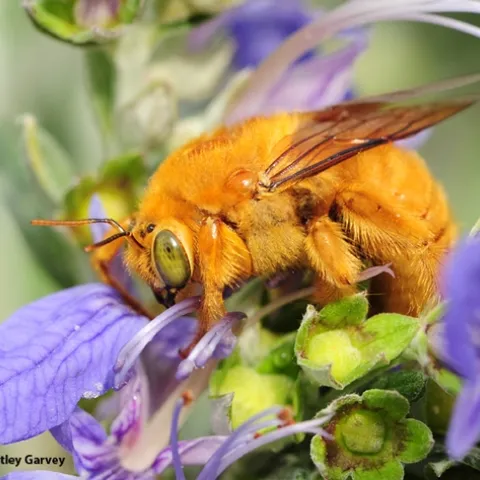
Male long-horned bee, Melissodes communis, on salvia. Identified by Robbin Thorp. (Photo by Kathy Keatley Garvey)
Bug Squad: Article

For Beginners, a Guide to Pollinators

June 6, 2013
By Kathy Keatley Garvey
So many flowers. So many pollinators. So many floral visitors. On every field trip, we see something new and different, such as the male long-horned bee, Melissodes communis (below) on salvia and the female sunflower bee, Svastra obliqua expurgata, on a Mexican hat flower.
View Article
Primary Image
The feather-legged fly is a parasitoid that lays its eggs inside stink bugs and other agricultural pests. (Photo by Kathy Keatley Garvey)
Bug Squad: Article

How to Find Insects

June 5, 2013
By Kathy Keatley Garvey
If you're craving to find out more about insects--specifically how to FIND them--then you'll want to attend the Bohart Museum of Entomologys open house from 1 to 4 p.m., Sunday, June 9. It's free and open to the public.
View Article
Primary Image
This photo, appearing in the field guide, is of Extension apiculturist Eric Mussen being stung by a honey bee. (Photo by Kathy Keatley Garvey)
Bug Squad: Article

Great Field Guide to Bees

June 4, 2013
By Kathy Keatley Garvey
If you've studied bees, you know that there are approximately 20,000 described species of bees in the world. Most people are familiar with honey bees and bumble bees, but they don't know about "those big black bees" (carpenter bees) or "those green metallic bees" (sweat bees).
View Article
UC Weed Science (weed control, management, ecology, and minutia): Article

Weed Day and Weed Science School 2013

June 4, 2013
By Gale Perez
EVENT ANNOUNCEMENT * * * * * * Weed Day 2013 July 11, 2013 :: UC Davis Visit http://wric.ucdavis.edu and click on Weed Day Be a Weed Day sponsor (click here.) * * * * * * Weed Science School 2013 Sept. 17-19, 2013 :: UC Davis Visit http://wric.ucdavis.
View Article
Primary Image
Flame skimmer ((Libellula saturata), outlined against the sky. (Photo by Kathy Keatley Garvey)
Bug Squad: Article

It's a Bird, It's a Plane...

June 3, 2013
By Kathy Keatley Garvey
It's a bird, it's a plane... It's not Superman. It's a flame skimmer dragonfly (Libellula saturata). We spotted this dragonfly in our yard recently and crouched down for a low angle, framing it against the sky. This is one insect that everyone notices and admires. Except maybe its prey...
View Article
Primary Image
parent navel
Topics in Subtropics: Article

The Parent Washington navel orange tree- It’s first years

June 3, 2013
By Ben A Faber
In January, 1995 during my second consultancy visit to Thailand, I was asked to lecture to the staff of KasetsartUniversity located in Bangkok. The lecture was on the problems of the greening disease in their country where trees die between 4 and 8 years and rarely reach 12 years of age.
View Article
Primary Image
European wool carder bee nectaring on Lamb's Ear. (Photo by Kathy Keatley Garvey)
Bug Squad: Article

They're Not Sheepish on the Lamb's Ear

May 31, 2013
By Kathy Keatley Garvey
The next time you're around a lamb's ear--no, not the animal, the plant (Stachys byzantina)--watch for buzzing bees. Especially the European wool carder bees (Anthidium manicatum). The females card the fuzz from the soft, silvery-gray leaves for their nests.
View Article