A Natural Solution for California's Herds: African Catfish Peptides

California's cattle producers and agricultural communities are all too familiar with the rising challenge of antibiotic resistance, making common bacterial infections harder to treat in livestock. But imagine a future where we could tackle these infections with a natural, powerful alternative. Our research points to just that: antimicrobial peptides (AMPs) found in African catfish.

We're really excited about these peptides because African catfish thrive in pathogen-rich freshwater, naturally producing these robust immune compounds in their skin mucus as a defense. This natural origin makes them highly appealing alternatives to synthetic drugs.

Predicted Safety and Potent Action

One of the most compelling aspects of these AMPs is their predicted safety for mammals. Our initial computer analyses suggest that various catfish AMPs are generally recognized as safe (GRAS). We predict they'll be absorbed in the human intestine without causing liver, brain, or heart toxicity. Furthermore, lab tests on a promising peptide, NACAP-II, confirmed it was non-hemolytic, meaning it didn't damage rabbit red blood cells—a strong indicator of its potential safety for mammalian cells.

Beyond safety, these peptides demonstrate effectiveness against problematic bacteria. One study revealed NACAP-II's strong activity against Extended-Spectrum Beta-Lactamase (ESBL)-producing Escherichia coli—a critical concern for both animal and human health due to its resistance to many common antibiotics. Another peptide, ACAP-IV, also showed antibacterial activity against E. coli and Staphylococcus aureus. We believe these AMPs work by directly disrupting bacterial cell membranes, a mechanism that makes it harder for bacteria to develop resistance compared to how they resist traditional antibiotics.
UC Weed Science (weed control, management, ecology, and minutia): Article

Invasive weeds are taking a toll on wildflower displays

March 19, 2013
By Gale Perez
Sahara mustard, a resilient weed native to North Africa and the Mediterranean, is invading desert landscapes in the American Southwest, squeezing out beautiful wildflower displays that attract tourists and maintain the local ecology, reported the San Diego Union Tribune.
View Article
Primary Image
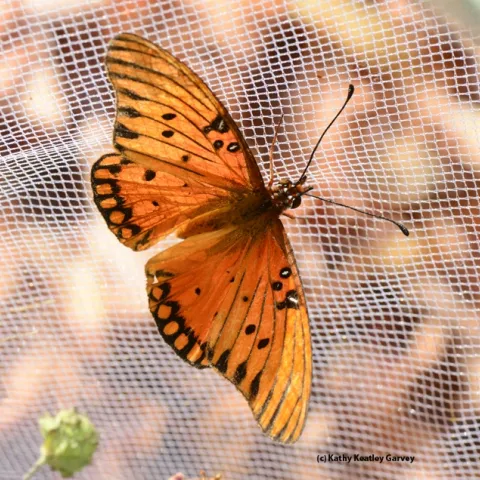
Gulf Fritillary butterfly touches down on the leaves of an Amaryllis, aka naked lady. (Photo by Kathy Keatley Garvey)

The Wearing of the Orange

March 18, 2013
By Kathy Keatley Garvey
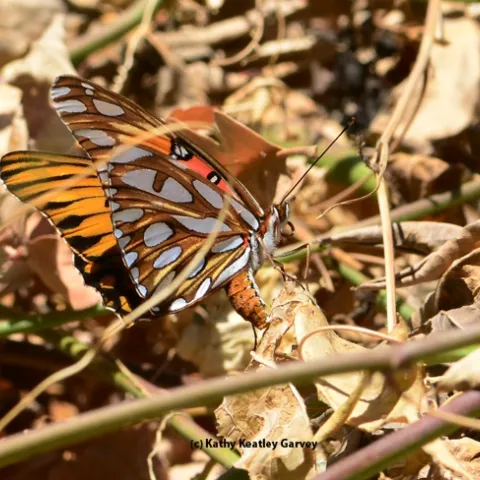
It was a perfect St. Patrick's Day--not just for the wearing of the green, but for the wearing of the orange. The Gulf Fritillary butterfly (Agraulis vanillae) arrived in our yard Sunday afternoon, March 16 and deposited an egg, just like E. Bunny will do soon.
View Article
Topics in Subtropics: Article

ATMOMETERS FOR IRRIGATION MANAGEMENT

March 18, 2013
By Ben A Faber
Efficient and precise irrigation management is becoming increasingly important inCaliforniaagriculture, both for maximizing crop quality and for conserving water.
View Article
Primary Image
Male Valley carpenter bee (Xylocopa varipuncta). (Photo by Kathy Keatley Garvey)

Cuddly Little Teddy Bear

March 15, 2013
By Kathy Keatley Garvey
It's a sure sign of spring when we see "the teddy bear bee." Native pollinator specialist Robbin Thorp, emeritus professor of entomology at the University of California, Davis, calls the male Valley carpenter bee (Xylocopa varipuncta) "the teddy bear bee." An apt description, to be sure.
View Article
Primary Image
Bagrada bug killed by Beauveria bassiana
E-Journal of Entomology and Biologicals: Article

An update on the Bagrada bug

March 15, 2013
Bagrada bug has an interesting scientific name - Bagrada hilaris. This bug is native to Africa and the genus probably represents the ancient Bagradas River in North Africa. Species name hilaris' means cheerful, merry or joyful in Latin.
View Article
Primary Image
stubborn disease
Topics in Subtropics: Article

Stubborn Disease of Citrus in California

March 15, 2013
By Ben A Faber
USDA-ARS National Clonal Germplasm Repository for Citrus & Dates Stubborn disease of citrus was first observed about 1915 in Washington navel trees nearRedlands. The first report of stubborn from outside ofCaliforniawas fromPalestinein 1928.
View Article
Primary Image
Heart researchers Bruce Hammock and Nipavan Chiamvimonvat. (Photo by Kathy Keatley Garvey)

From Insect Development to Heart Research

March 14, 2013
By Kathy Keatley Garvey
It's truly amazing how the study of insect biology can lead to research that may benefit humankind. Take entomologist Bruce Hammock, distinguished professor of entomology at the University of California, Davis.
View Article