A Natural Solution for California's Herds: African Catfish Peptides

California's cattle producers and agricultural communities are all too familiar with the rising challenge of antibiotic resistance, making common bacterial infections harder to treat in livestock. But imagine a future where we could tackle these infections with a natural, powerful alternative. Our research points to just that: antimicrobial peptides (AMPs) found in African catfish.

We're really excited about these peptides because African catfish thrive in pathogen-rich freshwater, naturally producing these robust immune compounds in their skin mucus as a defense. This natural origin makes them highly appealing alternatives to synthetic drugs.

Predicted Safety and Potent Action

One of the most compelling aspects of these AMPs is their predicted safety for mammals. Our initial computer analyses suggest that various catfish AMPs are generally recognized as safe (GRAS). We predict they'll be absorbed in the human intestine without causing liver, brain, or heart toxicity. Furthermore, lab tests on a promising peptide, NACAP-II, confirmed it was non-hemolytic, meaning it didn't damage rabbit red blood cells—a strong indicator of its potential safety for mammalian cells.

Beyond safety, these peptides demonstrate effectiveness against problematic bacteria. One study revealed NACAP-II's strong activity against Extended-Spectrum Beta-Lactamase (ESBL)-producing Escherichia coli—a critical concern for both animal and human health due to its resistance to many common antibiotics. Another peptide, ACAP-IV, also showed antibacterial activity against E. coli and Staphylococcus aureus. We believe these AMPs work by directly disrupting bacterial cell membranes, a mechanism that makes it harder for bacteria to develop resistance compared to how they resist traditional antibiotics.
UC Weed Science (weed control, management, ecology, and minutia): Article

Medusahead in San Diego County

December 9, 2013
By Gale Perez
Reposted (with permission) from the UC ANR blog Invasive Plants in Southern California Link to original post (December 6, 2013): Medusahead in San Diego County written by Carl Bell Medusahead [Elymus (Taeniatherum) caput-medusae] is a relatively new but serious invasive grass in San Diego County.
View Article
Primary Image
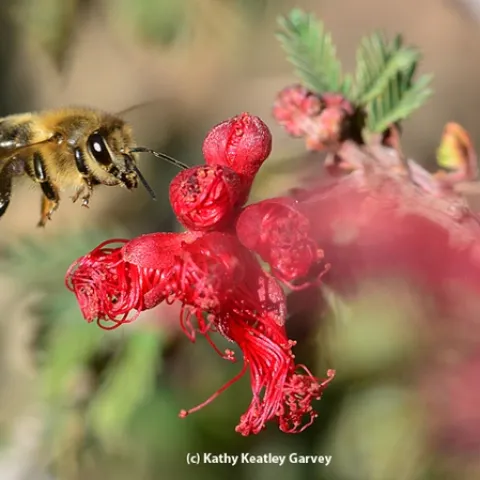
This honey bee was not aware of the "no fly" list; bees don't usually fly when the temperature is 49 degrees, but this one did. (Photo by Kathy Keatley Garvey)

Ah, Humbug!

December 6, 2013
By Kathy Keatley Garvey
It's no secret that bugs often get a bad rap. Take the negative expression, "Bah, Humbug!" uttered by Ebenezer Scrooge, a Charles Dickens character. Now it seems that everyone who dislikes Christmas says it, with an emphasis on "bug.
View Article
Primary Image
image 19649
IGIS: Article

Help to Validate Global Land Cover with GeoWiki and Cropland Capture

December 5, 2013
By Maggi Kelly
Courtesy of the International Institute for Applied Systems Analysis This creative project from GeoWiki seeks to get croudsourced feedback on crop types from participants around the world. They say: By 2050 we will need to feed more than 2 billion additional people on the Earth.
View Article
Colusa County: Article

Sacramento Valley Walnut News

December 5, 2013
Various meetings planned Managing Ground Squirrels and Pocket Gophers Winter Cold and Irrigation During Drought Training Young Walnut Trees: Minimum Pruning vs No Pruning Compared Nitrogen Management Planning...
View Article
Primary Image
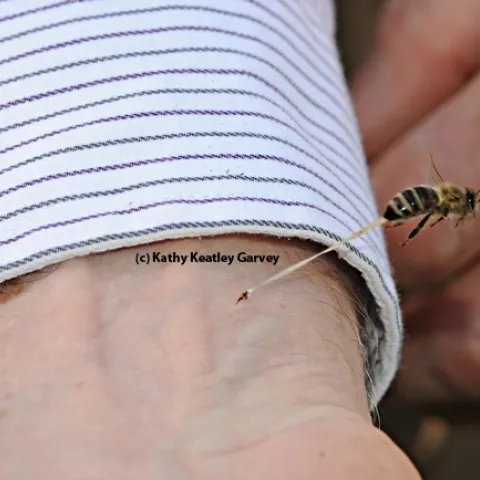
This image, "The Sting," drew $900 at the California State Beekeepers' Association auction. (Photo by Kathy Keatley Garvey)

When a Bee Sting Can Be Sweet

December 4, 2013
By Kathy Keatley Garvey
A bee sting can be sweet. Especially when the result is an auction item. Take the case of "The Sting," a memorable lunch-hour photo that went viral. Extension apiculturist Eric Mussen and I were walking through the apiary of the Harry H. Laidlaw Jr.
View Article
Primary Image
frost

Rehabilitating Frost Damaged Citrus and Avocado

December 4, 2013
By Ben A Faber
For the first time since the great freeze of '89-90, we have experienced a little more than minor damage to our crops. Compared to the San Joaquin Valley, Ventura country escaped without major damage; although there were some areas harder hit like the Ojai Valley and some canyons near Santa Paula.
View Article
Primary Image
frost

Methods of Frost Protection

December 4, 2013
By Ben A Faber
Mature Orchards Only two general methods of protecting avocado groves have proved satisfactory - heaters and wind machines. A combination of these two also is used.
View Article