A Natural Solution for California's Herds: African Catfish Peptides

California's cattle producers and agricultural communities are all too familiar with the rising challenge of antibiotic resistance, making common bacterial infections harder to treat in livestock. But imagine a future where we could tackle these infections with a natural, powerful alternative. Our research points to just that: antimicrobial peptides (AMPs) found in African catfish.

We're really excited about these peptides because African catfish thrive in pathogen-rich freshwater, naturally producing these robust immune compounds in their skin mucus as a defense. This natural origin makes them highly appealing alternatives to synthetic drugs.

Predicted Safety and Potent Action

One of the most compelling aspects of these AMPs is their predicted safety for mammals. Our initial computer analyses suggest that various catfish AMPs are generally recognized as safe (GRAS). We predict they'll be absorbed in the human intestine without causing liver, brain, or heart toxicity. Furthermore, lab tests on a promising peptide, NACAP-II, confirmed it was non-hemolytic, meaning it didn't damage rabbit red blood cells—a strong indicator of its potential safety for mammalian cells.

Beyond safety, these peptides demonstrate effectiveness against problematic bacteria. One study revealed NACAP-II's strong activity against Extended-Spectrum Beta-Lactamase (ESBL)-producing Escherichia coli—a critical concern for both animal and human health due to its resistance to many common antibiotics. Another peptide, ACAP-IV, also showed antibacterial activity against E. coli and Staphylococcus aureus. We believe these AMPs work by directly disrupting bacterial cell membranes, a mechanism that makes it harder for bacteria to develop resistance compared to how they resist traditional antibiotics.


Primary Image
Data Wrangling in R
Informatics and GIS Program: Page

Data Wrangling in R Parts I & II

October 10 & 17, 2025. Preparing data for analysis is frequently a pain point for researchers. This two-part, hands-on workshop series will cover wrangling tabular data in R using packages from the tidyverse.
View Page
Primary Image
Drone regulations
Informatics and GIS Program: Page

Introduction to Drone Rules and Regulations

October 3, 2025. Drone regulations are multi-layered with rules and policies coming from the federal, local, and institutional level. This webinar reviews the state of drone regulations in late 2025, including recent federal regulations limiting the use of Chinese made drones.
View Page
Stanislaus County: Article

Evapotranspiration Report 9/12/25

September 12, 2025
By Adrienne A Tompkins
Please find the attached document to provide the previous week’s estimated water use report in terms of evapotranspiration for almonds, peaches, walnuts, established vineyard, alfalfa, and pasture in Stanislaus County. This report may be used as a guide in your irrigation schedule for the…
View Article
Primary Image
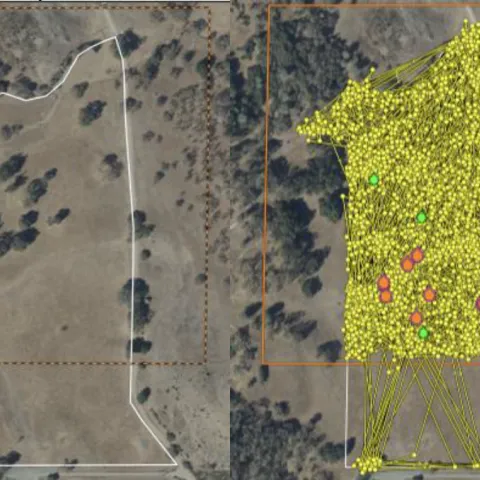
side-by-side image of virtual fence boundary and movement of heifers within it
UCCE Central Sierra: Article

Central Sierra: Introduction to Virtual Fencing for Livestock and Land Management

September 12, 2025
By Brian J Allen
Virtual Fencing: A New Tool for Livestock and Land Management Virtual fencing (VF) is a precision agriculture tool gaining traction across California’s diverse rangelands. It uses GPS collars to contain livestock without physical fences. Producers set virtual boundaries across their pasture from a…
View Article
Primary Image
Foto panoramica del Rio Grande
Blog Verde: Article

Urgen a México y EUA continuar trabajo coordinado para reducir problemas de agua en la franja fronteriza

September 12, 2025
By Basilisa M Rawleigh
 Proponen una cooperación institucional, transformación agrícola, educación técnica, empoderamiento comunitario y la participación del sector privadoLa seguridad hídrica a lo largo de las cuencas hidrográficas de los ríos Bravo y Colorado se enfrenta a una amenaza que “ya no es temporal sino sistemática…
View Article
Intermountain Research and Extension Center: Page

Contact Us

How to Reach UsIntermountain Research and Extension Center PO Box 850 2816 Havlina Road Tulelake, CA 96134 Phone: (530) 667-5117  Questions or Comments? Meet Our Team   Robert G Wilson Farm Advisor/ Director Phone: (530) 667-5117 Email: rgwilson@ucanr.edu     …
View Page
Primary Image
Houseplants
Fresno Gardening Green: Article

Why grow indoor plants and how to care for them

September 12, 2025
By Haramrit Gill
Indoor plants are a beautiful and practical addition to any home or office, offering numerous benefits that go beyond their aesthetic appeal. These ornamental plants are cultivated indoors and are typically chosen for their ability to thrive in low-light conditions and require minimal maintenance. Most…
View Article