A Natural Solution for California's Herds: African Catfish Peptides

California's cattle producers and agricultural communities are all too familiar with the rising challenge of antibiotic resistance, making common bacterial infections harder to treat in livestock. But imagine a future where we could tackle these infections with a natural, powerful alternative. Our research points to just that: antimicrobial peptides (AMPs) found in African catfish.

We're really excited about these peptides because African catfish thrive in pathogen-rich freshwater, naturally producing these robust immune compounds in their skin mucus as a defense. This natural origin makes them highly appealing alternatives to synthetic drugs.

Predicted Safety and Potent Action

One of the most compelling aspects of these AMPs is their predicted safety for mammals. Our initial computer analyses suggest that various catfish AMPs are generally recognized as safe (GRAS). We predict they'll be absorbed in the human intestine without causing liver, brain, or heart toxicity. Furthermore, lab tests on a promising peptide, NACAP-II, confirmed it was non-hemolytic, meaning it didn't damage rabbit red blood cells—a strong indicator of its potential safety for mammalian cells.

Beyond safety, these peptides demonstrate effectiveness against problematic bacteria. One study revealed NACAP-II's strong activity against Extended-Spectrum Beta-Lactamase (ESBL)-producing Escherichia coli—a critical concern for both animal and human health due to its resistance to many common antibiotics. Another peptide, ACAP-IV, also showed antibacterial activity against E. coli and Staphylococcus aureus. We believe these AMPs work by directly disrupting bacterial cell membranes, a mechanism that makes it harder for bacteria to develop resistance compared to how they resist traditional antibiotics.
Primary Image
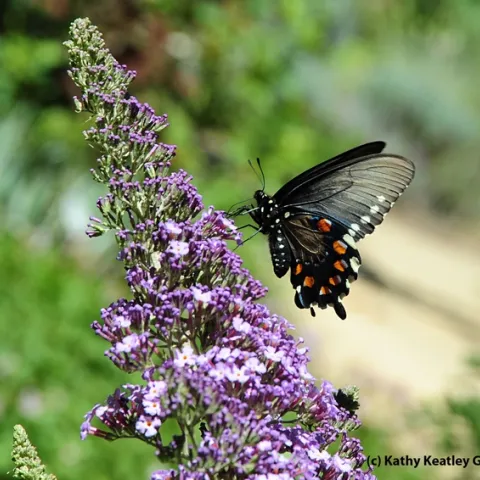
Gulf fritillary nectaring a passionflower vine. (Photo by Kathy Keatley Garvey)

Grateful for the Gulf Frits!

November 24, 2011
By Kathy Keatley Garvey
It's Thanksgiving, and time to be grateful. In the bug world, we're all grateful for the people who study insects, monitor them, and share information to impart scientific data and help save declining species.
View Article
Primary Image
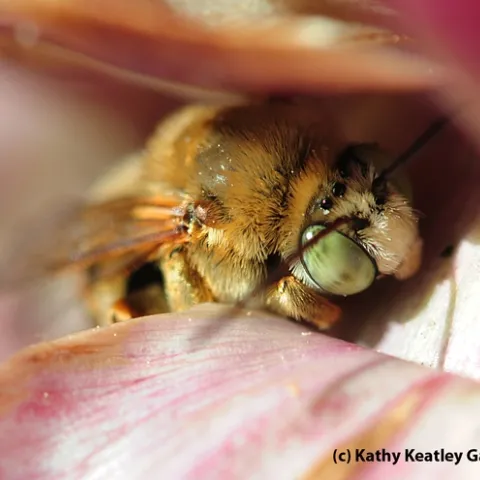
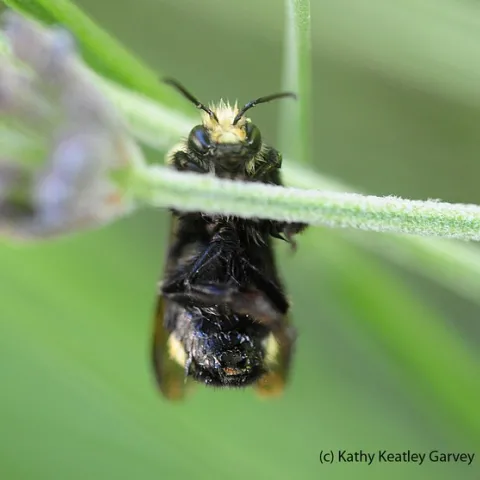
Metallic green sweat bee (Agapostemon texanus) on coneflower. (Photo by Kathy Keatley Garvey)
Bug Squad: Article

Tiny Saviors in Our Backyard

November 23, 2011
By Kathy Keatley Garvey
If you're interested in native bees, you'll want to read the newly published University of California research article, "Tiny Saviors in Our Backyard.
View Article
Primary Image
UC Davis team of Matan Shelomi, Mohammad-Amir Aghaee, Meredith Cenzer and Andrew Merwin competed in the semi-finals. (Photo by Kathy Keatley Garvey)

What's That Again?

November 22, 2011
By Kathy Keatley Garvey
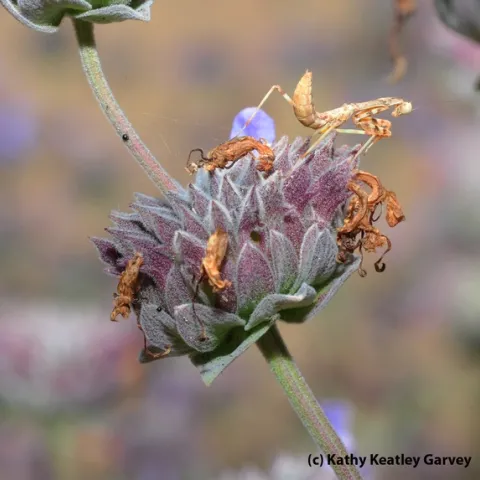
Quick! Answer this question: Until recently, praying mantids were thought to be deaf. We now know that 65 percent of all mantid species can hear.
View Article
Primary Image
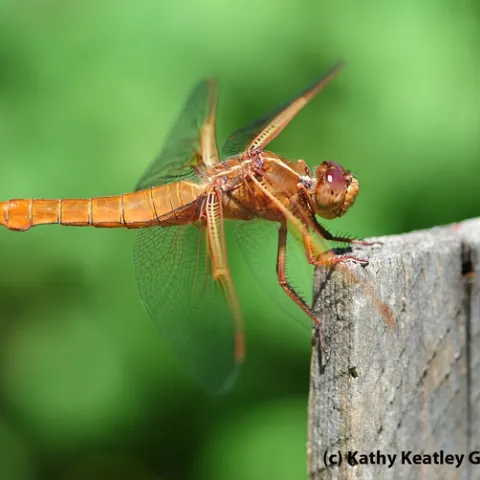
This flame skimmer was one of the entries accepted into the 2011 Insect Salon. (Photo by Kathy Keatley Garvey)

Insect Salon: Fantastic Captures

November 21, 2011
By Kathy Keatley Garvey
If you're into macro photography of insects, you'll want to check out the amazing photos that won awards, or were accepted into the international Insect Salon competition, affiliated with the Entomological Society of America (ESA) and the Peoria Camera Club, Illinois.
View Article
UC Weed Science (weed control, management, ecology, and minutia): Article

California Invasive Plant Council honors Weed Specialist DiTomaso

November 21, 2011
By Gale Perez
Cooperative Extension Specialist Joe DiTomaso has received the Jake Sigg Award for Vision and Dedicated Service from the California Invasive Plant Council (Cal-IPC), the highest honored bestowed each year by the group which works to protect Californias lands and waters from invasive plants through s...
View Article
UC Weed Science (weed control, management, ecology, and minutia): Article

Recently revised: Field Bindweed Pest Notes

November 21, 2011
By Gale Perez
The Field Bindweed Pest Notes (Publ. 7462) has been revised. View the publication information online or as a PDF (http://www.ipm.ucdavis.edu/PMG/PESTNOTES/pn7462.html.) Pest Notes are produced by the UC Statewide IPM Program.
View Article
Primary Image
Assistant professor Neal Williams and Kimiora Ward, research associate from the Williams lab, collect bees. (Photo by Kathy Keatley Garvey)

Protecting the Pollinators

November 17, 2011
By Kathy Keatley Garvey
It's good to see so many publications focusing on the pollinator crisis--because that's exactly what it is, a crisis. Writing for the Nature journal, Sharon Levy recently examined pollination studies that focus on the importance of pollinators and the plants they frequent.
View Article