A Natural Solution for California's Herds: African Catfish Peptides

California's cattle producers and agricultural communities are all too familiar with the rising challenge of antibiotic resistance, making common bacterial infections harder to treat in livestock. But imagine a future where we could tackle these infections with a natural, powerful alternative. Our research points to just that: antimicrobial peptides (AMPs) found in African catfish.

We're really excited about these peptides because African catfish thrive in pathogen-rich freshwater, naturally producing these robust immune compounds in their skin mucus as a defense. This natural origin makes them highly appealing alternatives to synthetic drugs.

Predicted Safety and Potent Action

One of the most compelling aspects of these AMPs is their predicted safety for mammals. Our initial computer analyses suggest that various catfish AMPs are generally recognized as safe (GRAS). We predict they'll be absorbed in the human intestine without causing liver, brain, or heart toxicity. Furthermore, lab tests on a promising peptide, NACAP-II, confirmed it was non-hemolytic, meaning it didn't damage rabbit red blood cells—a strong indicator of its potential safety for mammalian cells.

Beyond safety, these peptides demonstrate effectiveness against problematic bacteria. One study revealed NACAP-II's strong activity against Extended-Spectrum Beta-Lactamase (ESBL)-producing Escherichia coli—a critical concern for both animal and human health due to its resistance to many common antibiotics. Another peptide, ACAP-IV, also showed antibacterial activity against E. coli and Staphylococcus aureus. We believe these AMPs work by directly disrupting bacterial cell membranes, a mechanism that makes it harder for bacteria to develop resistance compared to how they resist traditional antibiotics.

Primary Image
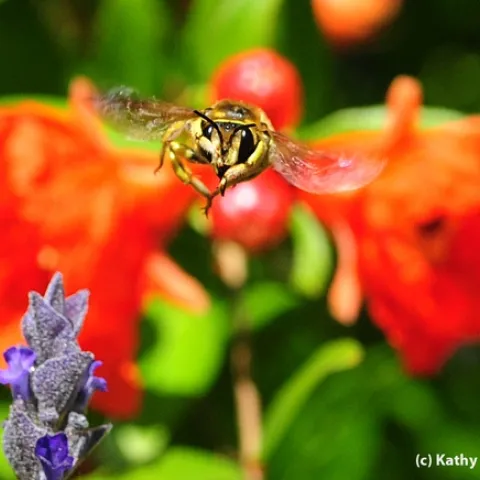
Morpho butterfly, a genus that Phil DeVries studies. (Photo by Kathy Keatley Garvey)
Bug Squad: Article

What Butterflies Tell Us About Tropical Diversity

February 3, 2012
By Kathy Keatley Garvey
What do butterflies tell us about tropical diversity? Take it from an expert. Tropical ecologist Philip DeVries of the Department of Biological Sciences, University of New Orleans, will discuss the topic at his lecture on Thursday, Feb. 9 at the University of California, Davis.
View Article
UC Rice Blog: Article

Foundation Seed Program accepting requests

February 3, 2012
By Luis Espino
A message from Robert Stewart, Foundation Seed Program Advisor: Now is the time to plan for requests of Rice Experiment Station (RES) Foundation Rice Seed for the 2012 production year.
View Article
Primary Image
Ladybugs, aka lady beetles, in fava beans. (Photo by Kathy Keatley Garvey)
Bug Squad: Article

Bug Lovin'

February 2, 2012
By Kathy Keatley Garvey
In a pre-Valentine's Day event, officials at the Bohart Museum of Entomology at the University of California, Davis, are planning a Bug Lovin' theme for their next open house. It will be a lovefest of bugs! The event, free and open to the public, will take place from 1 to 4 p.m., Sunday, Feb.
View Article
Primary Image
Young citrus trees.
Topics in Subtropics: Article

Topworking

February 2, 2012
There are many changes going on in the citrus industry and one opportunity is the conversion of an orchard to another variety of citrus. If this is a consideration, then the question becomes one of whether the orchard should be topworked or replanted with new nursery trees.
View Article
Primary Image
A jumping spider, probably Phidippus johnsoni, eyes the photographer. (Photo by Kathy Keatley Garvey)
Bug Squad: Article

How Jumping Spiders Communicate

February 1, 2012
By Kathy Keatley Garvey
Those jumping spiders certainly can jump. Last summer we spotted what appeared to be the red-backed jumping spider, Phidippus johnsoni (famiiy Salticidae), stalking native bees and honey bees in our yard.
View Article
Primary Image
Benicia resident Gordon Hough stops to check for honey bees at the Benicia State Park. (Photo by Kathy Keatley Garvey)
Bug Squad: Article

Almonds a' Bloomin'

January 31, 2012
By Kathy Keatley Garvey
Almond pollination season in California traditionally begins around Valentine's Day. This year, however, thanks to the unseasonably warm weather, almond trees began blooming in late January in some parts of Central California. Take the city of Benicia.
View Article
Cooperative Extension Ventura County: Article

February 2012 Clover Lines

January 31, 2012
Presentation Prep, TIC Wrap-up, County Council Information, Bardsdale 4-H and much more...
View Article