A Natural Solution for California's Herds: African Catfish Peptides

California's cattle producers and agricultural communities are all too familiar with the rising challenge of antibiotic resistance, making common bacterial infections harder to treat in livestock. But imagine a future where we could tackle these infections with a natural, powerful alternative. Our research points to just that: antimicrobial peptides (AMPs) found in African catfish.

We're really excited about these peptides because African catfish thrive in pathogen-rich freshwater, naturally producing these robust immune compounds in their skin mucus as a defense. This natural origin makes them highly appealing alternatives to synthetic drugs.

Predicted Safety and Potent Action

One of the most compelling aspects of these AMPs is their predicted safety for mammals. Our initial computer analyses suggest that various catfish AMPs are generally recognized as safe (GRAS). We predict they'll be absorbed in the human intestine without causing liver, brain, or heart toxicity. Furthermore, lab tests on a promising peptide, NACAP-II, confirmed it was non-hemolytic, meaning it didn't damage rabbit red blood cells—a strong indicator of its potential safety for mammalian cells.

Beyond safety, these peptides demonstrate effectiveness against problematic bacteria. One study revealed NACAP-II's strong activity against Extended-Spectrum Beta-Lactamase (ESBL)-producing Escherichia coli—a critical concern for both animal and human health due to its resistance to many common antibiotics. Another peptide, ACAP-IV, also showed antibacterial activity against E. coli and Staphylococcus aureus. We believe these AMPs work by directly disrupting bacterial cell membranes, a mechanism that makes it harder for bacteria to develop resistance compared to how they resist traditional antibiotics.
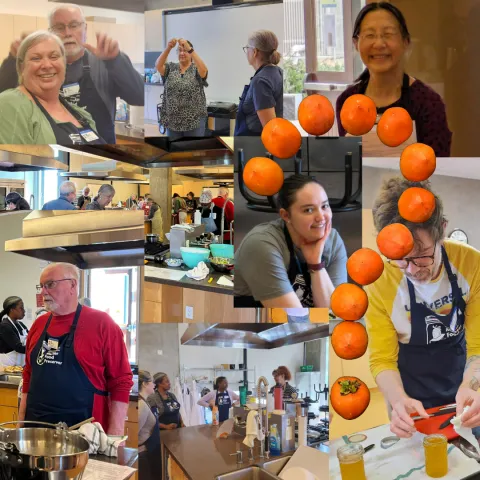
Event Primary Image
Ask an MFP Collage.png
UC Master Food Preserver: Event

Ask A UC Master Food Preserver Live Q&A (Online Delivery Program)

Event Date
Nov 16, 2025

A panel of volunteers specializing in freezing, dehydrating, canning and food safety will be available to answer your questions and share their tips so you can safely and successfully preserve food at home.
UC Master Food Preserver
View Event
UC Oaks: Page

Stump Sprouting: An Alternative Regeneration Approach

By Douglas McCrearySeveral recent inventories of California oaks have indicated that for several native species there is insufficient natural regeneration. That is, there are not enough young seedlings becoming established to take the place of older trees that will eventually die. One of the species reported…
View Page
UC Oaks: Page

Oak Regeneration: Species, Planting Methods, and Care Information

You are interested in oak regeneration, but what species should you plant?Click here to find out what oak species (and other native plants) are found in your area (CalScape website).Click here for information about habitat and ecology of the major California oak trees (our UC Oaks ID tool).Now you know what…
View Page
Event Primary Image
Ask an MFP Collage.png
UC Master Food Preserver: Event

Ask A UC Master Food Preserver Live Q&A (Online Delivery Program)

Event Date
Oct 19, 2025

A panel of volunteers specializing in freezing, dehydrating, canning and food safety will be available to answer your questions and share their tips so you can safely and successfully preserve food at home.
UC Master Food Preserver
View Event
Preservation Notes - San Joaquin Master Food Preservers: Article

A Cozy Tradition with Mulling Spices

September 5, 2025
By Sherida J Phibbs
By Sherida Phibbs, UCCE Master Food Preserver When autumn rolls in, we notice it right away—the crisp morning air, the golden light in the afternoons, and of course, the abundance of apples. From sweet Galas to tart Granny Smiths, orchards are bursting with fruit, and it feels like an invitation to slow…
View Article
UC Oaks: Page

Landscaping Under Native Oaks of the Central Valley

Plant List and ProceduresLichter, J. and Ellen Zagory. HortScript 11, March, 1995 California native oaks such as the valley oak (Quercus lobata), blueoak (Q. douglasii)), interior live oak (Q. wislizenii), and coast live oak (Q. agrifolia) are some of the most significant natural components of our California…
View Page
UC Oaks: Page

Montane Hardwood Forest & Wildlife Habitat

Hardwood Rangeland Habitats: Although there are numerous ways to classify California’s oak-dominated woodlands, the five vegetation types used in the California Wildlife Habitat Relationships System (CWHR) are the most commonly used and are described below. The CWHR types are based on the dominant tree…
View Page
UC Oaks: Page

Valley Oak Woodland & Wildlife Habitat

Hardwood Rangeland Habitats: Although there are numerous ways to classify California’s oak-dominated woodlands, the five vegetation types used in the California Wildlife Habitat Relationships System (CWHR) are the most commonly used and are described below. The CWHR types are based on the dominant tree…
View Page
UC Oaks: Page

Blue Oak Woodland & Wildlife Habitat

Hardwood Rangeland Habitats: Although there are numerous ways to classify California’s oak-dominated woodlands, the five vegetation types used in the California Wildlife Habitat Relationships System (CWHR) are the most commonly used and are described below. The CWHR types are based on the dominant tree…
View Page
UC Oaks: Page

Coastal Oak Woodland & Wildlife Habitat

Hardwood Rangeland Habitats: Although there are numerous ways to classify California’s oak-dominated woodlands, the five vegetation types used in the California Wildlife Habitat Relationships System (CWHR) are the most commonly used and are described below. The CWHR types are based on the dominant tree…
View Page