A Natural Solution for California's Herds: African Catfish Peptides

California's cattle producers and agricultural communities are all too familiar with the rising challenge of antibiotic resistance, making common bacterial infections harder to treat in livestock. But imagine a future where we could tackle these infections with a natural, powerful alternative. Our research points to just that: antimicrobial peptides (AMPs) found in African catfish.

We're really excited about these peptides because African catfish thrive in pathogen-rich freshwater, naturally producing these robust immune compounds in their skin mucus as a defense. This natural origin makes them highly appealing alternatives to synthetic drugs.

Predicted Safety and Potent Action

One of the most compelling aspects of these AMPs is their predicted safety for mammals. Our initial computer analyses suggest that various catfish AMPs are generally recognized as safe (GRAS). We predict they'll be absorbed in the human intestine without causing liver, brain, or heart toxicity. Furthermore, lab tests on a promising peptide, NACAP-II, confirmed it was non-hemolytic, meaning it didn't damage rabbit red blood cells—a strong indicator of its potential safety for mammalian cells.

Beyond safety, these peptides demonstrate effectiveness against problematic bacteria. One study revealed NACAP-II's strong activity against Extended-Spectrum Beta-Lactamase (ESBL)-producing Escherichia coli—a critical concern for both animal and human health due to its resistance to many common antibiotics. Another peptide, ACAP-IV, also showed antibacterial activity against E. coli and Staphylococcus aureus. We believe these AMPs work by directly disrupting bacterial cell membranes, a mechanism that makes it harder for bacteria to develop resistance compared to how they resist traditional antibiotics.

Site

UCCE Central Sierra Forestry

The Central Sierra forestry program seeks to provide the latest research-based information from the University of California to residents, non-profits, and staff of local, state, and federal agencies. Susie Kocher is the Forestry Advisor for the Central Sierra area.
View Site
Flames burning conifer forest floor.
Site

UCCE Central Sierra Living with Fire

Living with Fire is a challenge in the Sierra Nevada. We live in a fire adapted ecosystem where wildfires used to burn naturally every 8 to 35 years depending on elevation.
View Site
Site

Fresno UC ANR Climate Smart Agriculture

Climate Smart Agriculture (CSA) addresses the risk that the agriculture industry faces due to changing climate conditions. It encompasses management practices that increase soil carbon, reduce greenhouse gas emissions, improve on-farm efficiencies, and promote sustainable land practices.
View Site
Site

Small Scale and Urban Farming Resources

Thanks to all the presenters for sharing their expertise and resources and to the > 150 attendees who chose to spend the day with us! We will be offering the workshop annually and are looking forward to 'seeing' you for the 2021 workshop.
View Site
Site - County Office

San Bernardino County

Welcome to University of California Cooperative Extension, San Bernardino County We develop and extend practical research-based information in agriculture and natural resource to the residents and workforce of San Bernardino County through a trained core of academics, staff, and volunteers.
View Site
Bibliography Project and EndNote Information: Page

Contact Us

For questions about publications reporting, Online Bibliography, EndNote integration, or related Program Planning and Evaluation resources, please contact Kit Alviz in the Program Planning and Evaluation unit.Kit Alviz Title: Program Policy Analyst 5 Phone: (510) 987-0027 Email: kit.alviz@ucop.edu 
View Page
ANR Publishing: Page

UC ANR Publications Style Guide External Use

AbbreviationsSpell out all units of measure in running text—that is, use “kilogram” rather than “kg." Use “e.g.” and “i.e.” very sparingly. Rely instead on the readable terms “for example” and “that is.” Names of elements are spelled out in running text.Numbers, amounts, and mathFractionsSpell out fractions…
View Page
Cooperative Extension Program Evaluation: Page

Data Collection

Data collection is an important part of program planning, evaluation, reporting, and learning. The resources in this section are designed to help UC ANR academics and program staff collect useful, appropriate, and high-quality information from participants, partners, and communities.Use the pages below to…
View Page
Cooperative Extension Program Evaluation: Page

Contact Us

How to Reach UsUC Agriculture and Natural Resources 1111 Franklin Street Oakland, CA 94607Meet Our TeamKatherine Webb-Martinez, MPA Title: Director Specialty: Strategic planning, program evaluation, reporting, and impact writing Phone: (510) 987-0029 Email: katherine.webb-martinez@ucop.edu Kit Alviz…
View Page

Purchased a Grapevine at Costco in N. CA recently? Read This!

May 28, 2026
By Karey Windbiel-Rojas
Attention Stanislaus Sprout readers!An invasive insect called the glassy-winged sharpshooter (GWSS) has been found on grapevine shipments sold at select Costco locations in Northern California between April 21 and May 19, 2026. If you or someone you know has recently purchase a grape plant at Costco…
View Article
UC Master Gardeners of the Lake Tahoe Basin: Article

Central Sierra: Red Twig Dogwood

May 28, 2026
Red Twig Dogwood: A Native Shrub of Beauty and Ecological Value  Red twig dogwood is one of the most recognizable native shrubs in the Lake Tahoe Basin. Also known as red osier dogwood, this deciduous shrub thrives in moist mountain environments and is valued for its vivid winter stems, ecological…
View Article
UC Master Gardeners of the Lake Tahoe Basin: Article

Central Sierra: Smart Water-Saving Tips for Tahoe Gardens

May 28, 2026
Beat the Heat: Smart Water-Saving Tips for Tahoe GardensJen Cressy, South Tahoe PUD Water Efficiency Technician and UC Master GardenerGardening in Tahoe is rarely simple. High elevation, sandy and rocky soils, low humidity, intense sunlight, and summer heat waves can all place stress on landscape plants…
View Article
Primary Image
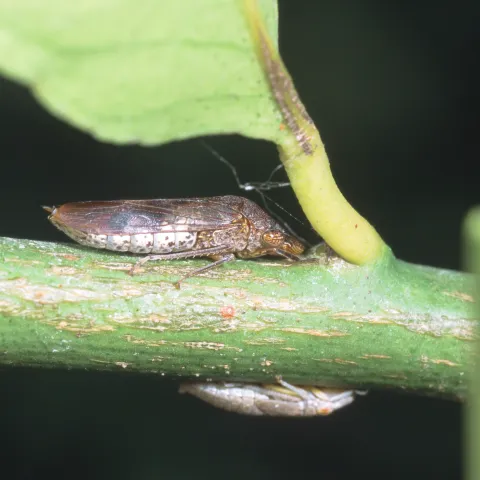
Glassy-winged sharpshooter adult and (out-of-focus) nymph on green lemon twig.

Purchased a Grapevine at Costco in N. CA Recently? Read This!

May 28, 2026
By Karey Windbiel-Rojas
Updated May 29, 2026 at 4:30pmAn invasive insect called the glassy-winged sharpshooter (GWSS) has been found on grapevine shipments sold at select Costco locations in Northern California between April 21 and May 21, 2026. Note that the timeframe for grapevine plants sold at Costco has been extended to April…
View Article