UC ANR is committed to providing an accessible and inclusive web experience for all users. If you encounter an accessibility barrier or need content in an alternative or remediated accessible format, please contact anraccessibility@ucanr.edu.
Understanding your soil's properties and characteristics helps you become a more successful gardener. In California's diverse landscape, soil can vary dramatically even within short distances. These variations influence everything from how often you water to which plants will thrive in your garden.
Healthy soil is an important part of a productive vegetable garden. Source: USDA Soil provides plants with air, water, and nutrients. Garden soils are of three general types, or textures. Texture is difficult to change.
California has a unique vegetable growing climate, we can grow many different types of vegetable crops throughout the year. Crops are classified as warm-season or cool-season crops. Vegetable planting guides provide the approximate planting periods for both cool and warm-season crops.
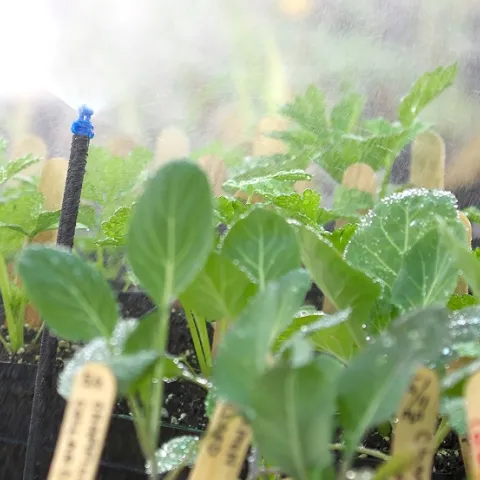
A sprinkler irrigation display board at the Fair Oaks Horticulture Center in Sacramento, Calif.Photo credit: Melissa Womack Gardens in most areas of California require regular irrigation to provide the soil with the moisture needed for maximum plant growth. Vegetable crops are not drought tolerant.
Band fertilizing uses a trench to distribute fertilizer to young plants, always follow the manufacturer's instructions. Photo credit: Lauren Snowden (Learn about the fertilization application process before planting in the soil preparation and improvements section.
Thinning of radish shoots to prevent overcrowding, thin radishes so plants are 1 inch apart. Photo source: eLearning Brothers Overcrowded plants cannot grow rapidly or reach a good size. Thin small root crops, salad crops, and those grown for greens early at the second or third true leaf stage.
Apply mulch around your garden beds and pull young weeds before they can become established in your vegetable garden. Photo credit: Lauren Snowden Weeds adversely affect crop growth by competing for nutrients, water, and sunlight.
Welcome to the UC Master Gardener Program. Whether you are troubleshooting garden pests, learning to compost, or interested in joining our mission, we are here to help.
The UC Master Gardener Program believes that gardening is not just about growing plants, but about cultivating healthier lives, stronger communities, and a more sustainable world.
It is easy to grow your own fruits and vegetables in a container, your yard, a community garden plot or on a large ranch property! To have a successful garden just follow the seven basic rules of edible gardening: Plant only as much as you can easily maintain. Create a garden plan before you begin.