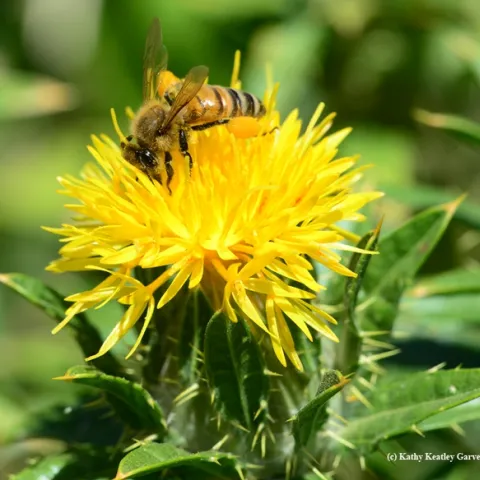
It won't bloom until summer, but already many eyes are on the California buckeye. The tree's blossoms are poisonous to honey bees. Bees are attracted to them and forage on them, but the end result of the food provisions to the colony can be deformed larval development.
Along with drought there are also concerns about water quality which has all kinds of weird units that area actually convertible. Here's a little guide for the principle water quality components and their conversions.
From the UC Strawberries and Caneberries blog :: Oct. 11, 2013 A response to the question posed to us concerning how soon one should be applying water to Chateau (flumioxazin) sprayed in the furrows for weed control in strawberry.
If you like oranges, you can thank a honey bee. Oranges are 90 percent dependent on honey bees for pollination. Remember that week of freezing temperatures back in December? Yes, it affected California's $2 billion citrus industry.
Adult weeping fig thrips, larva, and eggs. (Photo by Gevork Arakelian, Senior Biologist, Los Angeles County) Another exotic pest has recently found its way to California.
Dothiorella leaf blight which is really a whole range of fungi that cause leaf diseases, along with cankers and wilts goes to many different host plants from citrus to Brazlian pepper to ash to redwood to palm to pittosporum to eucalyptus to pine.
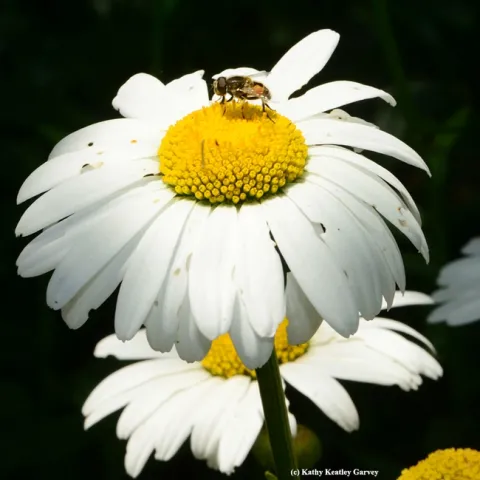
It's often mistaken for a honey bee. Indeed, to the untrained eye, the drone fly (Eristalis tenax) appears to be a bee. It's not; it's a fly. Native pollinator specialist Robbin Thorp, emeritus professor of entomology at UC Davis, calls the drone fly "The H Bee.