I'm sure you've noticed that different years have dominant weed species. For example this year in Southern California Russian thistle (aka tumbleweed Salsola tragus among other Salsola species) is abundant in many areas.
It's National Pollinator Week! Do you know where your pollinators are? It was good to see the University of California Agriculture and Natural Resources (UC ANR) conduct its recent "Be a Scientist" project.
Don't miss Clyde Elmore's photo exhibit Our Great Outdoors. If you attend Weed Day 2014 (July 10, 2014) you'll get a chance to see the exhibit. Our Great Outdoors July 7-Aug. 31, 2014 Buehler Alumni Center, UC Davis There will be a reception from 5-7 PM on July 11, 2014.
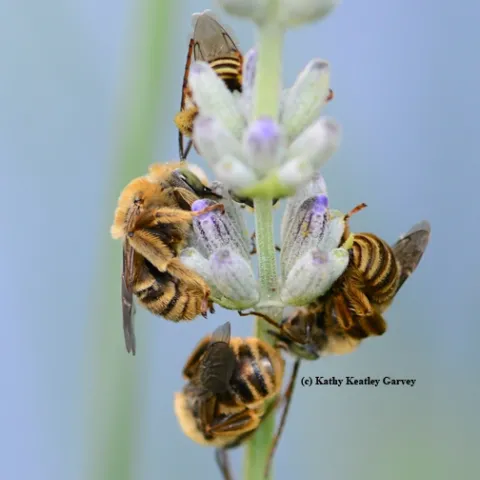
By day, they fly around our yard looking for the girls. At night, it's "Boys' Night Out." These males, longhorned digger bees, Melissodes agilis (as identified by native pollinator specialist Robbin Thorp, emeritus professor of entomology at UC Davis), are absolutely spectacular.
From the May 2014 Tulare County UC Cooperative Extension "Field Crop Notes" newsletter http://cetulare.ucanr.edu/newletters_898819/Field_Crop_Notes_692/?newsitem=51665 Managing Junglerice in Corn by Steve Wright and Carol Frate Introduction.
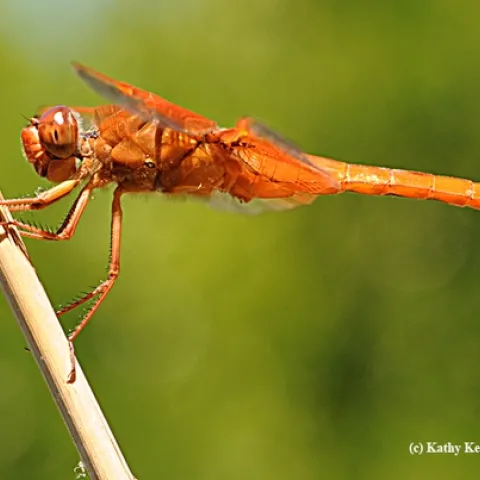
Don't you just love those dragonflies? We watch them circle our fish pond, grab flying insects in mid-air, and then touch down on a bamboo stake in our yard to eat them. Some dragonflies stay for hours; others for what seems like half a second. Some let you walk up to them and touch them.
From the Invasive Plants in Southern California blog :: June 11, 2014 Preemergence herbicides for wildland weed control Kill weeds before they ever see the light of day; sounds great, doesn't it? That is what preemergence herbicides are for.
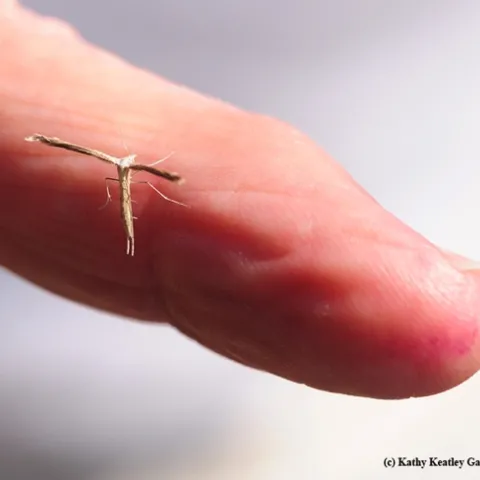
In some respects, the pterophorid plume moth is fit to a 'T.' "The T-square shape is classic," says butterfly expert Art Shapiro, distinguished professor of evolution and ecology at the University of California, Davis.
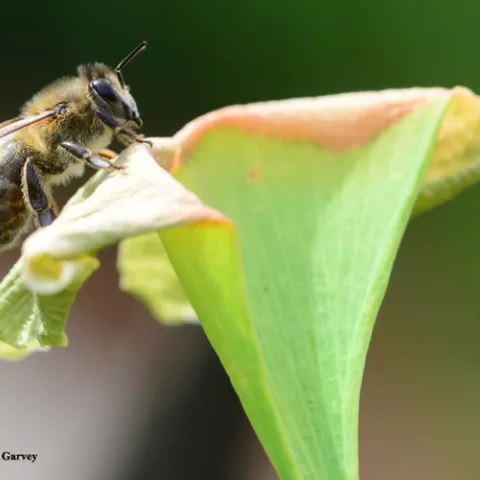
I've always liked the ginkgo tree, despite the fact that honey bees don't like it. It's a non-flowering plant so there's no reward for the bees. In other words, a bee has no reason to visit it. No reason at all.