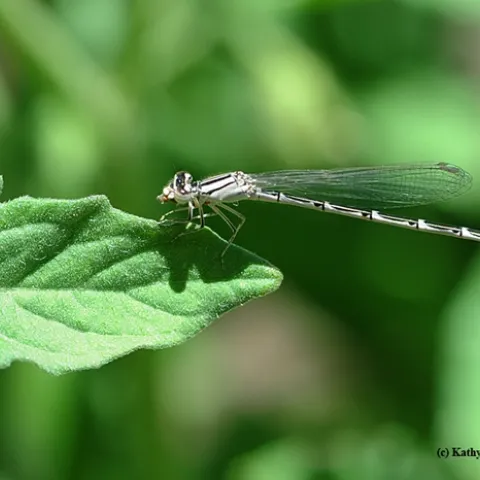
Finding a tan-colored damselfly in a patch of fading English lavender is like finding a needle in the proverbial haystack. They're so tiny and inconspicuous that they're easy to miss. They're about an inch long and so slender that they look like flying needles.
New IPM Advisor New Farm Advisor Advisor Retirement Leaf analysis and salinity monitoring Research reveals the core components of optimum almond production Navel orangeworm management Nitrogen Management in Orchard Crops Meeting MEETING ANNOUNCEMENT: Nitrogen Management in Orchard Crops - Thursday,...
Butterflies flutter. Bees don't. Indeed, some bees seem to possess Superman's extraordinary power of "faster than a speeding bullet." They're just lacking a blue costume, a red cape and an "S" on their thorax.
Hand weeding is undoubtedly the oldest method of weed control, as old as agriculture itself. The weed uprooted by hand pulling or with a hoe dies from desiccation.
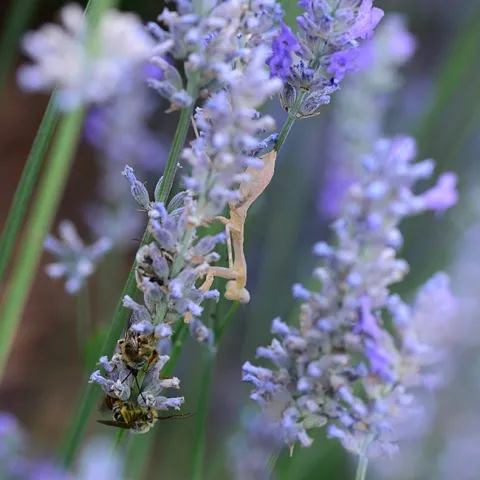
Just call it sleeping with the enemy. But how can you sleep when you sense a predator in your midst? Last night, as usual, was Boys' Night Out in our lavender patch.
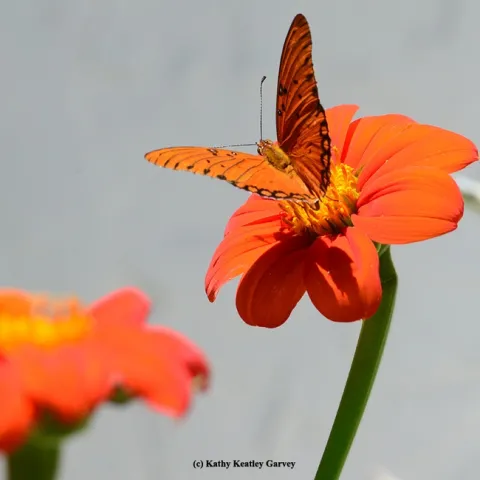
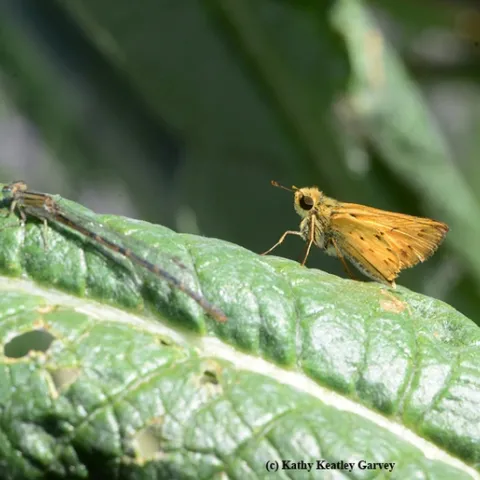
In the entomological world, we call that a "two-fer." Two insects in the same photo. Sunday morning we spotted a fiery skipper butterfly (Hylephila phyleus) on an artichoke leaf. It was warming its flight muscles, maybe to flutter over to the lavender for a sip of nectar.
From the Invasive Plants in Southern California blog :: Nov. 22, 2013 Hi All. In my last blog the subject was about what I had learned regarding the use herbicides as a tool for effective passive restoration of CSS and native grassland habitats.
From the Invasive Plants in Southern California blog :: Jan. 24, 2014 Tips on applying herbicides The table below is from training that my colleagues Dr. Cheryl Wilen, Area Advisor, UC IPM; Dr.