Ongoing research

Primary Image
asphyxiation

Clogging emitters?

May 23, 2013
By Ben A Faber
"What should I watch for?" "I Have a Clogging Problem and I Want to Solve It" "How do I determine if I have a clogging problem?" "What should I do to keep my microirrigation system running well?
View Article
Primary Image
Backlit by the morning sun, a spider web glows, glistens and glitters. (Photo by Kathy Keatley Garvey)
Bug Squad: Article

Where's Charlotte?

May 22, 2013
By Kathy Keatley Garvey
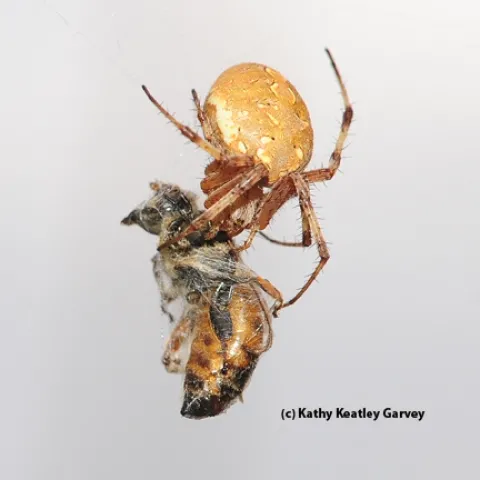
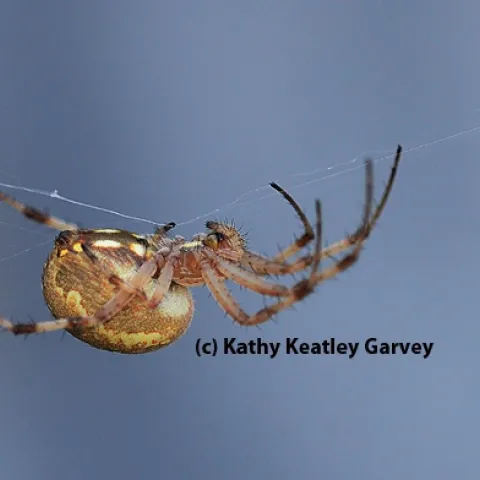
A spider web is one of nature's most marvelous wonders. It's art, it's architecture, and it's engineering. The silk is as beautiful as it is deceiving. It's 10 times stronger than Kevlar; as sticky as cotton candy covered with honey; and as flexible as a classical ballet dancer.
View Article
Primary Image
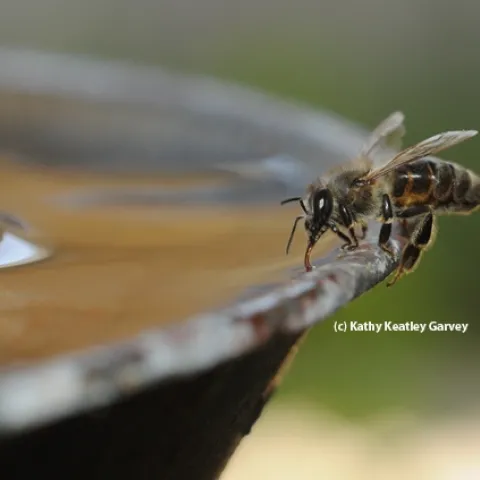
A worker bee staggers and extends her tongue. (Photo by Kathy Keatley Garvey)
Bug Squad: Article

Where Do Foraging Bees Go to Die?

May 21, 2013
By Kathy Keatley Garvey
"Where do foraging bees go to die?" That question was asked this week of honey bee guru Eric Mussen of the UC Davis Department of Entomology, who serves as the statewide Extension apiculturist. "Do they return to the hive? Do they retire and live out their last days inside?" he was asked.
View Article
Primary Image
A flame skimmer perches on a bamboo stake. (Photo by Kathy Keatley Garvey)
Bug Squad: Article

My Old Flame

May 20, 2013
By Kathy Keatley Garvey
I usually can't get within 25 yards of a dragonfly. Not so in our back yard. A flame skimmer or firecracker skimmer (Libellula saturata) has apparently decided that this is where he wants to be.
View Article
Primary Image
IMG 0575
UC Rice Blog: Article

Immature tadpole shrimp size

May 20, 2013
By Luis Espino
I was asked the other day what do immature tadpole shrimp (TPS) look like. Young TPS look pretty much like the older ones, just smaller.
View Article
Primary Image
ponding

Water infiltration problems

May 20, 2013
By Ben A Faber
By the beginning of the irrigation season, the entire root zone is usually wetted by winter rainfall. Under low volume irrigation during the irrigation season only fifty percent or less of the root zone is wetted with each irrigation on most soil types.
View Article
Primary Image
Cellar spider traps and wraps a ladybug. (Photo by Kathy Keatley Garvey)
Bug Squad: Article

Poor ol' Ladybug

May 17, 2013
By Kathy Keatley Garvey
The lady beetle, aka ladybug, was at the wrong place at the wrong time. We don't know how she managed to get tangled in the cellar spider's web or why the cellar spider opted to have her for dinner instead waiting for a tasty honey bee, a nutritious leafcutter bee or a plump bumble bee.
View Article
Primary Image
Cover crop growing in cotton and tomato residues.
Conservation Agriculture: Article

2013 No-till Cotton Production Field Day May 30

May 17, 2013
By Jeffrey P Mitchell
The Conservation Agriculture Systems Innovation Center will hold a two-stop field tour of innovative and cost-cutting no-till cotton production systems on Thursday, May 30. The program begins at 9 a.m. in south Dos Palos (Nees Avenue and I-5) and continues at 11 a.m.
View Article
Primary Image
When a ladybug lands on you, it's considered good luck. A gentle push and this one took flight. (Photo by Kathy Keatley Garvey)
Bug Squad: Article

Ah, Ladybugs!

May 16, 2013
By Kathy Keatley Garvey
Consider the lady beetle, aka ladybug. It's not a bug, but a beetle. It belong to the family Coccinellidae, and scientists have described about 5000 species worldwide, and about 450 in North America. Some quick facts... Ladybugs are not always red with black spots.
View Article