
Lightweight garden infrastructure projects can give you a headstart
Too early to plant? Consider taking on these lightweight garden infrastructure projects! Use cold frames, raised beds, and other season extenders to get a head-start on planting outdoors.
As we look at sunny skies and longer days in May, we get the urge to plant annual flowers and vegetables. However, in the Tahoe Basin, our last average frost date is not until mid-June. Some annual ornamental plants can survive the occasional May frosty morning, such as pansies and primroses. Cool season vegetables (kale, chard, parsley) and Tahoe native plants can handle dips in temperature and are safe to put outside now. Summer favorites such as peppers, tomatoes, and zinnias won’t survive a single freeze. Here’s Tahoe-specific information on various edible crops and by what date you can expect to be able to plant outside.
Many hardy gardeners turn to “season extenders” - lightweight infrastructure you can use to help create warm / protected parts of your garden. Season extenders can include frost cloth, cold frames, hoop houses, and soil heating cables. Locating plants in the warmest parts of your garden enables you to plant some of those more sensitive plants a bit earlier.
- Planting in movable containers: when no freeze is expected, container planted crops can be moved to a more protected location with any threat of freeze. Once the threat of frost is past, you can relocate the container or plant in-ground outside.
- Planting along a southern-facing fence or wall: Plants growing on the sunny side of a vertical surface gather significantly more warmth, due to exposure to the warming sun and a built-in windbreak. Using frost cloth or other flexible covers for short freeze events provides extra protection.
- Raised beds & terraces: Not only is soil management easier in raised beds, soil tends to heat faster, giving plants a warmth boost. Soil heating cables in raised beds also increase soil temperature which aids in germination and growth.
Hoop houses / floating row covers: these structures are often built with flexible PVC pipe and plastic sheeting, enabling temporary installation in the portion of your garden that needs additional cold protection. These work well to cover a raised bed in the early season, and can be re-purposed for pest management throughout the growing season by replacing frost cloth or plastic with lighter row cover fabric.
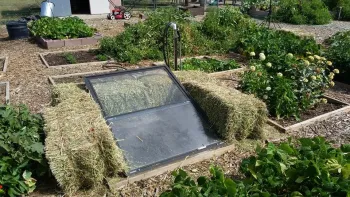
Cold frame consisting of straw bales for side and rear insulation, glass to let light and heat through to provide plants with a protected environment. Source: UC Regents - Cold frames: akin to mini-greeenhouses, cold frames use glass or polycarbonate insulated sides and a sun-penetrable top,. They extend a growing season by warming the ground earlier in the spring and protecting small plants from freezes and weather reversals.. There are plenty of commercially available ones or you can fashion your own out of a variety of materials (photo here shows how you can re-purpose an old window pane and straw bales).
- Growing domes & greenhouses: structures that can house plants year-round. They provide good protection for crops that require both heat and moisture, but need to have protection for sunny days, as internal temperatures can get *too* hot for some crops. Ventilation and fans provide air circulation as well as cooling in the summer.