
Vegetable Gardening - Handbook for Beginners
Chapter 1.2.
Raised beds are:
- Easy to maintain without stepping on loose soil reserved for plant roots
- Keeps amended soil separate from pathways and unamended soil
- Pest control is easier - snails, gophers and two-legged critters
- Crop rotation is easier
- Ownership of bed is defined in a community or school garden
- Easy access for seniors and physically challenged persons
Bed depth should be at least twelve inches, or up to 3 feet tall to provide for tomato roots. In order to access the bed from both sides, the width of a raised bed should not be more than about four feet. If you only have access from one side, make the bed no wider than three feet.
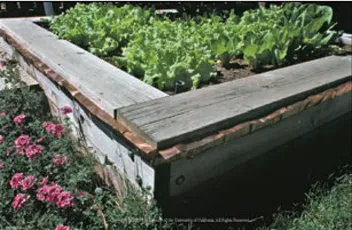
Raised beds planted intensively and well-amended with manure and compost between crops offer higher yields in less space and are easier to keep weed free. Raised beds allow for early- and later season planting because the soil warms earlier in the spring and stays warm longer in the fall. Beds can be covered easily with floating row covers to protect crops from pests, frost or summer light intensity. Build a reinforced or “boxed” raised bed using 2x12 redwood planks for the sides and ends. Fill with amended soil. If you are purchasing “soil,” be cautious because there is no legal definition of topsoil, garden soil, etc.
Be sure to look at the material before you purchase it. Do not use just any garden soil because you may be importing diseases, weeds and pests. Amend with 1/3 part each compost and manure. Clumps of compost or clods of soil must be broken up and uniformly mixed together. A permanent sprinkler system or a faucet for irrigation hoses can be attached to the outside of the raised bed.
Previous ← Chapters → Next or Return to the Table of Contents of this Handbook.