
Nitrogen Fixation in Peas
Atmospheric nitrogen (N2) is not in a usable form for most plants. For legumes like beans and peas a symbiotic relationship exists with a type of nitrogen fixing bacteria (Rhizobia spp.). The bacteria “infects” the root system obtaining essential nutrition, while providing the plant with a usable form of nitrogen -
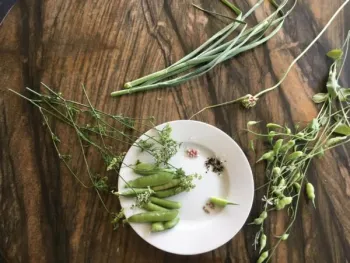
nitrates (NO3). The location of the “infection” are the nodules that form in the roots of the plants. Seeds can be purchased that are coated with the bacteria as an inoculate. The relationship is complex as the plant moves nutrients to seed production.
Types of Peas
- Garden Peas (Garden, English, Field.)--A pea that is shelled and may be dried (field beans) before eating.
- Snow Peas (Chinese pea pods)--A pea and pod eaten prior to seed maturity.
- Sugar Snap Peas--A cross between Garden and Snow Peas usually eaten with pod.
History & Botany of Peas
- Thought to be native to the Mediterranean area, this legume, Pisum sativum (L) has been a staple food for thousands of years - including Neanderthals. Well maybe.
- The garden pea is fully domesticated with no known wild populations. Three subspecies are recognized, each being a domesticated variation of the garden pea.
- Botanically the pea is a fruit. The plant itself is an annual having perfect flowers and can be self fertile. Stems are hollow. Tendrils at leaf nodes help support the plant.
- The common ornamental Sweet Pea, Lathyrus Odoratus, is poisonous causing paralysis, difficulty breathing and convulsions.
Planting and Harvesting Peas
- Select planting location with well drained soils. If poor drainage, plant on elevated rows (or mounds), or amend soil with sand and gravel. Soil pH of 5.5-7 is optimum.
- Initial planting can be 2-3 weeks before the last frost.
- If variety will benefit from trellising place trellis prior to planting.
- Plant seeds one inch deep. Consider soaking seeds overnight prior to planting.
- Plant seeds 4 inches apart. Water if soil is dry.
- Replant every 2-3 weeks to extend the season.
- When plants reach the top of trellis top off leading shoot.
- Harvest every 2-3 days for maximum production.
- In addition to the pod, you can eat the tender leaves and tendrils of pea plants either raw or sautéed.
- Peas are a cool weather plant that can tolerate short periods of freezing temperatures.
- Cut plant at base once production tapers off. Leave roots in soil.
- Rotate planting location each season.
Saving Pea Seeds
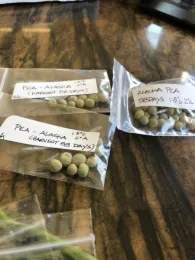
- Leave pod on the vine, until pod turns brown.
- Once pod is brown, dry and hard remove from vine.
- You should hear seeds rattle if pod shaken.
- Break open the pod and remove seeds.
- Place in paper bag label and store for up to 2 years.
Information provided by Mary Wall, Lake Tahoe Master Gardener, Summer 2025