
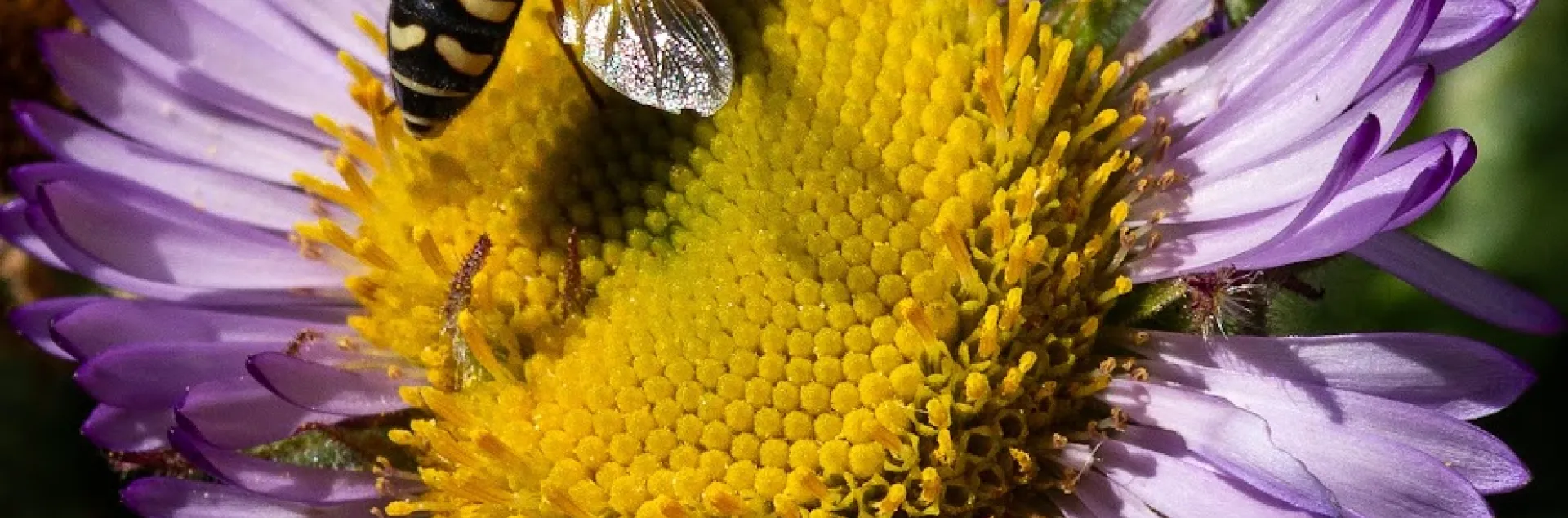
When I started gardening, my understanding was that gardeners should try to keep insects out of their gardens. But I’ve since learned that insects are an important and valuable part of the garden. Certainly many insects do damage the plants that you’re trying to grow. But many other insects are critical for crop production and plant reproduction, improve the ecosystem of your garden, and allow you to reduce the use of pesticides. You want these in your garden!
While many of the best-known plants that attract these wanted insects are large, you don’t need a large garden or a large plant to draw these “good bugs.” They can be attracted to plants in small beds and containers by intentional plant selection and sound garden management.
What are the insects you want to attract?
What I’m calling “good bugs” are pollinator insects, predator insects and parasitoidal insects. The predators and parasitoids together are frequently called natural enemies because they can help keep pest insects in check.
Pollinators
According to the USDA, worldwide three-fourths of flowering plants and just over a third of food crops need animal pollination. Without their pollinators, these plants could not create seeds or otherwise reproduce. Bees (both native and honeybees) are the most important pollinators, but other insects contribute too. In the recent past, according to Xerces Society for Invertebrate Conservation, increases in annual hive losses for domestic honeybees in the US have been dramatic; beekeepers are now losing more than 30% of their bees each year. Xerxes also estimates that for native bees, 28% of bumble bee species are in decline and that 50% of leafcutter bees and 27% of mason bee species are at risk.
Insects and other animals pollinate by feeding on the nectar and pollen of a plant. As they brush against the plant’s pollen, it sticks to their bodies. When the insect travels to another plant, where the pollen is brushed off and delivered. More information on pollinators
Predators and Parasitoidals (Beneficial Insects)
These insects help manage pest populations. Predators hunt down and eat other insects. The lady beetle (sometimes called a ladybug) is probably the best known of the insect predators. Both the young (larvae) and adults eat large quantities of soft bodied insects, notably aphids. The larvae of syrphid flies (sometimes called flower flies or hoverflies) perform this function too.
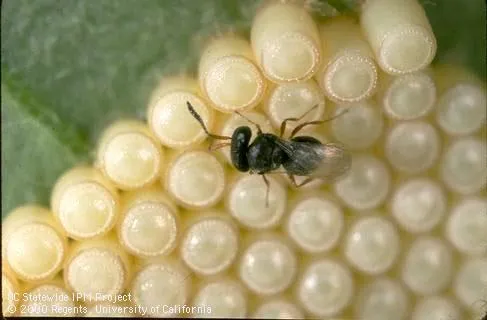
Parasitoids use other insects, frequently food crop pests, as hosts on which their larvae feed and eventually kill. These include very small wasps and tachinid flies, which lay their eggs on the larval and egg stages of their hosts. When the eggs hatch, they eat their hosts and kill them. More information on beneficial insects.
Planting for Pollinator, Predator and Parasite Insects
Planting appropriate plants is the first step in bringing these wanted insects into your garden space. Native plants support insects better than non-natives. Studies in Alameda and Berkeley found this was specifically true for bees, both honeybees and non-native bees.
Some of the best known plants for drawing pollinators and beneficial insects tend to be quite large, like manzanita, ceanothus,and coyotebrush for example. Many of us can’t squeeze these plants into our space, but there are smaller plants that also draw these helpful insects. This article focuses on plants, mostly California natives, that will be happy in a small space (all are three feet wide or less) and will support the bees and beneficial insects you’d like to see in your garden. All are relatively easy to grow and many of them are suitable for containers.
Selected Native Plants for Small Gardens
This chart summarizes 13 native California plants that meet these criteria. The detailed plant paragraphs following the chart provide more details on water needs, soil and other details.
Suitability for containers per CalScape.
About Water: Almost all of the plants in the chart are classified as low or very low water. But all these plants in seed form or if newly planted seedlings need damp soil until after their roots have grown in and they are “established.” It’s recommended that natives be planted in the fall, so the winter rains can provide much of the water they need. If the rains are late or scanty, you may need to step in and water. Also, all plants in pots require more water than plants in the ground, so check the container's soil regularly.
Baby Blue Eyes (Nemophila menziesii)
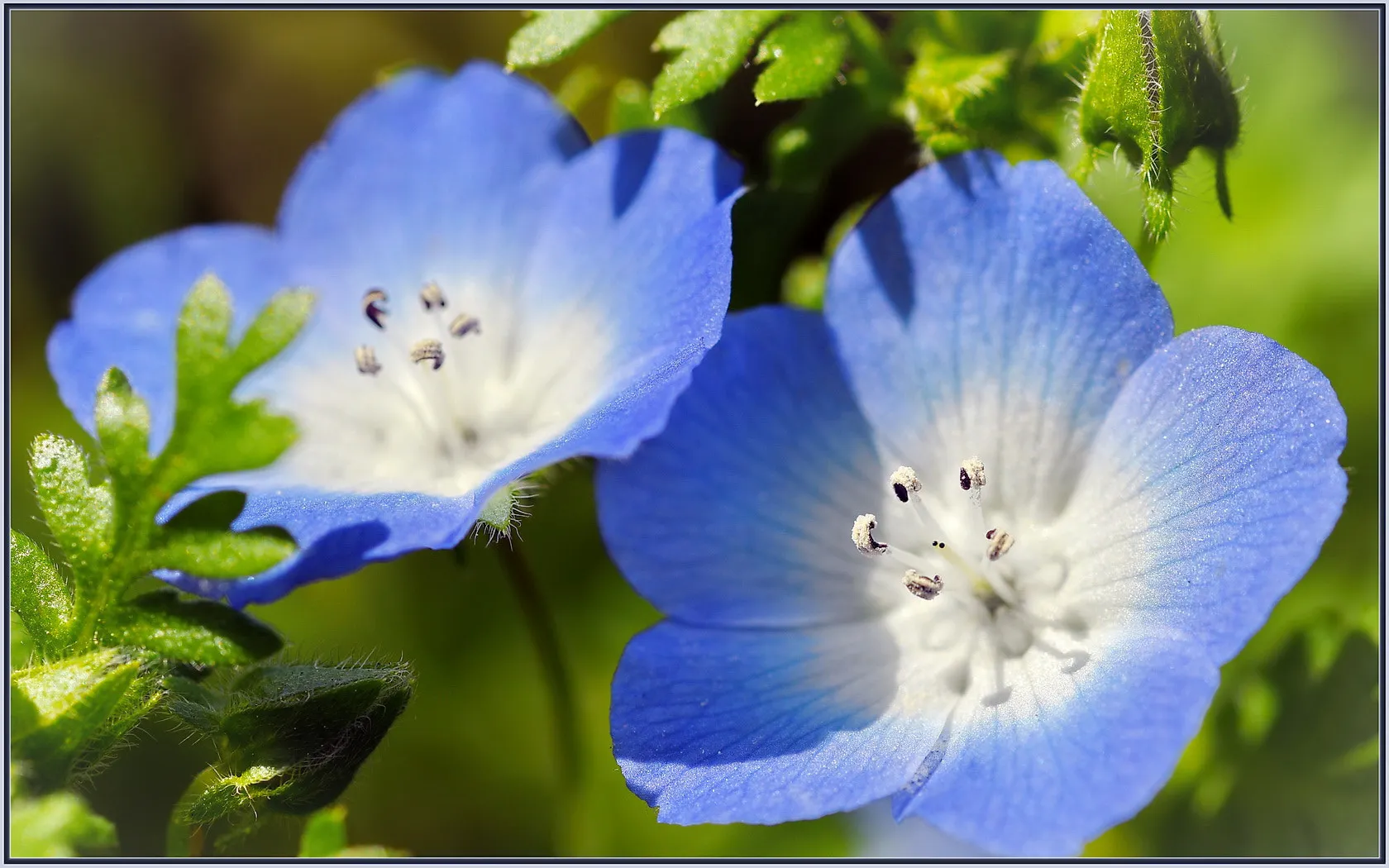

This small sweet plant is common in nature in large swaths of California and is a common garden plant. The Baby Blue Eyes plant blooms early and attracts many types of natural enemies - syrphid flies, parasitic wasps and pirate bugs, a big benefit when flowers are scarce. It is easy to grow from seed; best to plant in late fall, in sandy to loamy soil. Baby Blue Eyes is a very small plant, and so is most effective when planted in multiples. Like many of the small annuals in the table, it does well as part of a “meadow” of mixed wildflowers; the “meadow” can even be in a large pot!
Blue Field Gilia (Gilia capitata)
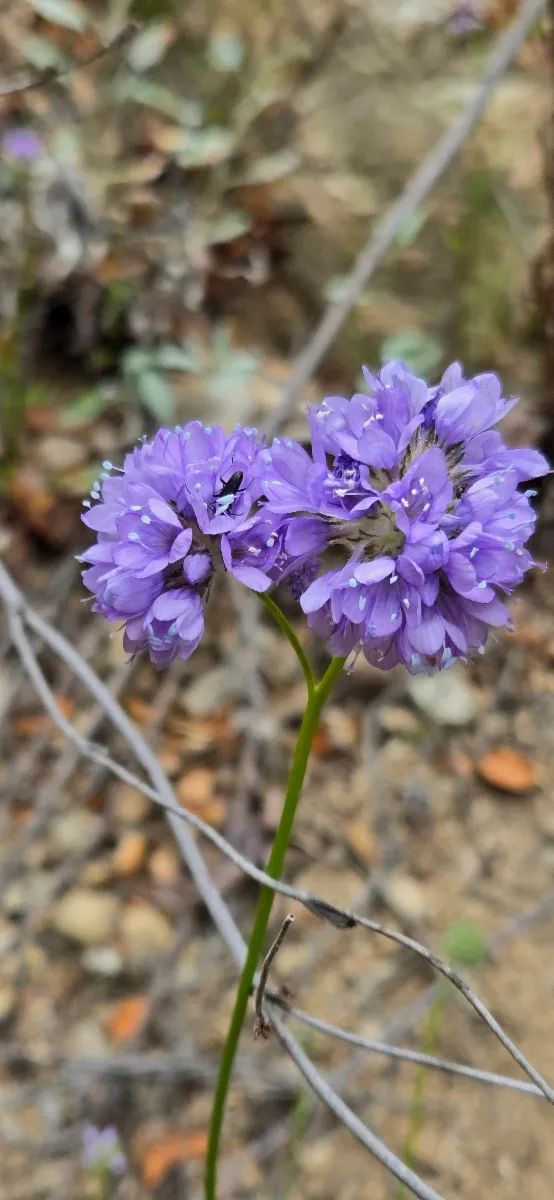
Blue Field Gilia offers a feast for bees (including green sweat bees) as well as natural enemies. While up to 3 feet tall, it is only 6 inches wide, so looks best grown in quantity and with other annuals. It is frequently grown from seed, doing best in well-drained soils and when planted with the fall rains. Each plant has one thick stem, which branches near the top; atop each of these branches is a spherical flower cluster with 50 to 100 tiny flowers. Another excellent candidate for the annual “meadow”.
California Aster (Symphyotrichum chilense)
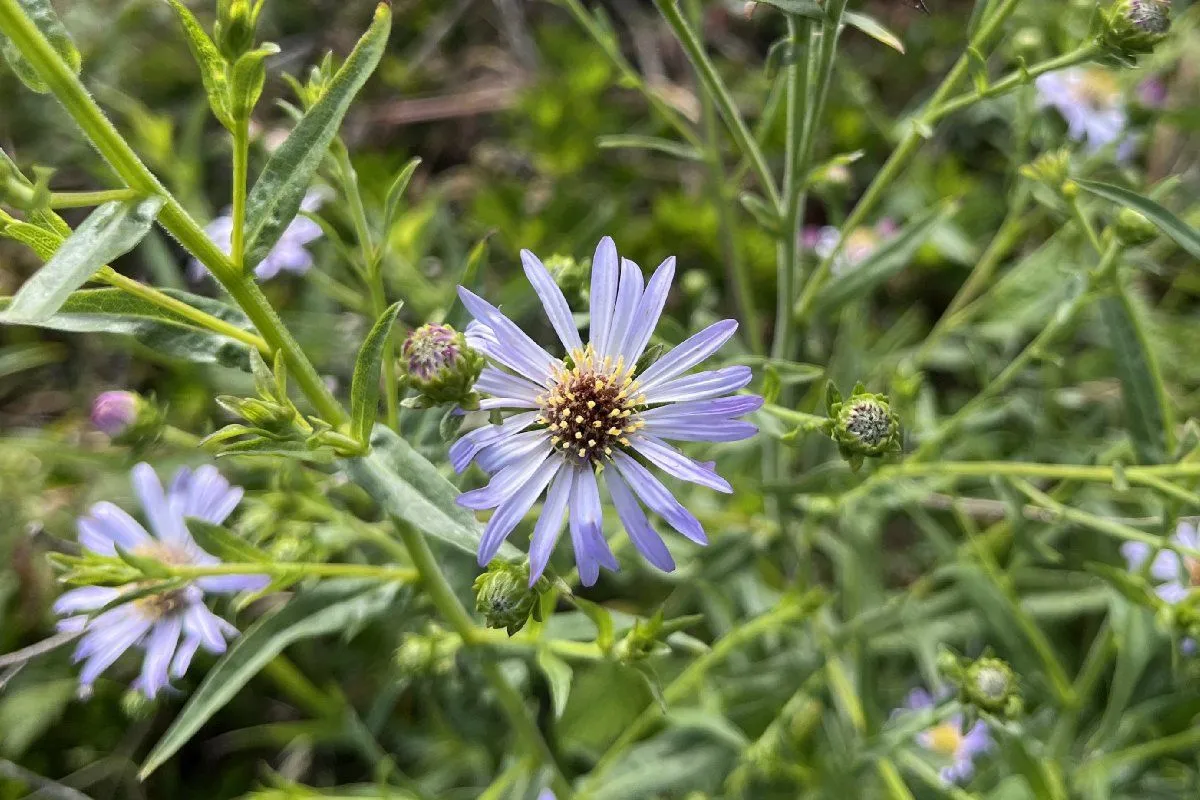
This member of the sunflower family is native to coastal California, and prefers loamy clay soil. Because it blooms from summer to fall, it provides food for bees and natural enemies after the spring flowers have faded. Snipping off the dead flowers promotes more flowering. It loses its leaves in winter, so cut this plant back to the ground in late fall or early winter. It will come back to provide its benefits in the spring. California Aster spreads by rhizomes, so if you want to keep it from spreading, it will need periodic snipping off of the rhizomes or edging.
California Fuchsia (Epilobium canum)
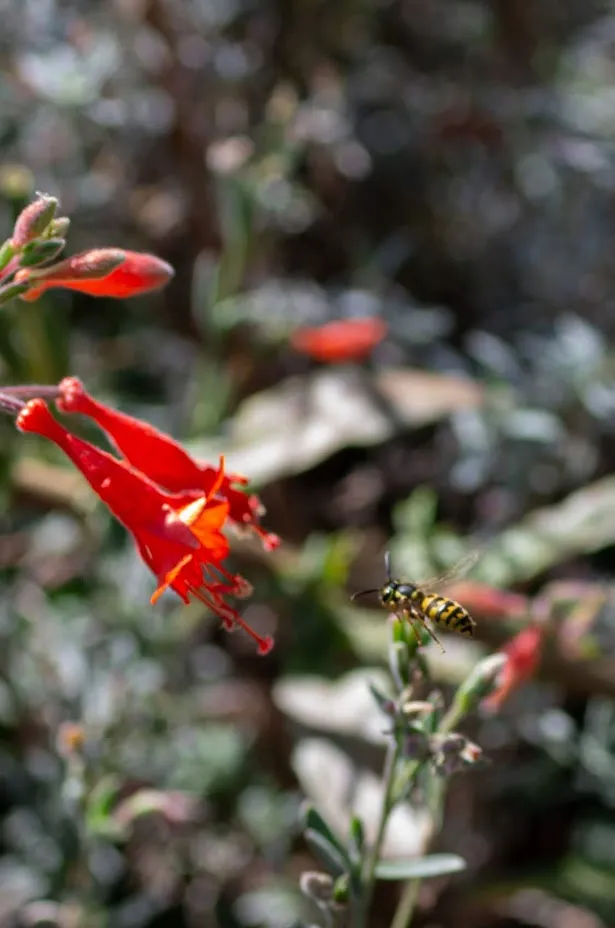
In some places, California Fuchsia is the only native plant blooming in late summer and fall; bees as well as hummingbirds flock to it. California Fuchsia is a perennial, and tolerates many types of soil. It spreads by rhizomes and can also self-seed. California Fuchsia has many cultivars, which vary by height; width can be managed by pruning. It loses its flowers and leaves in the winter; pruning it back to the ground at that point will help it come back bushy and healthy in the spring. California Fuchsia is easy to grow; it does best and will flower most profusely in full sun. In the cooler and wetter parts of California, it typically requires no supplemental water after it is established. In the drier, hotter, inland southern areas, watering once a month in the summer will keep it going.
California Goldenrod (Solidago velutina ssp. californica)
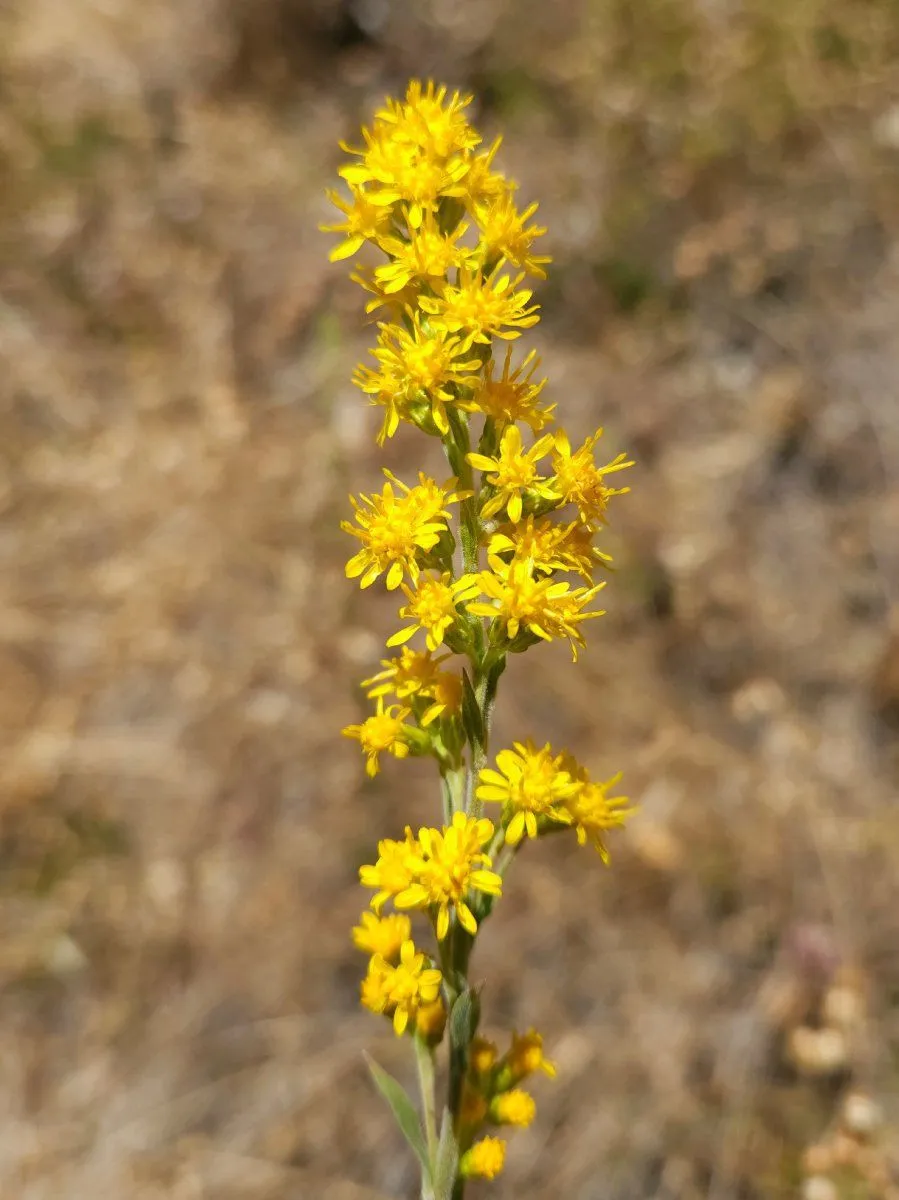
This plant is widespread in nature in much of California. California Goldenrod produces masses of yellow flowers when many other plants are dormant, in late summer and fall. Many insects are attracted to it, including bees, soldier beetles, bugs, lady beetles, and wasps. It is easy to grow in the garden and will grow in a variety of soils. California Goldenrod has a creeping rootstock, so give it some room if you can. Deadheading before the flowers shed seed and digging up runners will help keep it in check.
Because of its “goldenrod” name, it is sometimes accused of causing hay fever. Likely not true - ragweed (some species in the Ambrosia genus) is much a more likely cause of your allergic reactions. Ragweed pollen is wind-distributed; California Goldenrod has heavy sticky pollen grains, designed to be distributed by animals, not to fly in the wind.
California Poppy (Eschscholzia californica)
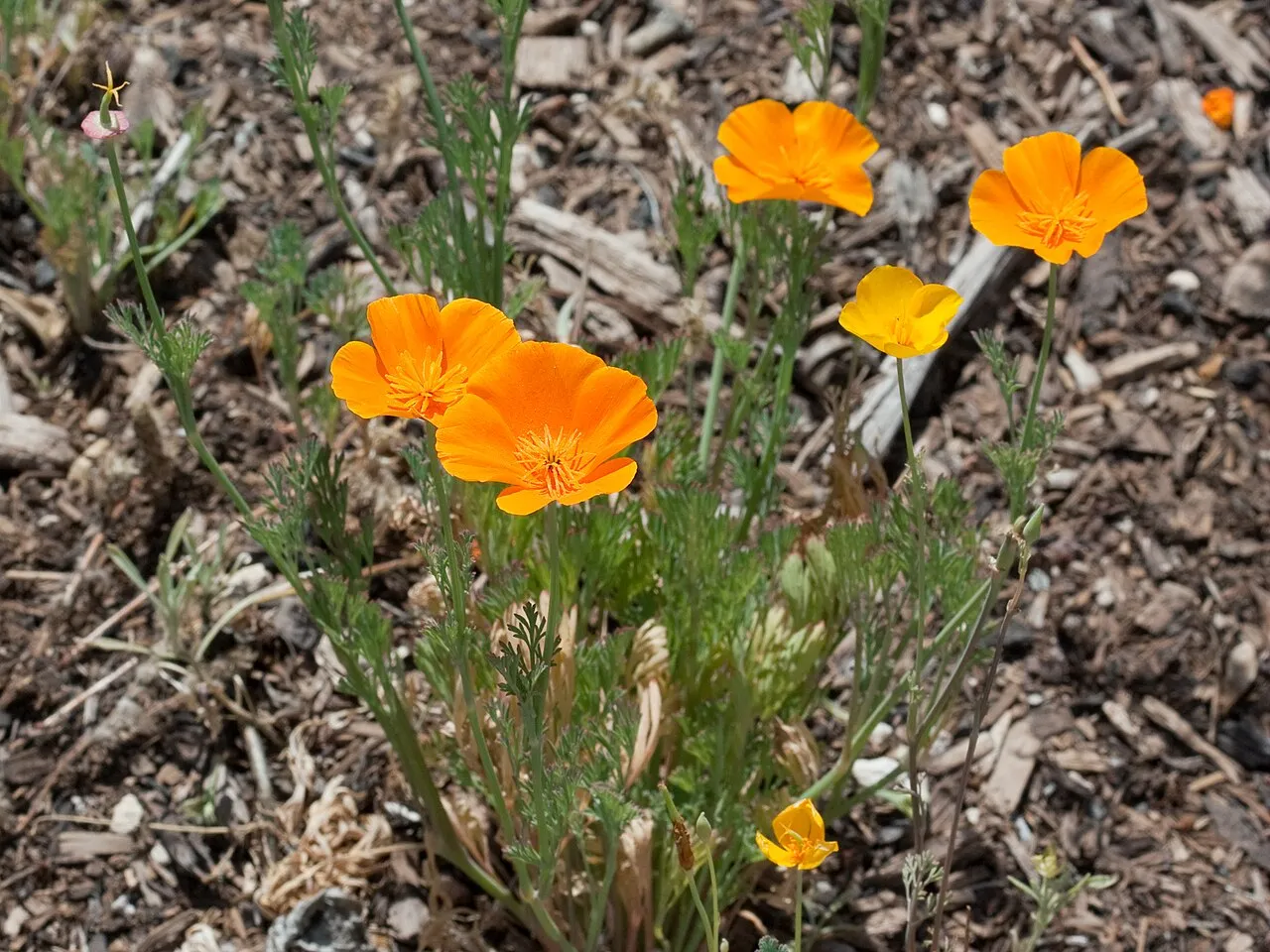

California’s state flower, these bright yellow to orange flowers heralding the Bay Area spring are not just beautiful, they support bees and beneficial insects. California Poppy prefers sandy, infertile and well-drained soil. It self-seeds and in milder climates will frequently overwinter. California Poppies reseed easily unless you cut off the flowers before the seeds pop out of their capsules; grow best in full sun but will tolerate part shade. California Poppies reach one to two foot tall and wide, but can be planted more closely. Because these poppies bloom early, they are attractive and helpful to early-emerging bees. They also attract minute pirate bugs, a beneficial predator.
Note that California Poppies are not closely related to the Oriental poppies widely cultivated in gardens. Oriental poppies are in the genus Papaver and are native to Central Asia.
Common Yarrow (Achillea millefolium)
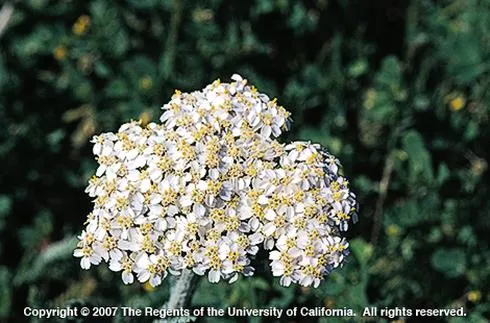
Common Yarrow is a super-star when it comes to attracting the insects that are useful to the home gardener - bees, lady beetles, syrphid flies and parasitic wasps are all attracted to its flattened flower heads. Yarrow is durable, suitable for a wide range of soil types and will grow in sun, part sun and full shade. It even grows in containers! Yarrow is a perennial, spreading quickly by rhizomes, and also reseeds. And it’s great for a small garden, only 6 to 18 inches wide.
Yarrow does come with some cautions. Common yarrow is toxic to dogs, cats and horses. In rare cases in humans, yarrow can cause severe allergic skin rashes and prolonged exposure can increase the skin’s photosensitivity.
Elegant Clarkia (Clarkia unguiculata)
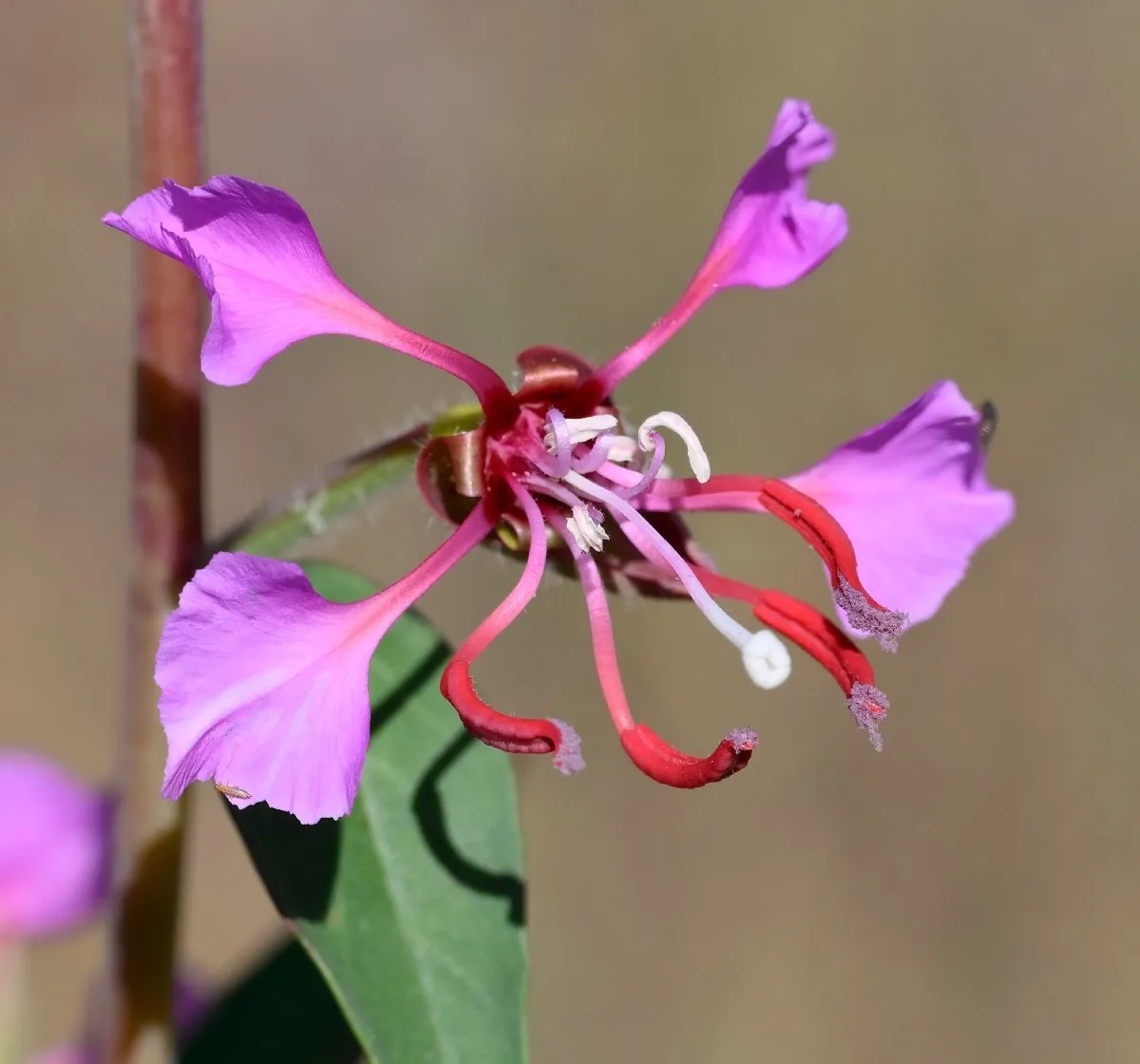
Clarkia are annual wildflowers, small in size, and generally brilliant in color. Several types are noted for attracting bees. In a 2018 UC Davis study, Elegant Clarkia stood out for its attractiveness to honeybees and native bees. Purple (Winecup) Clarkia (C. purpuria), Farewell to Spring (C. amoena) and Fort William Clarkia (C. williamsonii) all attract bees. Clarkias bloom from summer into early fall. Elegant Clarkia is easy to grow, adaptable to sun or shade, adaptable to soil type, and can be grown in containers. It’s an annual, but readily re-seeds. Another excellent candidate for planting in multiples in a meadow pot, where it will really stand out because of its bright contrasting color.
Great Valley Phacelia (Phacelia ciliata)
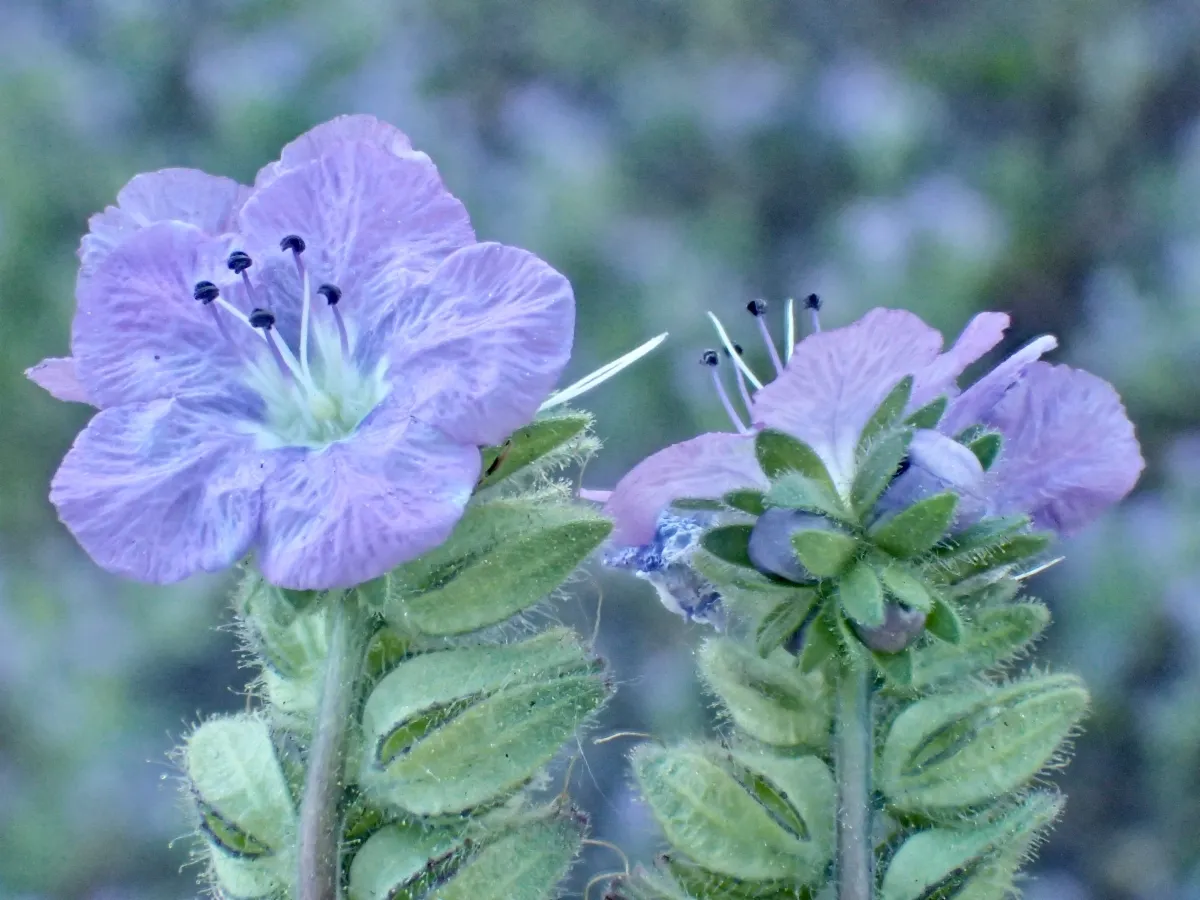
In the same Davis study, Great Valley Phacelia stood out as an early blooming flower that attracts wild bees and honeybees. It is tolerant of many different degrees of soil drainage, and reseeds well. The flowers emerge in a cluster, in which each small branch is topped with a lavender-blue bell-shaped flower. This species has not been widely adopted by the nursery industry. If you have trouble finding it, the related Lacy phacelia (P. tanacetifloria) and the California phacelia (P. californica) are more widely available and also attract bees.
Great Valley Gumweed (Grindelia camporum)
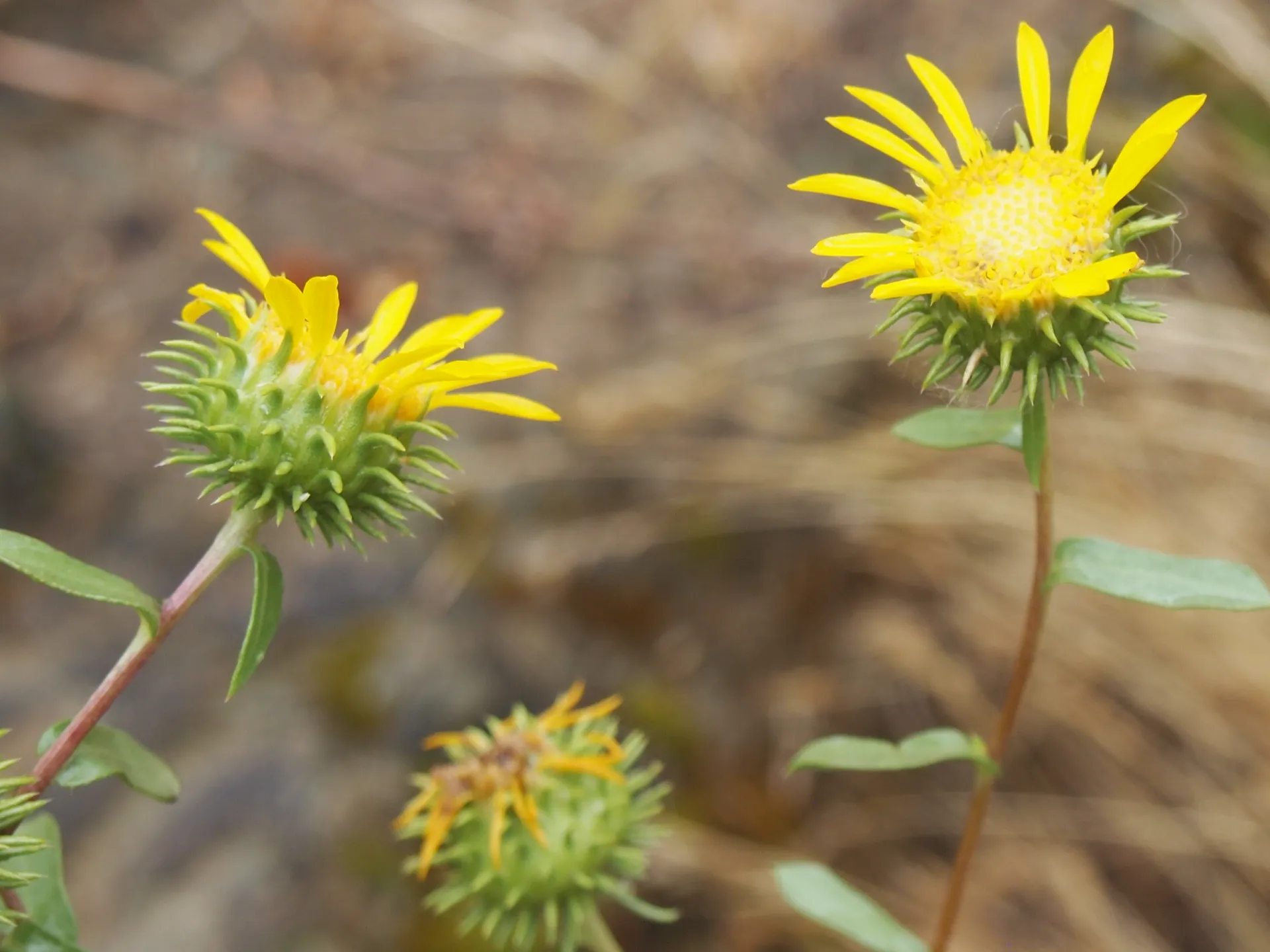
Great Valley Gumweed is a major pollinator attractor as well as an attractor of natural enemies. Distributed widely in California, it can grow to 7 feet but is generally much shorter, about 3 feet in height. This is one hardy plant, growing happily in disturbed areas like ditches and adaptable to various soils. In bloom the flower center is filled with yellow disc flowers surrounded by yellow ray flowers (the “petals”). Unlike similar flowers, immature flowers of this gumweed fill with a gummy white substance which may protect the flowers. The “gum” disappears as the flowers mature. The Great Valley Gumweed was a traditional Native American medicinal plant. If you prefer a shorter Grindelia, Hairy Gumweed (G. hirsutula) also attracts bees and natural enemies. Note that Grindelia likes to spread and may need pruning and other management to keep it in its space.
Miniature Lupine (Lupinus bicolor)
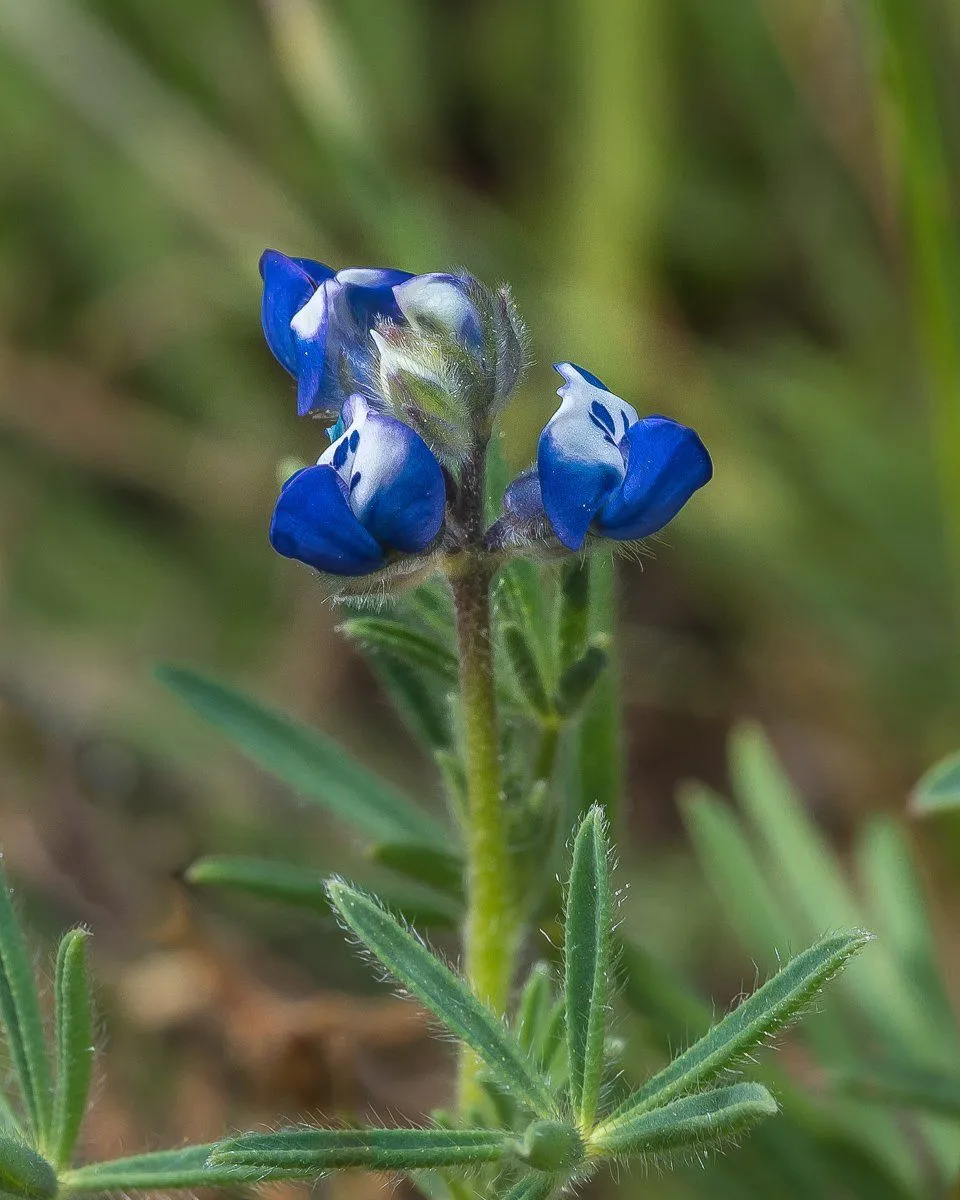
The Miniature Lupine is commonly considered the smallest of the native California lupines. It is an annual, but reseeds very effectively, so it could be with you for years. It will tolerate many different soils, but needs at least medium soil drainage. It thrives in full sun along the coast but is better in part sun inland. Because Miniature Lupine is quite small, it is most effective visually in multiples and would be another great addition to that large pot “meadow”. A note on watering: This plant is classified as needing moderate water until established so when in seed and small, will need more water than the other plants in the chart.
Note that many species of lupines are poisonous, particularly when eaten. Lupine pods and seeds commonly kill livestock who have eaten them. Lupine parts can also be toxic to people.
Red-flowered Buckwheat (Eriogonum grande var. rubescens)
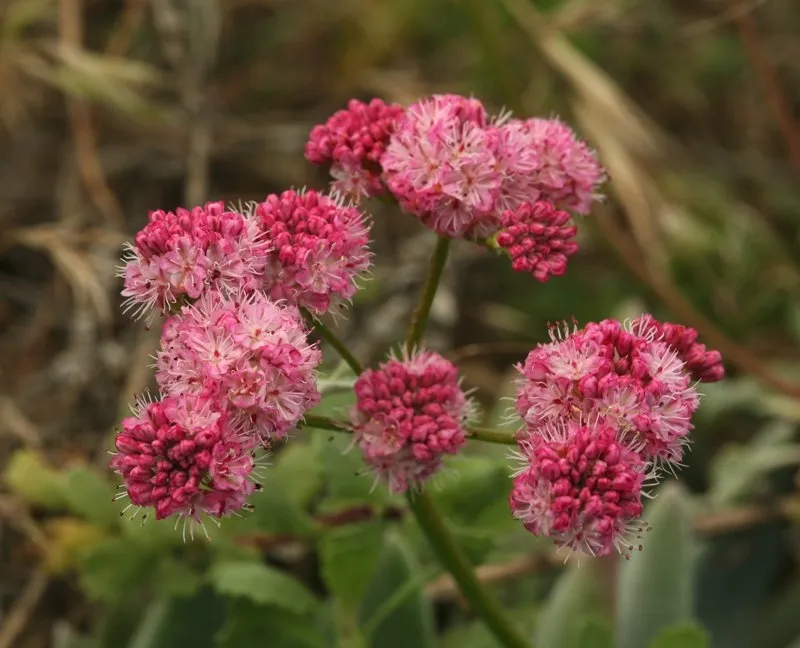
California native buckwheats are superb plants for supporting bees, parasitic wasps and tachinid flies. Red-flowered Buckwheat is more compact than many buckwheats, so it can fit into more gardens and provides a wonderful spot of rosy color. This buckwheat originated in the California Channel Islands but has become very popular in gardens throughout the state. Red-flowered Buckwheat is even suitable for containers. It prefers slowly draining soil, and is said to be tolerant of clay and alkaline soils.
Seaside Daisy (Erigeron glaucus)
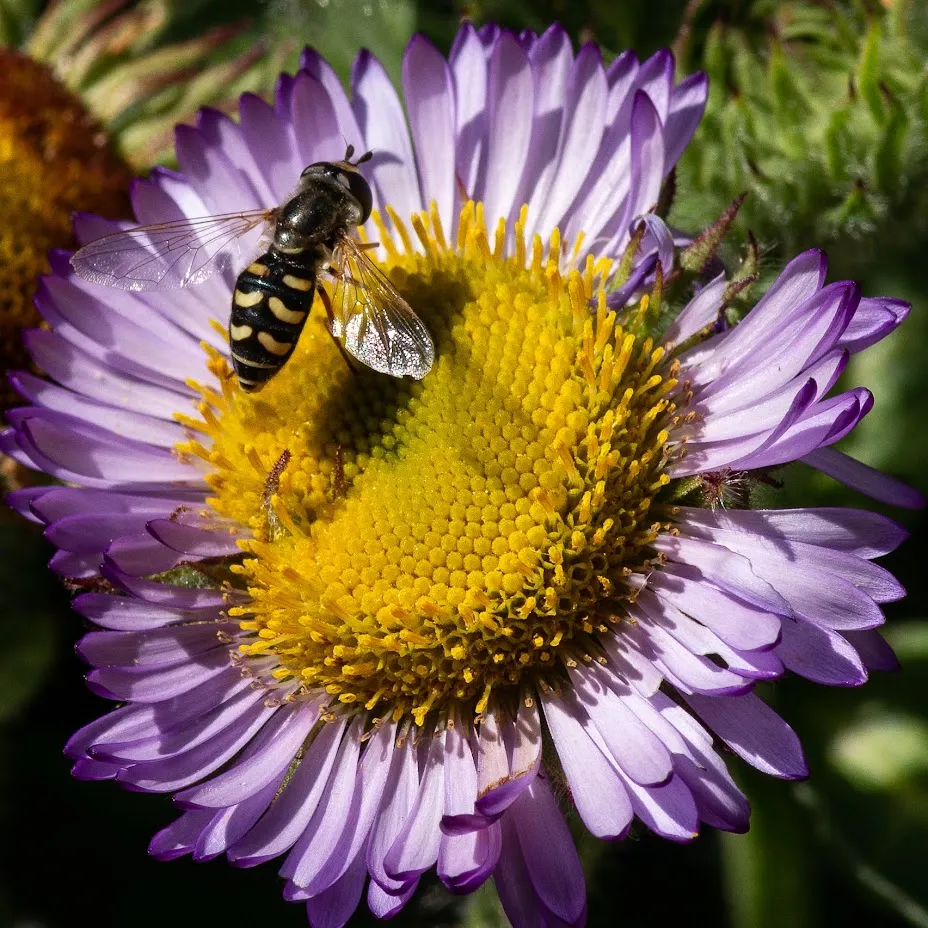
Seaside Daisy attracts bees and butterflies and provides bloom over a long period. It needs very little to no water once established in coastal areas, a bit more in the interior. It is perennial and requires little maintenance other than cutting back every 2 to 3 years in the fall. It’s fine in containers. Dead-heading the flowers after they are spent will prolong blooming.
Non-native Culinary Herbs for Attracting Bees and Natural Enemies
Growing herbs can save money and give you an ongoing supply right outside your door! It can also attract natural enemies to help out your plants. If you grow extra annuals, both you and your insects win!
Cilantro, Dill, Parsley (Annuals or Biannuals)
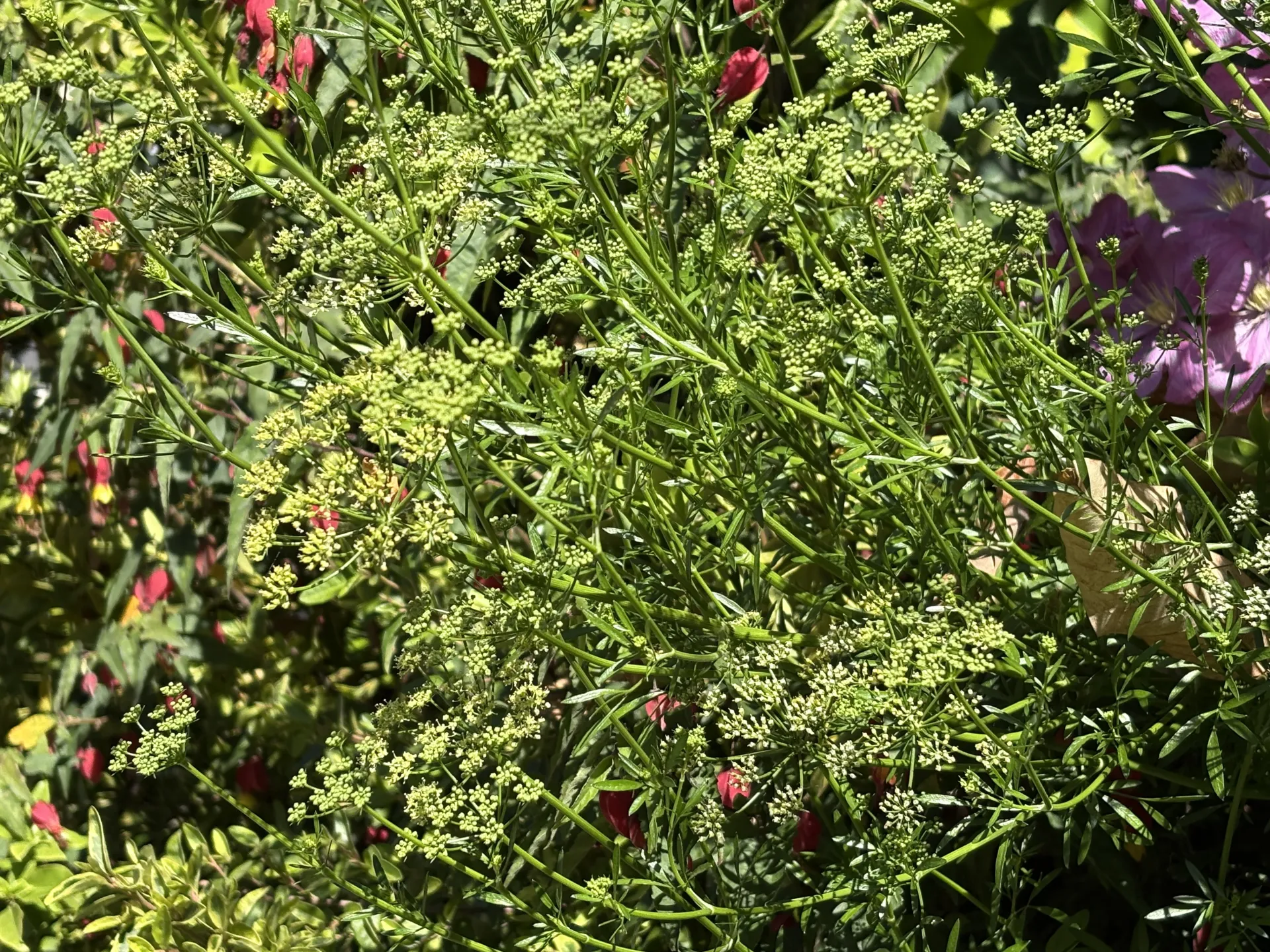
Each of these herbs fits within our size criteria of no wider than 3 feet. Dill and parsley are each 2 feet wide or less; cilantro is around a foot wide.
If you allow these herbs to go to flower (bolt), the flowers are attractive to butterflies, syrphid flies and parasitic wasps. (Note that once the plant has gone to flower, the leaves do not taste the same as before flowering.) Dill, parsley and cilantro flowers are (relatively) flat-topped and include many small flowers to feed on, both characteristics that attract small beneficial insects, as well as some bees. All these plants will grow in containers, but because they have tap roots, need larger pots. All like sun, but cilantro in particular goes to flower very quickly in warm weather. To keep harvesting cilantro leaves then, the plant will need part shade. Information on growing parsley, cilantro and dill.
Thyme (Perennial)
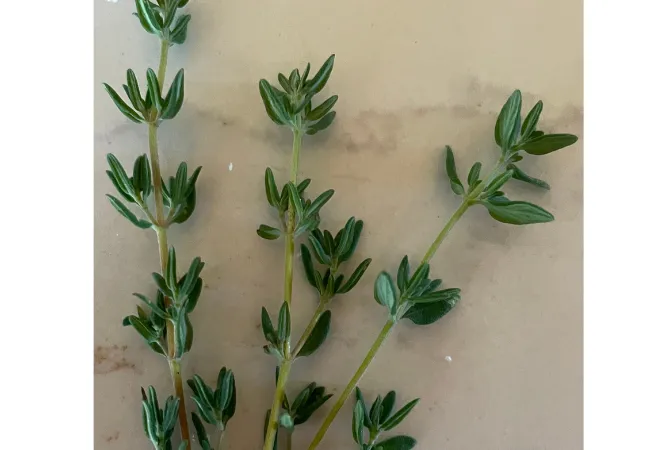
Thyme is a relatively small perennial, generally growing one to 2 feet wide. Bees are attracted to thymes generally, including the thyme species we eat. Unlike with the annuals described above, flowering is not a part of the end stage of the plant, just a part of its ongoing life. Some sources suggest that the oils that give the plant its flavor are at a peak just before flowering, so the leaves are most flavorful then. Other sources indicate that thyme leaves are still flavorful during and after flowering. After the plant has flowered or in the next spring, cut the plant back to keep the plant compact. Information on growing thyme.
Giving These Insects What they Need - Useful Garden Practices
Provide Food and Shelter
To encourage beneficial insects and pollinators to stay in your garden, diversity is key - in type of plant, sun exposure, and blooming time. Plant diversity has been shown to benefit predator insects and to decrease damage from pests that eat plants. In high-diversity mixtures (compared to monocultures), the diversity decreases the effect of insects that eat plants by both benefiting predators and reducing average herbivore food quality. Planting many different species also allows you to offer food and shelter to insects with different needs. Beneficials need food all year round, so continuous blooming is important to provide nectar and pollen. Perennial plants provide shelter all year round, even when they are not in bloom. More details.
Avoid Pesticides When Possible
Pesticides don’t discriminate based on whether you’d like to rid yourself of the insect or keep it around. Bees and beneficial insects are sensitive to many insecticides, and spraying can easily destroy their populations. Using insecticides to solve pest problems “right now” can result in pest population booms down the road, because the predators and parasites no longer remain to combat them. Knowing what the beneficials are, avoiding all pesticides if possible and using less toxic pesticides and application methods can help keep those beneficials around. More information
Bees and Beneficial Insects Can Thrive in Your Small Garden
Even if you don’t have the space for those well-known large shrubs that attract bees and beneficials, your small spaces can draw them. Seeding a wide shallow pot with small annuals is a great place to start: Miniature Lupine, Elegant Clarkia, Baby Blue Eyes and Blue Field Gilia, together with California Poppy are all good choices. Small annuals and perennials in a range of colors will appreciate your small beds and pots, contribute to the ecosystem and support the insects that help keep your garden spaces healthy.
Resources:
US Department of Agriculture on the importance of pollinators
Xerxes Society for Invertebrate Conservation Pollinator Loss - What's At Stake?
Science Advances - Importance of Plant Diversity
Sources of Plant Information:
UCCE - Sacramento County Attracting Beneficial Insects to Your Yard (2015)
UC Master Gardeners of Sonoma County Plants for Beneficial Insects (2016)
Xerces Society - Recommended Plants for Pollinators and Beneficial Insects - California Central Coast Region
CA Native Plant Society, East Bay Chapter, Alameda and Contra Costa Counties - Native Landscape Planting Guide
California Native Plant Society, Calscape
Want to learn more?
This blog post is brought to you by the Help Desk of the UC Master Gardeners of Alameda County. Subscribe to our blog!
Have a Gardening Question? We'll Help.
Visit our Help Desk page to submit your question and see additional ways you can reach us.