
Over the past century, the traditional ranching operations found in the oak savannas, grasslands, and coastal prairies of California’s Central Coast have been subdivided and converted to a vast sea of human development. It has become increasingly important to manage remaining rangelands with an eye towards preserving both ecological and economic sustainability.
 |
In recognition of the unique challenges faced by rangeland managers and livestock operators in the region, the Central Coast Rangeland Coalition formed in 2002 with a commitment to using science to promote sound rangeland stewardship.
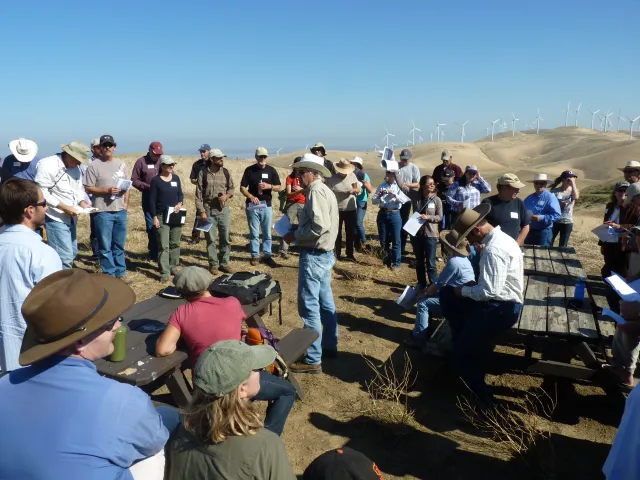
With both ecosystem and civic goals, the founders created a collaborative partnership among ranchers, conservation groups, agency personnel, researchers, students, land managers, policy makers, consultants, and others. Together, through its Spring and Fall meetings, the Coalition engages in constructive dialog to share ideas, expertise, and resources necessary for addressing conservation goals across the landscape.
The group’s primary focus is on collating and sharing information on advances in scientific research, relevant tools, and management approaches. In particular, the group strives to share information validated by research or expert opinion, and, by member agreement, does not advocate for any specific management style. Another hallmark of CCRC meetings is the use of breakout groups after each significant segment of a workshop, allowing everyone to think about and discuss their reactions and ideas about the material just presented.
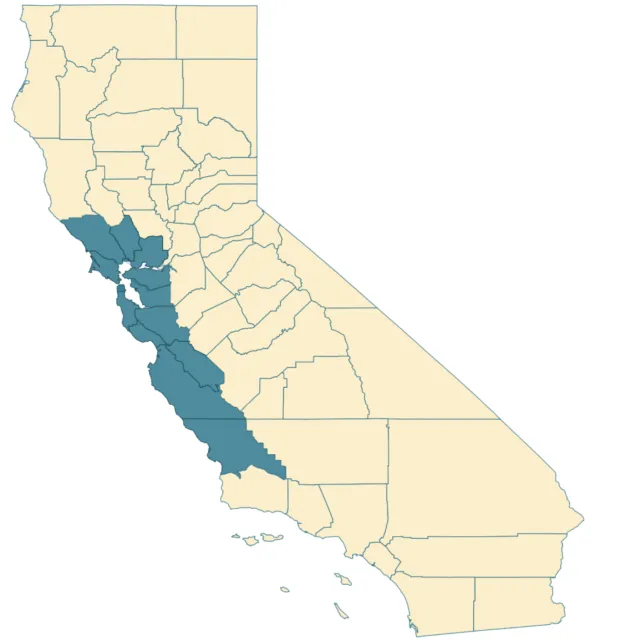 |
The CCRC’s diverse members represent roughly 200,000 acres of private rangeland, and many more thousands of acres of public rangeland across California’s Central Coast (spanning Sonoma to San Luis Obispo Counties).
Because ecological processes do not begin and end at property and jurisdictional boundaries, appropriate land management requires the kind of collaborative and holistic approaches that the CCRC highlights, and the Coalition thereby serves as a model for cooperative conservation and economic problem-solving beyond the Central Coast.