UC ANR is committed to providing an accessible and inclusive web experience for all users. If you encounter an accessibility barrier or need content in an alternative or remediated accessible format, please contact anraccessibility@ucanr.edu.
Seen any European wool carder bees lately? European wool carder bees (so named because the female collects or cards plant hairs for their nests) are on the move. The bees, about the size of honey bees, are mostly black and yellow.
What Makes a Plant Drought Tolerant? .......................1 A Different Kind of Potato...........2 Whats Wrong with My Tomato?...3 All-Star: Cape Balsam..................4 Hotline FAQ: Gophers..................4 Sustainable Lawn Care ...............5 Nevada County Demonstration Garden News ......
I am frequently asked if I can recommend a book on Soils. And yes, I can. It is Soils: An Introduction by Michael Singer and Donald Munns. The sixth edition recently came out so there's a lot of older used copies floating around on the wed for under $10.
UC Davis professors Diane Ullman and Joanna Chiu of the Department of Entomology and Nematology and UC Davis distinguished professor Walter Leal of the Department of Molecular and Cellular Biology and a former chair of the Department of Entomology, were among those honored at an awards ceremony host...
There is a lot to love about bulbs, especially ones that can naturalize in our clay soil. One I have had success with are Narcissus, especially the tazetta hybrid Paper White.' When the bulb is able to naturalize it starts producing more and more bulbs.
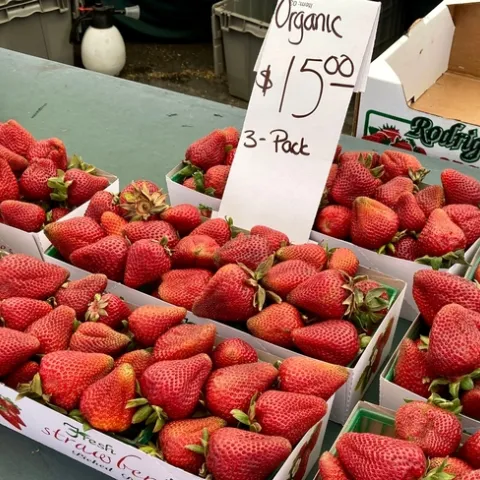
Seeing that I just handled my third call in just a week's time on a weird "lygus sort" of bug appearing in great numbers in some strawberry fields I thought it would be worth a note to share what is going on.
The bee and the butterfly. Or, Apis mellifera and Colias eurytheme. One's a beneficial insect. That would "bee" the honey bee. The other is a yellow and white butterfly, striking in appearance, but in its larval stage, it's a major pest of alfalfa.
Have you considered climate smart farming practices such as: carefully managing fertilizer amending soil with compost growing cover crops reducing tillage passes planting hedgerows restoring riparian habitat Have you already implemented some of these, or run into barriers?
I've never used a cloche, so I thought it was time to experiment with a modern cloche. If you're unfamiliar with a cloche (in French cloche means bell), it's a bell-shaped plant cover. Invented in 1623 in France,* cloches were initially made from glass.