UC ANR is committed to providing an accessible and inclusive web experience for all users. If you encounter an accessibility barrier or need content in an alternative or remediated accessible format, please contact anraccessibility@ucanr.edu.
Did you feel the buzz in 2015? The honey bees, bumble bees, sunflower bees, sweat bees...what a year it was! It's time to walk down memory lane--or stray from the garden path--and post a few bee images from 2015. It wasn't all flowers and sunshine.
No matter how many we see or how often we see them, we can't get enough of the Gulf Frits. That would be the Gulf Fritillary (Agraulis vanillae), a brightly colored orangish-reddish butterfly with silver-spangled underwings.
Is your 2016 calendar up on the wall yet? Or are you calendaring everything on your smart phone? No matter how you keep track of your "things to do," how about setting aside Saturday, Feb. 13? The University of California, Davis has scheduled its fifth annual Biodiversity Museum Day from 9 a.m.
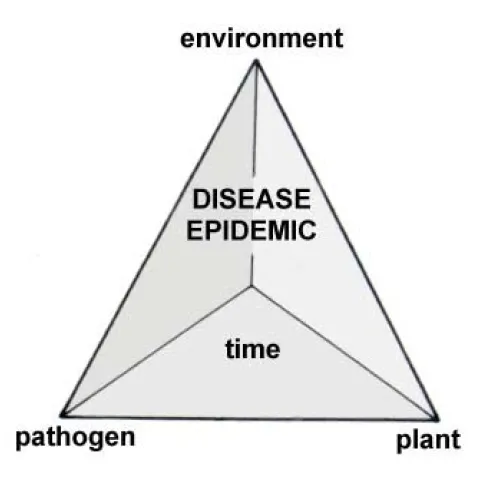
The disease pyramid describes how disease can eventually destroy a plant. It is comprised of the presents of the pathogen that causes the disease, the plant or host, the environmental conditions that sets up the pathogen to go after the plant and time.
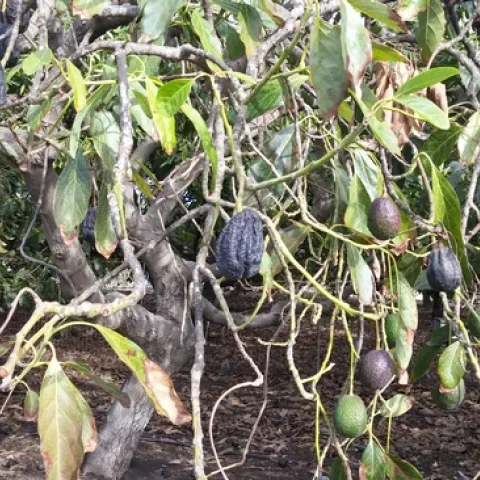
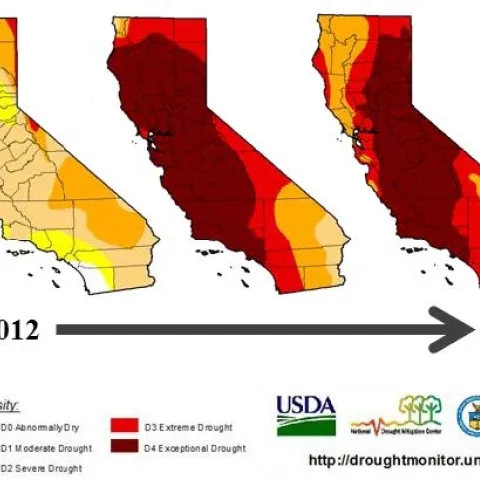
There have been so many calls recently with the same problem, thinning canopy with dieback. Thiscan be caused by several problems, but the most common this time of year is lack of good water management over the year, accentuated by lack of rain and salt damage.
It's a buggy kind of Christmas. Mussen/Garvey style. You've heard "The 12 Days of Christmas," beginning with a single "partridge in a pear tree" and ending with "12 drummers drumming.
So, hurry down the chimney, tonight! So goes a line from "Santa Baby." The songwriters (J. Javits, P. Springer and T. Springer) listed all the good presents they wanted Santa to bring: a sable, a '54 convertible (light blue, please!), a yacht, a duplex and a deed to a platinum mine.
We can help save the monarch butterflies by saving the "sacred" trees in central Mexico where most of the migrating population overwinters. Science journalist Janet Marinelli, writing in Yalee360, said it well in her Dec. 21st piece, "To Protect Monarch: a Plan to Save the Sacred Firs.
UC Davis, UC Cooperative Extension, the California Cattlemen's Association, and the California Wool Growers Association are all partnering to conduct a survey of California ranchers.