UC ANR is committed to providing an accessible and inclusive web experience for all users. If you encounter an accessibility barrier or need content in an alternative or remediated accessible format, please contact anraccessibility@ucanr.edu.
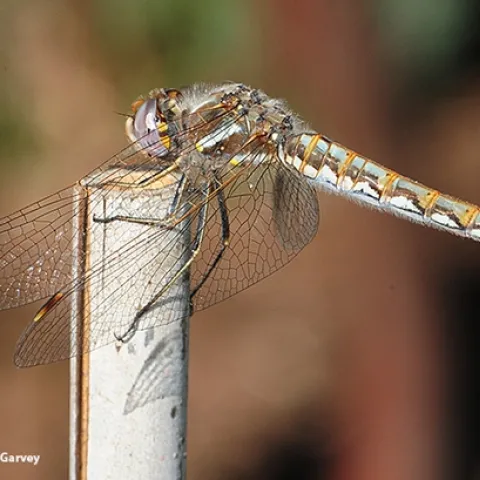
Dragonflies are fierce predators but they are predator-shy. "If it looks like a duck, swims like a duck, and quacks like a duck, then it probably is a duck," as the saying goes.
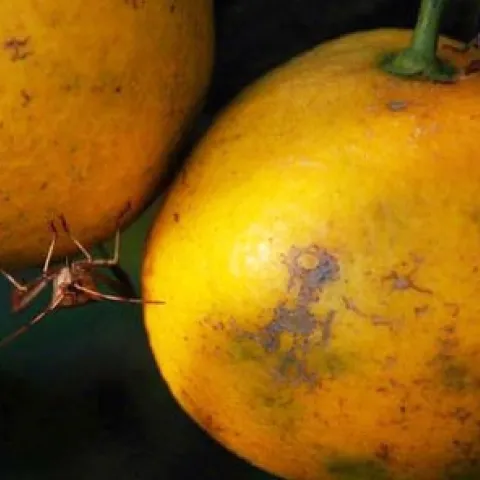
It is possible to blame a lot of things on the Drought, and here's another one. There have been reports of damaged fruit from the leaffooted bug - Leptoglossus occidentalis, although there are other species. This is a relative of stinkbugs which we have been seeing quite a number of this year.
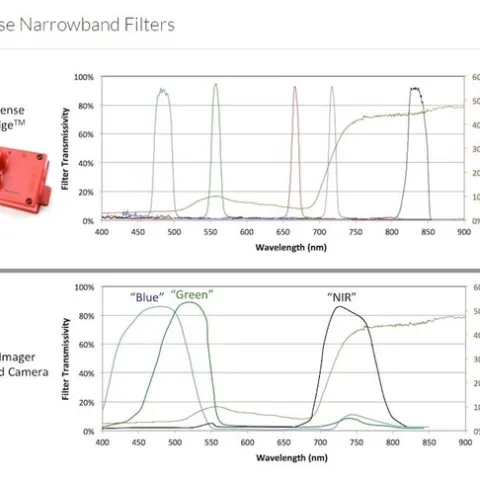
The second annual ASPRS UAS Technical Demonstration and Symposium was held in Reno, NV last week (ASPRS and UAS, being short for American Society of Photogrammetry and Remote Sensing, and Unmanned Aerial Systems).
Conventional strawberry producers should consider use of cereal cover-crops in the furrows of strawberry plantings. The advantages of this are improved water percolation, reduced soil erosion as well as weed suppression.
National 4-H Week begins. Open House and Achievement Awards at the Hansen Agricultural Research and Extension Center. Featured Club: Santa Rosa Valley.
The Ventura County 4-H office has a new home at the Hansen Agricultural Research and Extension Center in Santa Paula. It's that time of year again - Trick or Treat So Others Can Eat is set to begin.
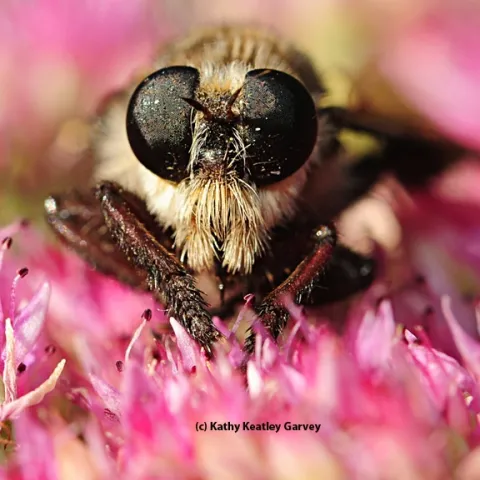
It's that time of year again. Teachers ask their students to make an insect collection. The project is considered a "rite of passage." However, often the students--whether they be middle school, high school or college level--don't know where to begin.
It's a sin to kill a mockingbird, wrote Pulitzer Prize-winning author Harper Lee in her classic novel, "To Kill a Mockingbird." "Mockingbirds don't do one thing except make music for us to enjoy," one of her characters, Miss Maudie, wisely observed.
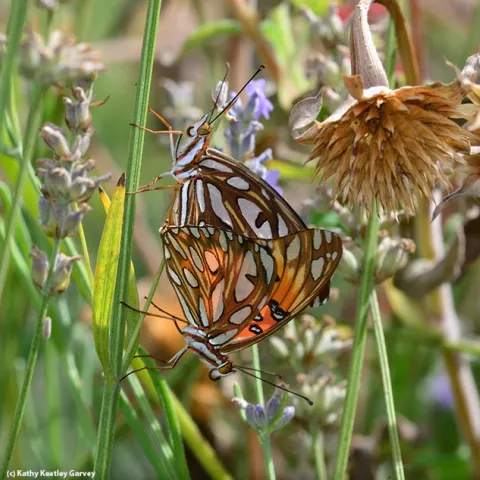
Privacy, please! You're walking by a patch of lavender and Mexican sunflower (Tithonia) and you notice that two Gulf Fritillaries (Agraulis vanillae) are doing what birds 'n' bees 'n butterflies do. Well, some folks call it "bug porn" and some call it a "two-for" images--two insects in one photo.