UC ANR is committed to providing an accessible and inclusive web experience for all users. If you encounter an accessibility barrier or need content in an alternative or remediated accessible format, please contact anraccessibility@ucanr.edu.
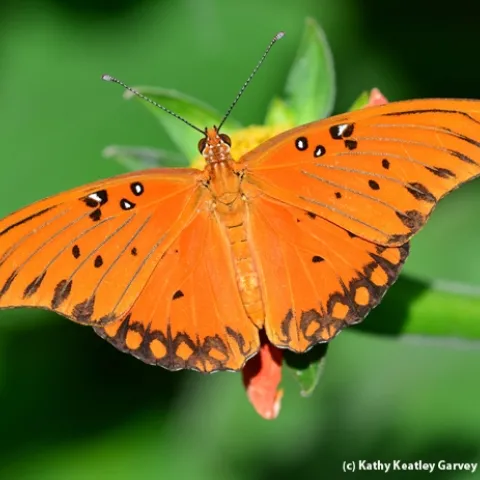
It suits them to a "T." And the "T" is for Tithonia. Many species of butterflies frequent our Tithonia, also known as Mexican sunflower. Like its name implies, it's a member of the sunflower family, Asteraceae.
IGIS is happy to announce that we now have a fantastic new tool for mobile data collection. This new tool is called Survey 123, and is among the most impressive of the new technological developments presented at the ESRI Users Conference last week in San Diego.
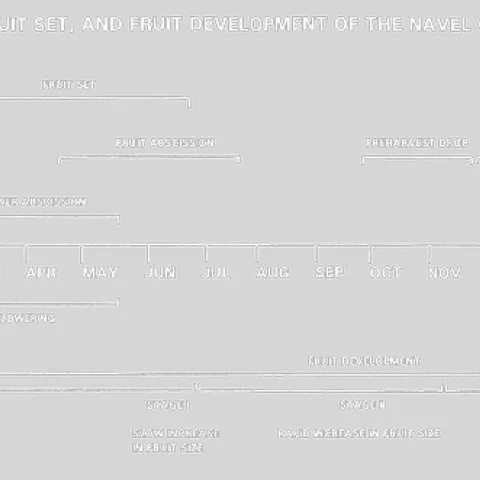
Citrus response to irrigation water deficits have demonstrated that sensitivity of yield to water stress is dependent on the phenological phase in which water stress was applied. Adequate water supply is of major importance during citrus flowering and fruit set.
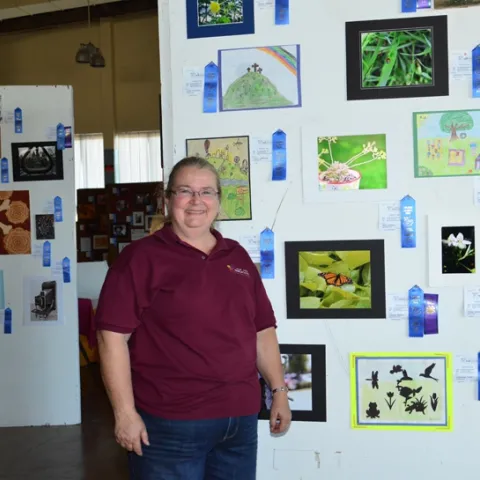
County fairs are filled with fun, food and festivities. They're meant to educate, inform and entertain. What we've always loved about the county fairs: the incredible exhibits. Especially exhibits dealing with photographs and paintings of insects.
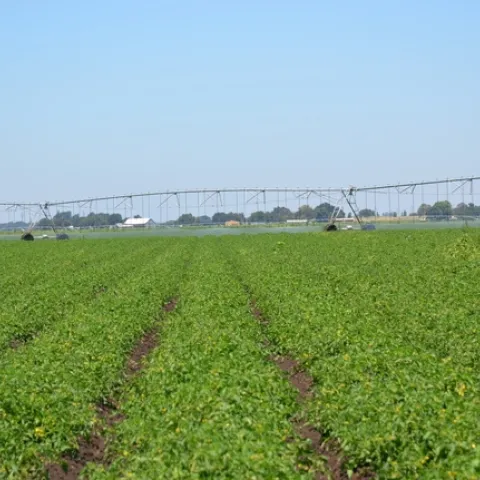
A group of CASI partners has been working with Walnut Grove, CA tomato farmer, Michael Boparai, this summer on his efforts to produce processing tomatoes using an automated, precision-application center pivot irrigation system.
Recently I was asked why an irrigation schedule could be projected for almond and citrus in the Central Valley (Almonds:http://cekern.ucanr.edu/Irrigation_Management/Almond_Drip_-_Microsprinkler_- _Flood_Weekly_ET/Citrus: http://cekern.ucanr.
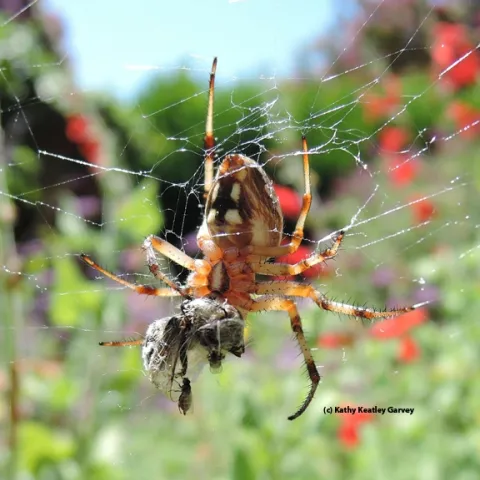
"When we try to pick out anything by itself, we find it hitched to everything else in the Universe." --John Muir, My First Summer in the Sierra Muir said it well.
Just got the following announcement today. ********************* SAVE THE DATE! November 5, 2015 For the inaugural Do No Harm workshop: Considerations of pathogens, pests, and plant disease in restoration activities at the UC Palm Desert Campus. Check out: http://donoharm.ucdavis.
The last day of the ESRI User Conference was as informative as the first. I attended several different sessions covering several different topics. The first session I attended was about smart mapping. Smart Mapping is a new set of tools that are being integrated into ArcGIS server and ArcGIS online.