UC ANR is committed to providing an accessible and inclusive web experience for all users. If you encounter an accessibility barrier or need content in an alternative or remediated accessible format, please contact anraccessibility@ucanr.edu.
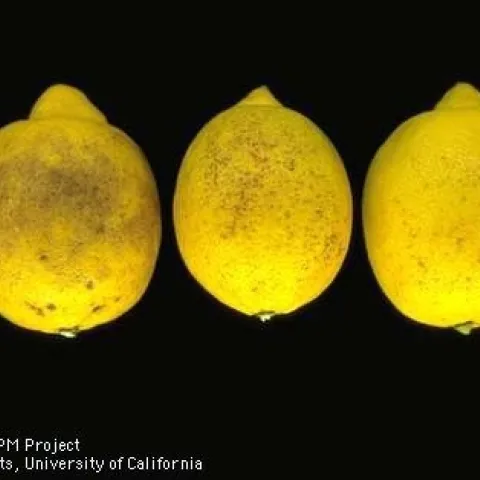
| All citrus pests | All crops | About guidelines | I have had a number of requests to identify fruit spotting on lemons. It turns out to be Septoria fungus which can show up on leaves, stems and fruit.
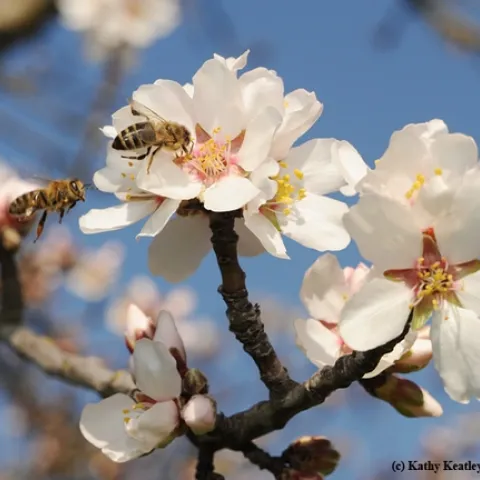
The word is "bees" and "almonds" are their world. Right this very minute there are about 1.7 million colonies of bees pollinating California almonds. Since it takes two colonies to pollinate one acre, and California doesn't have that many bees, beekeepers throughout the nation trucked in some 1.
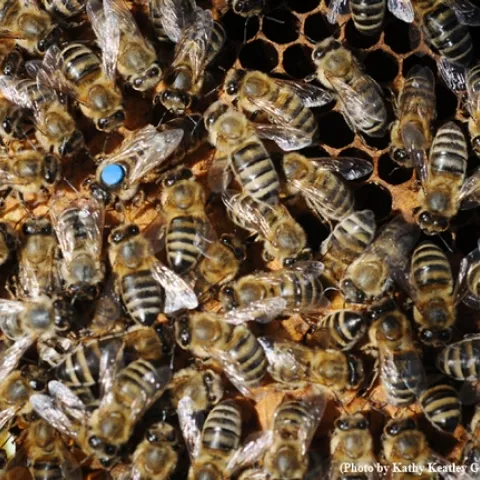
"Bee health" is on the minds of beekeepers, scientists, farmers, growers, gardeners, environmentalists and generally, everyone who cares about bees. Which should be everyone.
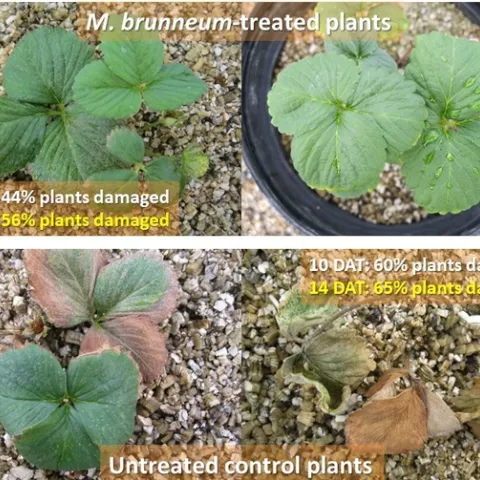
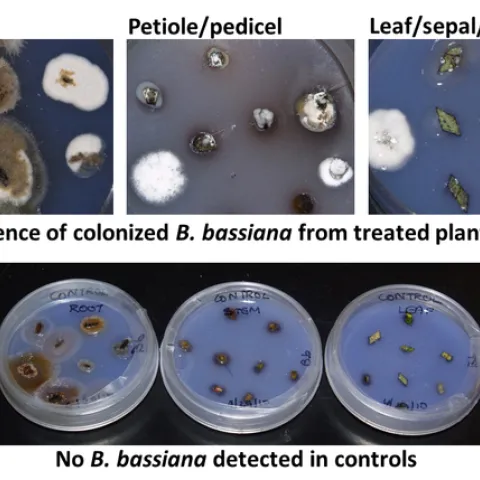
Entomopathogenic fungus Beauveria bassiana is known to endophytically colonize various plants and provide protection against arthropod pests. Information of such endophytic interaction of another entomopathogenic fungus Metarhizium brunneum (=M. anisopliae) is limited.
Mapbox introduced a new javascript library for spatial analysis called Turf.js. On the "Guides to getting started" page, it claims that Turf "helps you analyze, aggregate, and transform data in order to visualize it in new ways and answer advanced questions about it.
Quick! What do you think of when someone mentions "honey bees and mosquitoes" in the same sentence? Honey bees are the pollinators, the beneficial insects. Infected mosquitoes transmit killer diseases such as malaria and dengue; they are our most dangerous insect enemies on the planet.
Entomopathogen Beauveria bassiana is a soilborne fungus which is commercially available for pest management in organic and conventional agriculture. Although numerous studies demonstrated the interaction of B.
"Spring is the busiest time of year for honey bees, and their keepers, whether the operation is in the desert uplands of southern Arizona, the citrus groves of Florida, or the apple orchards of Washington state," writes entomologist/bee expert Stephen "Steve" Buchmann in his book, Honey Bees: Letter...