UC ANR is committed to providing an accessible and inclusive web experience for all users. If you encounter an accessibility barrier or need content in an alternative or remediated accessible format, please contact anraccessibility@ucanr.edu.
Reposted with permission from the January 2014 issue of "CWSS Research Update and News", a semiannual publication by the California Weed Science Society. Check out that issue for several other interesting research and extension articles.
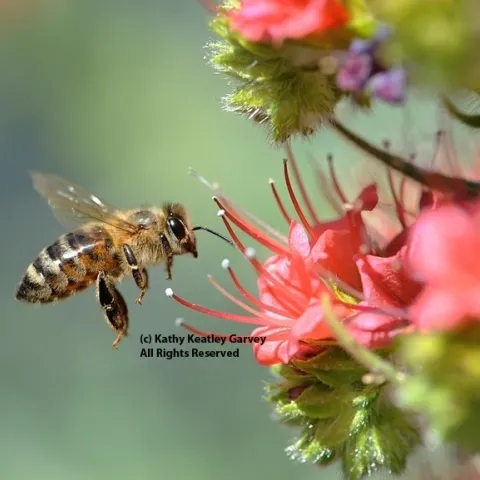
If you appreciate honey bees--particularly their pollination services--then you should thank them. Not just on National Honey Bee Day, which is Saturday, Aug. 16, but every day. This year's theme is Sustainable Gardening Begins with Honey Bees.
Just got back from an amazing workshop with the Google Earth Outreach Geo Team and 50+ geospatial educators, researchers, and lab managers! In between stealing off on the colorful google bikes and spending time wandering the amazing Google campus, we engaged each other in discussions of integrating...
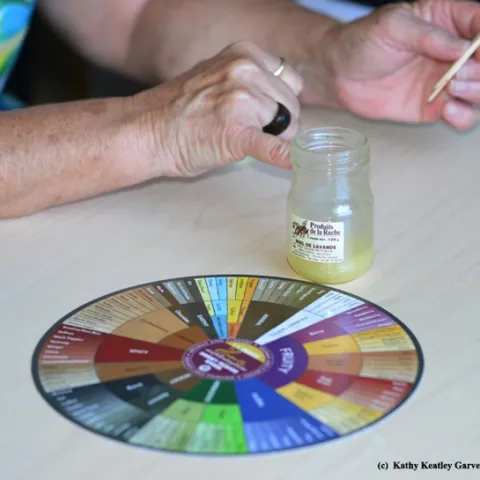
Honey connoisseur Amina Harris, director of the UC Davis Honey and Pollination Center, opens the jar of lavender honey from France and sniffs the aroma. She breathes in deeply. The "miel de lavande" produced by "apiculteur Marc Agnel" is creamed, as most lavender honeys are, she says.
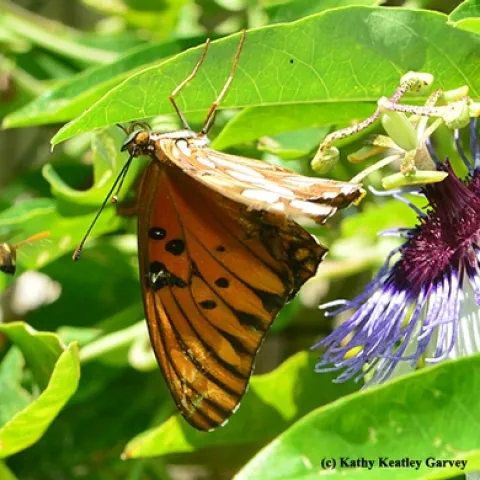
When you're trying to rear Gulf Fritillary butterflies (Agraulis vanillae), expect the expected: predators. It doesn't take long for European paper wasps (Polistes dominula) to find the butterfly's host plant, the passionflower vine (Passsiflora) and prey.
I just raked up all the leaves under the avocado and it looks so nice. PUT THEM RIGHT BACK. The avocado is shallow-rooted and really depends on the natural leaf mulch to protect its roots. In fact the roots will actually colonize the rotted leaves as if it were soil.
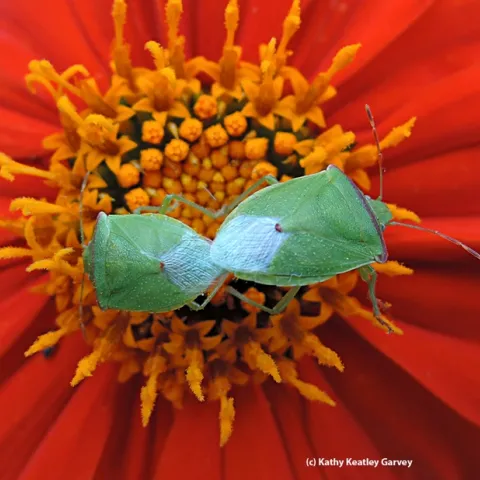
"Birds do it," sang Ella Fitzgerald. "Bees do it..." "Even educated" (insert "stink bugs") "do it." But she didn't sing that; that wasn't part of Cole Porter's lyrics. But it's true. Stink bugs do it. Unfortunately. We'd rather they NOT.
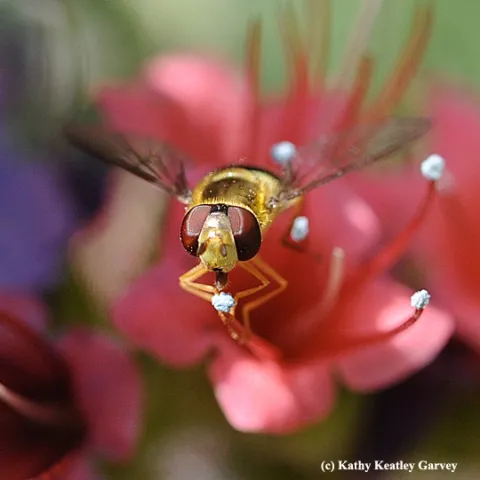
Think of them as "the good guys" and "the good girls." Insects such as lacewings, lady beetles and flower flies. We're delighted to see that the Xerces Society for Invertebrate Conservation has just published a 250-page book on "Farming with Native Beneficial Insects.