UC ANR is committed to providing an accessible and inclusive web experience for all users. If you encounter an accessibility barrier on this or need content in an alternative or remediated accessible format, please contact anraccessibility@ucanr.edu.
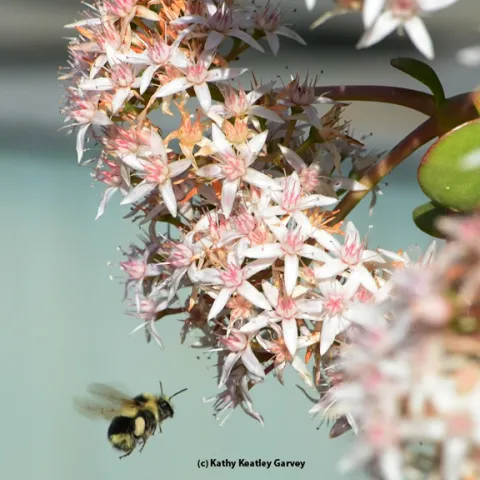
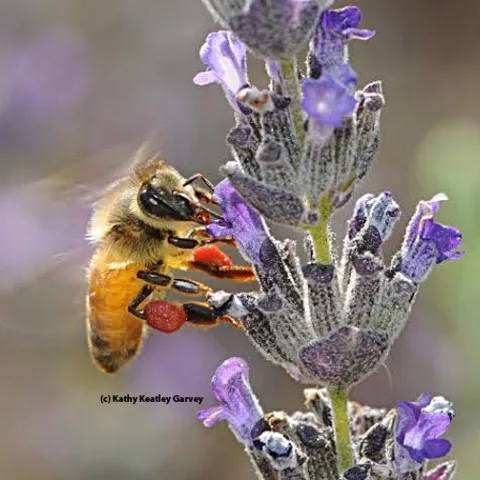
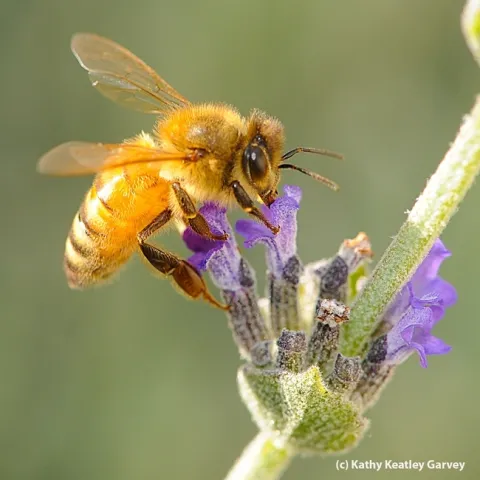
If you love to watch pollinators at work in your garden--especially the honey bees and the bumble bees--first you have to provide the plants. Promise yourself to plant pollinator plants periodically. But which ones? The UC Davis Arboretum staff gets asked that question a lot.
There have been a lot of new avocado orchards planted during the last few years. These often have been in old Valencia orchards or lemons that had poor production. In order to save money, growers have just cut the trees at ground level and replanted the avocados near the stumps.
It's a fantastic project. The UC Davis Entomology Graduate Student Association (EGSA) has decided to provide travel funds to entomology undergraduates who want to present their research at entomological associations.
In this issue... 4-H Presentations, Super Field Day, All-Star Applications due May 1st, Fashion Revue and Food Faire, State Field Day activities and much, much more.
It will be like "old home week" when professor Kelli Hoover of Pennsylvania State University presents a seminar on Tuesday, March 5 on the UC Davis campus. Hoover, who received her doctorate in entomology from UC Davis in 1997, will discuss Co-Evolution in a Host Baculovirus System from noon to 1 p.
Honey bees can't get enough of the New Zealand tea tree, which, as its name implies, is a native of New Zealand. Our favorite New Zealand tea tree is Leptospermum scoparium keatleyi. It's the tallest and rangiest variety of the Leptospermum scopariums--that's one of the reasons we like it.
Integrated pest management (IPM) is an ecosystem-based strategy that focuses on long-term prevention of pests or their damage through a combination of techniques such as biological control, habitat manipulation, modification of cultural practices, and use of resistant varieties.
In the United States, only species listed on state or federal noxious weed lists are regulated. According to our analysis, these regulatory lists poorly represent invasive plants in unmanaged (i.e., nonagricultural) systems.
[USDA 04 Feb 2013 by Ann Perry] -- Farmers can fine-tune their use of cover crops to help manage costs and maximize benefits in commercial organic production systems, according to U.S. Department of Agriculture (USDA) scientists.