LITTLE ROCK, Ark. (Legal Newsline) - The Arkansas Supreme Court affirmed Thursday a lower court's judgment awarding nearly $48 million in a case that challenged the state's cap on punitive damages.
What do flies have in common with us? For one thing, an innate immune system mechanism to detect and fight off invaders that threaten our health. Four scientists, including two Nobel Laureates, will discuss host defense at a UC Davis symposium on Wednesday, Jan. 25 in the UC Davis Conference Center.
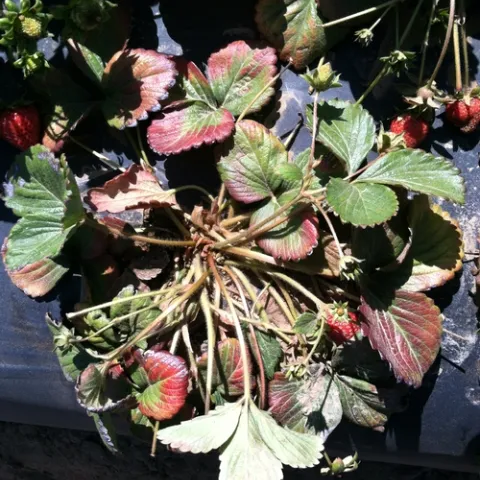
Two species of dipteran larva (maggots) were found feeding on strawberry fruits in the Santa Maria area recently. Last year, there was a minor issue of fungus gnat larvae and another species (probably Delia sp.
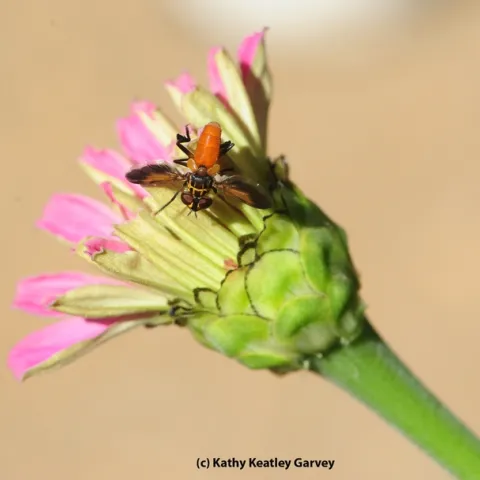
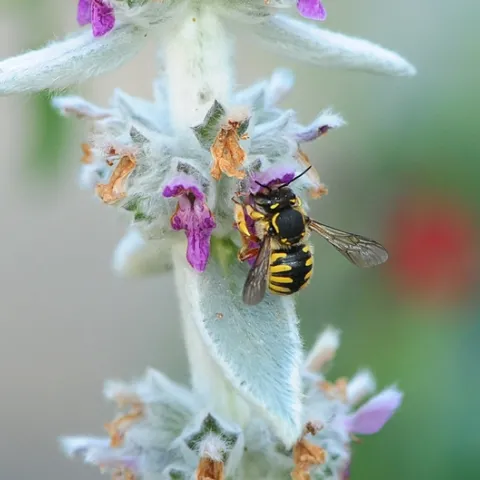
The parasitic fly (family Tachinidae) never had a chance. It went from floral visitor to spider prey to spider dinner when it made a single solitary mistake: it inadvertently fell into a sticky web.
You've probably already "put a bug" in Santa's ear, telling him what you want. But have you ever thought of putting a bug on your holiday card? If you're an entomologist, absolutely. If you like insects, probably. If you're not a bug lover, no.
Working in concert with the California Nursery industry and PlantRight, the UCCE Master Gardeners participated in an on the ground nursery survey to track the retail market for garden related invasive plants in California.
Horticulture is the cultivation of plants as ornamentals or for the production of food. When things go wrong (plants grow poorly or not at all), horticulturists sometimes turn to products that can cure, revitalize, invigorate, stimulate or enhance the growth of their plant or crop.
A neighbor asked me to identify a robust perennial that keeps coming up in his garden. It had long, tropical-looking leaves and floppy racemes with small white flowers. This was a new one for me. Turned out it was common pokeweed (Phytolacca americana), a native of eastern North America.
You like ants, right? Of course you do. But probably not as much as Andrea Lucky, the "Queen of Ants." (Or as much as Phil Ward, her major professor at UC Davis or Alex Wild, the Illinois-based biologist and insect photographer who also studied with Ward.
The temperature on the UC Davis campus stood solidly at 56 degrees this afternoon. The less-than-ideal weather didn't seem to deter several Italian honey bees from foraging in a flower bed behind the Laboratory Sciences Building on the central campus.