UC ANR is committed to providing an accessible and inclusive web experience for all users. If you encounter an accessibility barrier or need content in an alternative or remediated accessible format, please contact anraccessibility@ucanr.edu.
I just returned from the Western Aquatic Plant Management Society (WAPMS) meeting in Coeur d Alene Idaho. My interest in aquatic weeds is mostly as they relate to interfering with irrigation and frost protection ponds in Californias North Coast grape growing region.
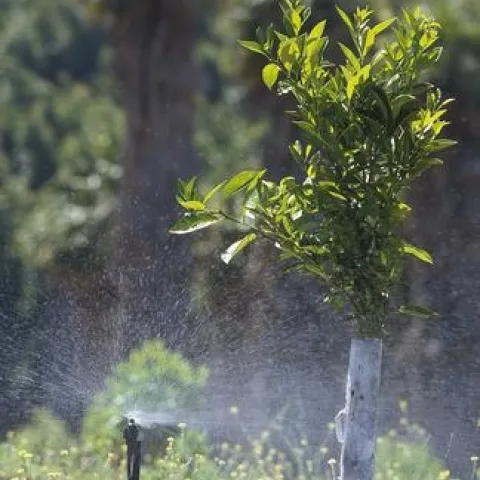
OK! Let's Strategize. There are four steps for everybody to consider, it doesn't matter if you have a backyard lawn and landscape or if you have 700 acres of avocados. 1. Maintenance: Irrigation System and Cultural Practices 2. Improve Irrigation Scheduling 3. Deficit Irrigation 4.
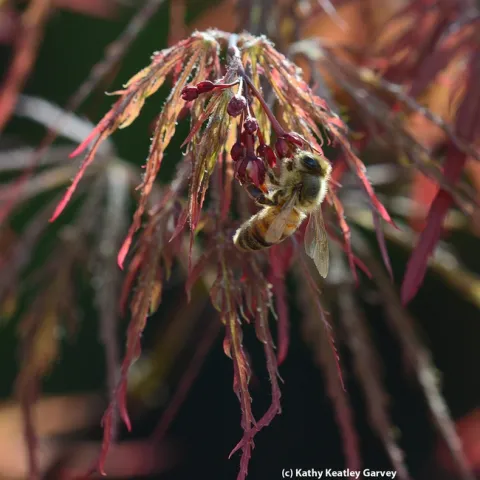
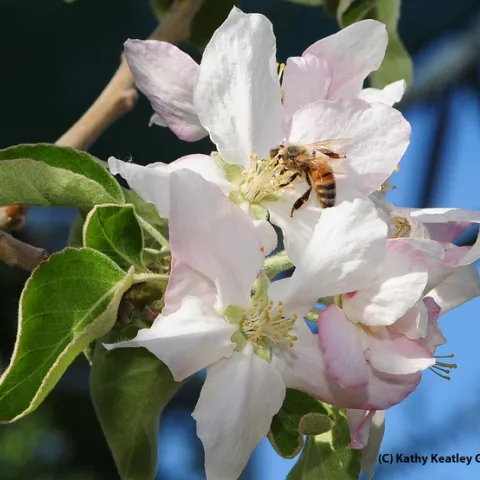
Honey bees favor assorted plants, including lavenders, mints, salvias, asters, borage, wild roses, echiums, clover, fireweed, goldenrod and phacelia, but have you ever seen them on a Japanese maple?
A repost and link today to a recent Weed Science Society of America press release entitled: "WSSA Scientists Stress the Importance of Early Response to Invasive Weeds" Click the link to go to the full article.
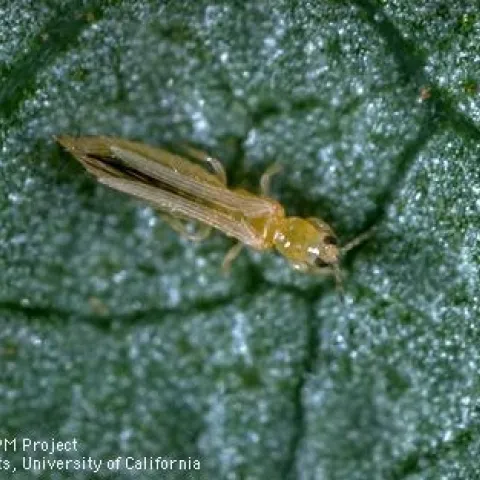
Cabbage aphids-Two live aphids in the foreground and those killed by B. bassiana in the background. (Photo by Surendra Dara) Green peach aphids (above) and western flower thrips adult (below).