Project Board Help

Test PB Collection: FTE

Test dynamic

Primary Image
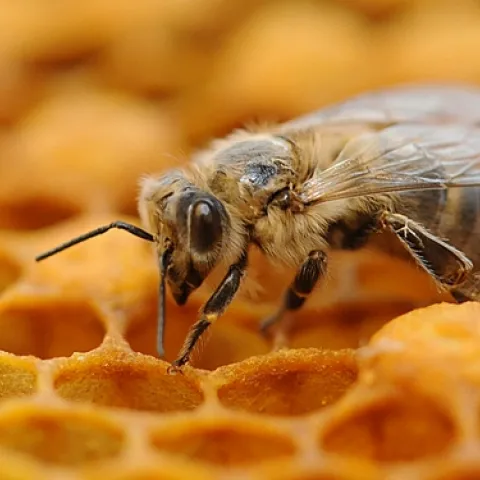
THIS NATIVE POLLINATOR is a female sweat bee (Halictus tripartitus), so nicknamed because it is attracted to sweat. (Photo by Kathy Keatley Garvey)
Bug Squad: Article

Wild Bees: Alternative Pollinators

March 24, 2009
Scientists have long been studying alternative pollinators, especially with the decline of the honey bee population and growing concerns about "How will we pollinate our crops?
View Article
Primary Image
THE VISITOR--A honey bee gathers nectar on salvia (sage), a popular plant in bee friendly gardens. (Photo by Kathy Keatley Garvey)
Bug Squad: Article

The Buzz in Berkeley

March 23, 2009
An article in today's San Francisco Chronicle indicated that the Berkeley City Council is "poised to transform all the city's parks and open spaces into habitats for bees." That's the kind of news we need more of, more often.
View Article
Primary Image
CLOSE--A beekeeper smokes a hive at Olivarez Honey Bees, Inc. in Orland. (Photo by Kathy Keatley Garvey)
Bug Squad: Article

A Matter of Perspective

March 20, 2009
To really know the honey bee industry, visit an apiary or bee yard. From a distance, you'll see a beekeeper working the hives. Look closer, and you'll see bees landing on visitors. Look even closer, and you'll see an individual bee going about her work.
View Article
Colusa County: Article

March 2008

March 20, 2009
2007 variety trials results for Colusa, Glenn and Yolo Counties.
View Article
Primary Image
SOAPBERRY BUG crawls along an almond tree branch at the Harry H. Laidlaw Jr. Honey Bee Research Facility at UC Davis. The almond tree will be part of the Haagen-Dazs Honey Bee Haven. (Photo by Kathy Keatley Garvey)
Bug Squad: Article

Biodiversity in the Honey Bee Haven

March 19, 2009
When the half-acre Hagen-Dazs Honey Bee Haven is implemented by the Harry H. Laidlaw Jr. Honey Bee Research Facility at UC Davis later this year, honey bees won't be the only ones enjoying the garden. Expect to see butterflies, bumblebees and other insects.
View Article
Primary Image
BEE BREEDER-GENETICIST Susan Cobey (center, with frame) manager of the Harry H. Laidlaw Jr. Honey Bee Research Facility teaches a class on the "Art of Queen Bee Rearing." Here she transfers bees. This photo shows an estimated 250,000 bees. (Photo by Kathy Keatley Garvey)
Bug Squad: Article

The Buzz

March 18, 2009
Let me tell you 'bout the birds and the bees And the flowers and the trees... The Birds and the Bees (music and lyrics by Herb Newman) Don't know about "the birds and the flowers and the trees," but the bees were definitely there. Lots of bees. More than 250,000.
View Article
Primary Image
A LONE FLY visits a flower in the Storer Garden, UC Davis Arboretum, on Feb. 27, 2009. The common housefly is known to transfer at least 100 different pathogens and carry about 6.6 million bacteria on its body at a single time, according to UC Davis forensic entomologist Bob Kimsey. (Photo by Kathy Keatley Garvey)
Bug Squad: Article

Flies 'n Superbugs

March 16, 2009
It wasn't too surprising. Reuters posted a story online today about flies spreading drug-resistant "superbugs" from chicken droppings.
View Article
Primary Image
UC EXTENSION APICULTURIST Eric Mussen with a bee observation hive at the 2008 Dixon May Fair. The exhibit, featuring question-and-answer-sessions with Mussen, just won second place in a Western Fairs Association competition. (Photo by Kathy Keatley Garvey)
Bug Squad: Article

A Honey of an Award

March 13, 2009
A honey bee exhibit at the 133rd annual Dixon May Fair featuring Cooperative Extension Apiculturist Eric Mussen has just won a top regional honor. The exhibit, housed appropriately in the floriculture building, won second place in the Western Fairs Associations non-competitive exhibit category.
View Article