Project Board Help

Test PB Collection: FTE

Test dynamic

Primary Image
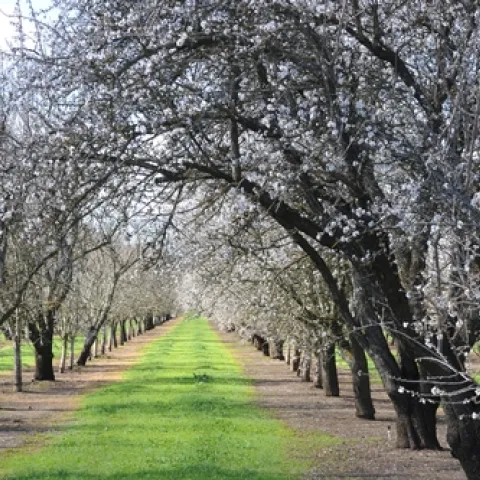
ALMOND ORCHARD in Dixon, Calif. shows rows and rows of popcornlike blossoms. (Photo by Kathy Keatley Garvey)
Bug Squad: Article

Closer, Closer, Closer

February 24, 2011
By Kathy Keatley Garvey
No thanks to the recent storms, almond orchards are encountering Nature's Extreme Makeover--from fluffy popcorn blossoms to tattered petals reminiscent of bottom-of-the-bag kernels. Still, there's something spectacular about driving down a rural road in Dixon, Calif.
View Article
Colusa County: Article

March 2011

February 24, 2011
New Date - Rabbit and Poultry Field Day, Camp Tehama Dates, WHY Conference t-shirt logo design contest, and Livestock Skill-A-Thon information...
View Article
Primary Image
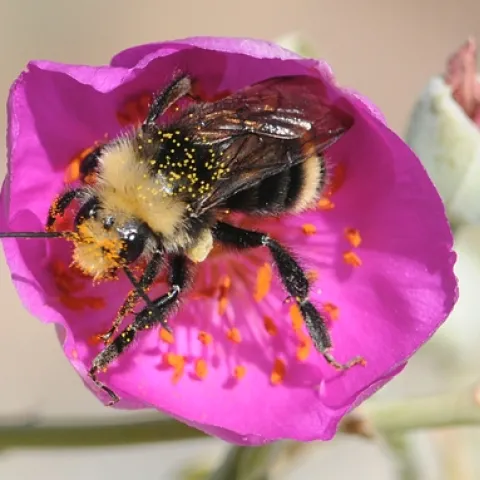
YELLOW-FACED BUMBLE BEE (Bombus vosnesenskii) gathers pollen on a rock purslane (Calandrinia grandiflora). (Photo by Kathy Keatley Garvey)
Bug Squad: Article

C'mon, Native Pollinators

February 23, 2011
By Kathy Keatley Garvey
So you want to attract native pollinators to your garden. The Xerces Society for Invertebrate Conservation, based in Portland, Ore., has just published a 380-page book, Attracting Native Pollinators, that encourages you to do just that.
View Article
Primary Image
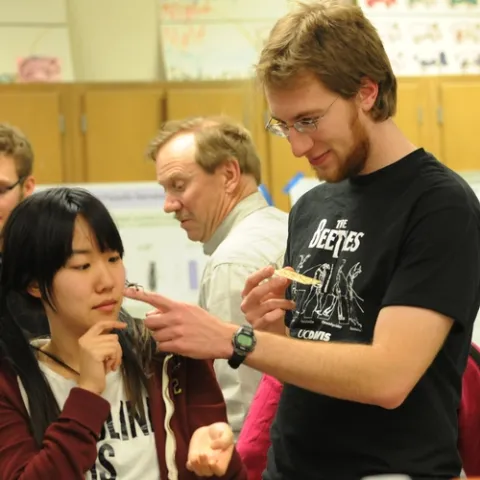
SARAH HAN, who works in the Greg Lanzaro lab at UC Davis and plans to enter entomology graduate school, meets a thorny walking stick from Borneo. With her is UC Davis entomology graduate student Matan Shelomi, who studies with major professor Lynn Kimsey, director of the Bohart Museum of Entomology. (Photo by Kathy Keatley Garvey)
Bug Squad: Article

Now That's Thorny

February 22, 2011
By Kathy Keatley Garvey
You never know who's coming to dinner...er...reception. When the UC Davis Department of Entomology hosted an open house today for prospective graduate students, the Bohart Museum of Entomology brought along some thorny walking sticks.
View Article
Primary Image
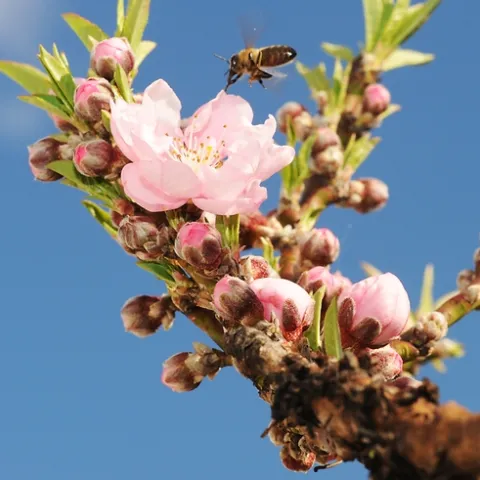
A HONEY BEE heads for the only blossom on the nectarine branch. (Photo by Kathy Keatley Garvey)
Bug Squad: Article

Nectarines Bursting Into Bloom

February 21, 2011
By Kathy Keatley Garvey
It's Presidents' Day and far too early for nectarines to burst into bloom. The unseasonable weather, however, fooled 'em. Didn't fool the honey bees.
View Article
Primary Image
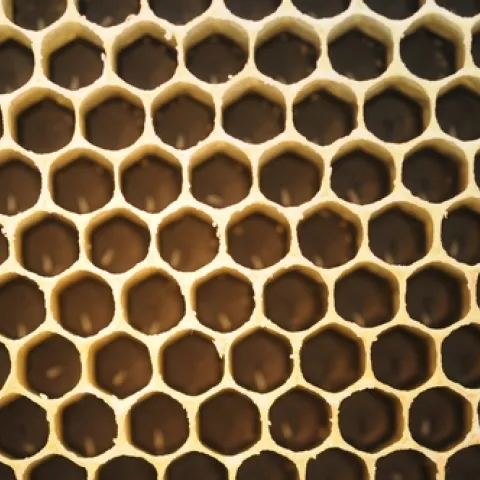
EGGS inside honey bee cells will turn into larvae, which will increase in weight 1000 times during the six days that they feed. (Photo by Kathy Keatley Garvey)
Bug Squad: Article

A Weighty Matter in the Hive

February 18, 2011
By Kathy Keatley Garvey
Think what it would be like if you increased your weight by 1000 times in six days. But that's exactly what worker bee larvae do in the honey bee colony.
View Article
Primary Image
Podosphaera aphanis-conidial chains-David Gadoury
E-Journal of Entomology and Biologicals: Article

New name for strawberry powdery mildew pathogen

February 18, 2011
Identity is an important issue whether it is for an individual, a company or even a disease causing organism. In this case, it is the plant pathogenic fungus that causes powdery mildew on strawberries and several other crops.
View Article
Primary Image
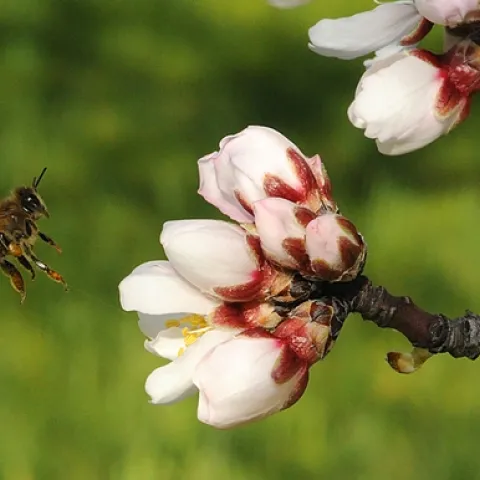
HONEY BEE heads for almond blossoms at the Harry H. Laidlaw Jr. Honey Bee Research Facility at the University of California, Davis. (Photo by Kathy Keatley Garvey)
Bug Squad: Article

Flight of the Honey Bee

February 17, 2011
By Kathy Keatley Garvey
Friday, Feb. 11 seemed like a glorious spring day. Almond trees at the Harry H. Laidlaw Jr. Honey Bee Research Facility at the University of California, Davis burst into bloom. Early birds...err...early bees...began foraging among the blossoms. A faux spring. Then the rains came.
View Article
Primary Image
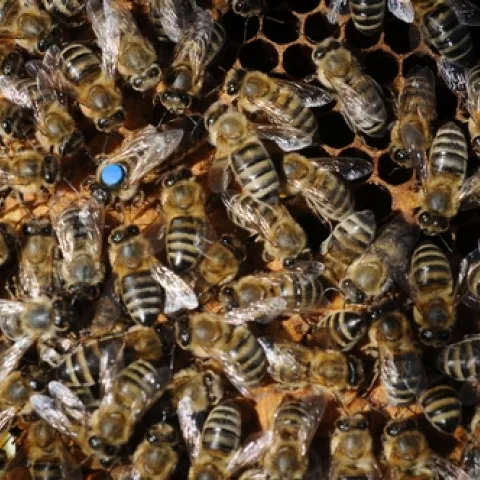
QUEEN BEE and her colony. (Photo by Kathy Keatley Garvey)
Bug Squad: Article

Bee-utiful Find

February 16, 2011
By Kathy Keatley Garvey
It was a bee-utiful find: A how-to book published in 1890 on rearing honey bees. We found the book, ABC of Bee Culture: A Cyclopedia of Everything Pertaining to the Care of the Honey Bee; Bees, Honey, Hives, Implements, Honey-Plants, Etc. by A. I.
View Article