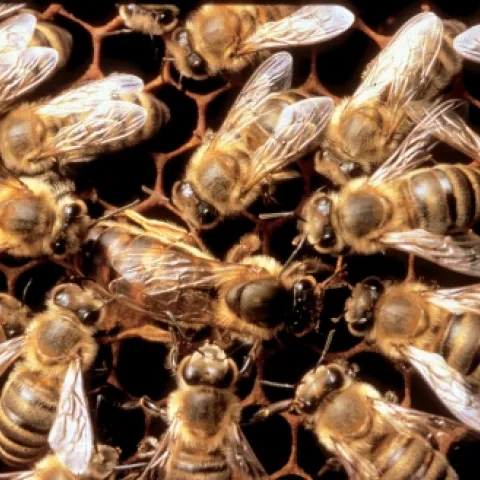
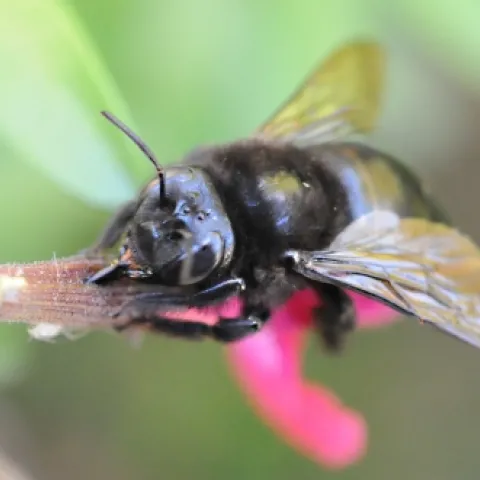
It's tough being a drone honey bee this time of year. The drones, or male bees, don't survive the winter. Bee breeder-geneticist Susan Cobey of the Harry H. Laidlaw Jr. Honey Bee Research Facility at UC Davis admits to having a soft spot for drones.
Ever wonder why the stink bug stinks? The stink bug, from the family Pentamodae, is a shield-shaped insect that tomato growers would love to ban from the face of this earth. Some 50 species exist in California. The adults are either brown or green. Most stink bugs are plant feeders.
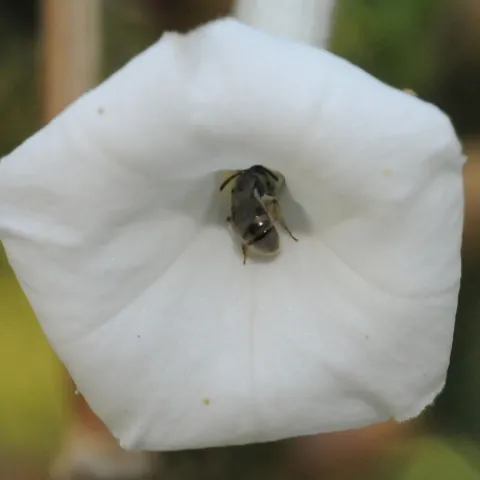
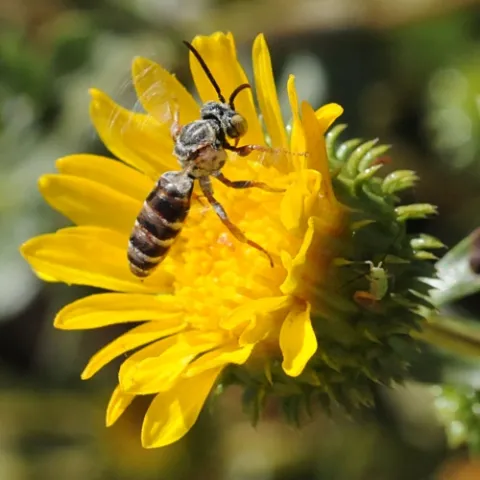
Okay, everybody in the pool! That means bees, too? It does. Sweat bees. You may have noticed the tiny bees--common name sweat bees from the family Halictidae--in your swimming pool or pollinating your flowers. They're attracted to perspiring skin (thus the name sweat bees).
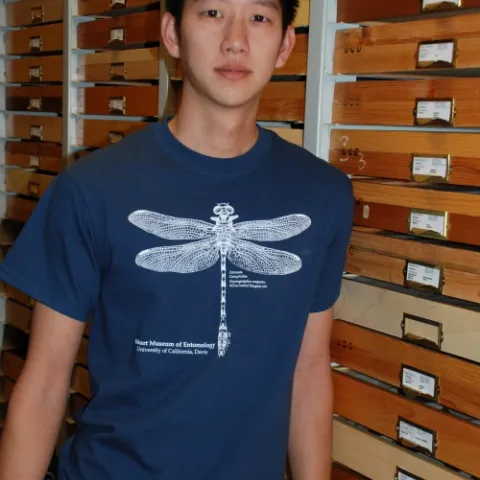
Some folks wear their heart on their sleeve. Others wear a dragonfly on their chest. As part of its public outreach education program and to showcase the world of insects, the Bohart Museum of Entomology at the University of California, Davis, has created t-shirts featuring a California dragonfly.
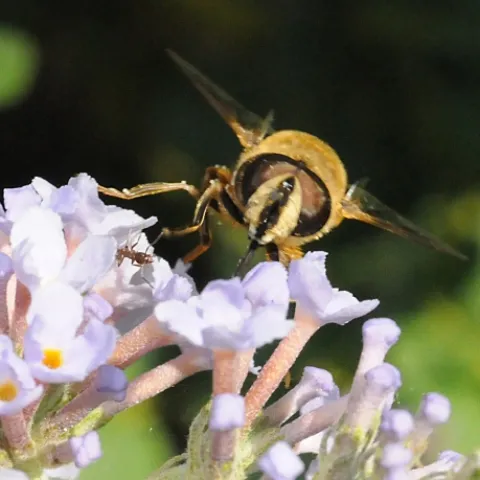
To bee or not to bee. Not to bee. The flying insect hovering over the Ruth Risdon Storer Garden, UC Davis Arboretum, looked like a honey bee or wasp at first glance. It wasn't. It was a hover fly or syphrid fly from the order Diptera (Greek for "two wings") and family Syrphidae.
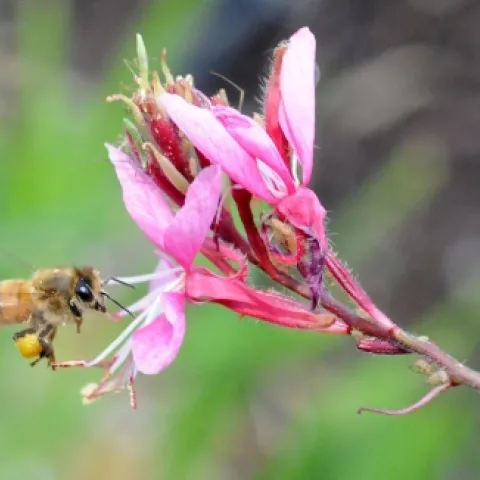
It's like going to the circus. A bee circus. When you see honey bees gather pollen from a gaura (Gaura linheimeri), it's as if they ran off and joined the circus. You'll see hire-wire (er...high-stem) acts, somersaults, pirouettes, cartwheels and cliffhangers.
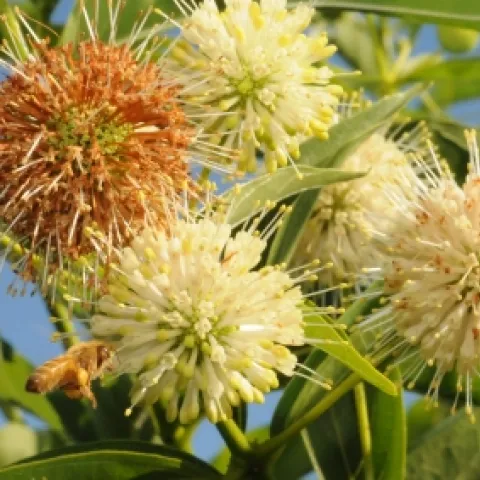
A bee on a ball. When it flowers, the button-willow (Cephalanthus occidentalis), also known as willow, buttonbush, honey ball, and button ball (oh, that's so close to butter ball!) attracts honey bees and butterflies like you wouldn't believe.
If you were a queen bee, you'd be laying about 1500 to 2000 eggs today. It's your busy season. "She's an egg-laying machine," said bee breeder-geneticist Susan Cobey of the Harry H. Laidlaw Jr. Honey Bee Research Facility at UC Davis. "And she's the mother of all the bees in the hive.
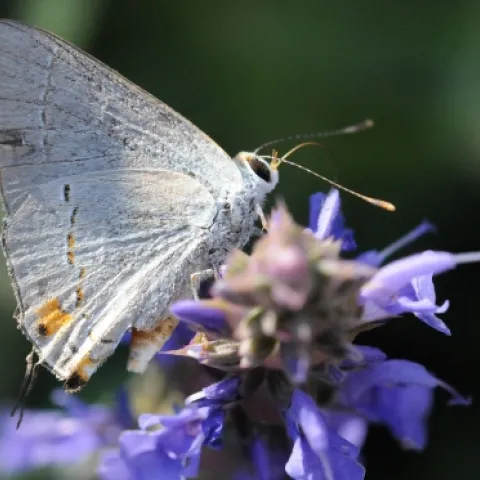
"Omigosh, what's that? A gray hairstreak?" If it's in your hair, you consult a mirror, your favorite salon, or just ignore it. If you're an entomologist or a lepidopterist, a gray hairstreak is delightful.
Build it and they will come. Baseball's Field of Dreams? No, a bee nesting block. Think "bee condo." It's an artificial nesting site made of wood and drilled with different-sized holes and depths to accommodate the diversity of native pollinators. Often the bee block is nailed to a fence post.