
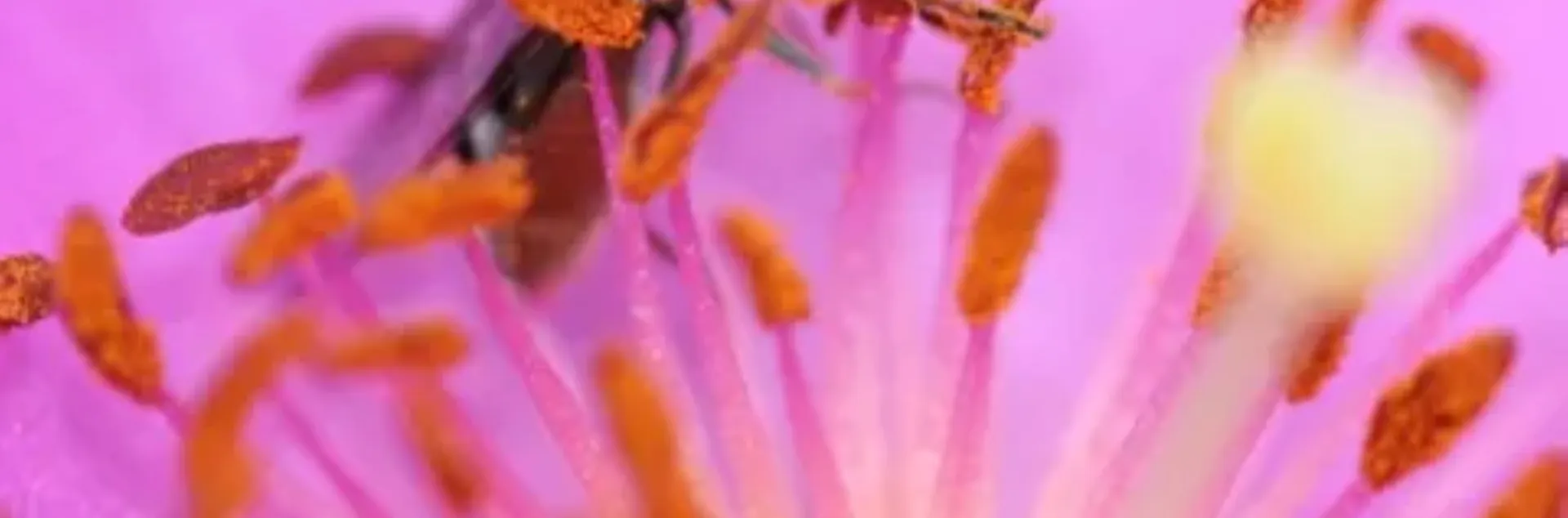
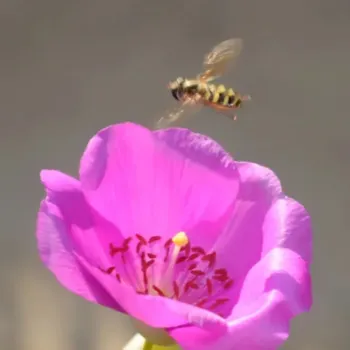
Last summer, I watched bee-looking creatures flying in zigzag formation, each with a separate flight plan. Are those bumble bees? Wasps? Nope, they were hover flies, also called syrphid flies, drone flies, and flower flies. Although they look like bees, they are a type of fly engaging in Batesian mimicry, a type of identity theft which is done to fool predators. To tell whether it’s a fly or a bee, a closer look shows hoverflies look different from bees because the fly has short, stubby antennae, two wings, not four, and no stinger.
They can be as small as 1/8 inch long and may be brightly colored with spots, stripes, or bands of yellow and brown or black. Colors vary depending on temperature during pupation, with the higher the temperature, the more yellow, while lower temperatures produce adults with darker markings.
A quick way to tell whether a hoverfly is a female or male is by its eyes. Males’ eyes are located together, and females’ eyes are set apart.
The larvae eat a variety of foods. Some devour aphids, thrips, and other leaf-hoppers. Other hoverfly larvae eat decaying plant or animal matter. The species that includes the drone fly, Eristalis tenax, lives in stagnant water in ponds, streams, or sewage as a larva but not as an adult.
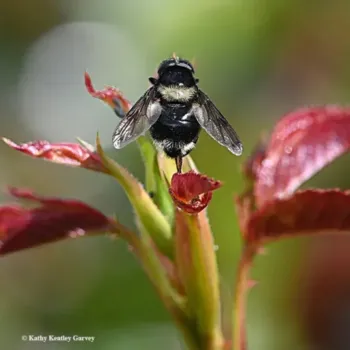
There are 6000 hoverfly species and 200 genera worldwide, including in California gardens. Most of the species are in the genus inquilines, a group that lays their eggs in bumblebee and wasp nests so their larvae can consume the host larvae. Other species lay their eggs in aphid colonies for their larvae’s food.
The hovering behavior of hoverflies is not like hummingbirds who hover while feeding, but is one way of finding a food source. For male hoverflies, it may be a territorial display while seeking females. The female uses hovering to search for a place to deposit her eggs.
Hover flies are important to a healthy garden for two reasons: they are impressive pollinators and they are pest-eating parasitoids. The adults feed on nectar and pollen, but their larvae feed on a variety of foods. Compared to honeybees, they take second place in pollinating plants. One reason is that bees are hairier and their hair collects more pollen, but hover flies have more motivation. They visit more flowers within a field, starting earlier in the day before it warms up and work in poor weather conditions.
Hover fly migration is an advantage to plants by exporting pollen and bringing a variety of pollen back into the area. Hoverflies can carry an average of pollen from many different plant species back boosting the genetic variety of crops.

A flower can be pollinated by both bees and hoverflies ensuring pollination is more complete with more seeds and improved quality of fruit.
Organic farmers have learned that an aphid on a head of lettuce is doomed if a hoverfly larvae is nearby. Lab experiments show that a single marmalade fly can devour up to 400 aphids during the time it is developing. There are predatory hoverfly larvae that farmers can buy for natural pest control.
The larvae that feed on dead wood or rotting plants have the potential of cleaning up sewage.by decomposing organic matter or filtering bacteria and fungi from freshwater
As with bees, the number of hoverflies is decreasing. Reasons for the decreasing rate and risk of extinction are much the same for both: pollution, pesticides, and degradation of habitats. Hoverflies need more than flowers for nectar and pollen; and many species also need compost heaps and rotting wood for their larvae.
Gardeners can help the larvae of these beneficial creatures by adding an old decaying log to the flower bed or planting the seeds of wildflowers that hoverflies like. Hoverflies like umbrella–shaped members of the parsley family like dill, cow parsnips, and Queen Ann’s lace.
By Sara O’Keefe, March 7 2026