
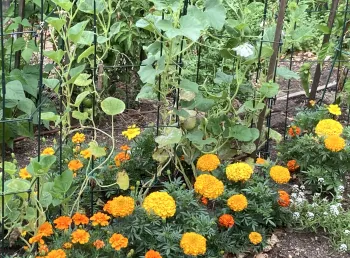
Companion planting means growing different plants close together so they can help each other. Some plants help keep bugs away. Others improve soil health, and many attract beneficial insects such as bees and butterflies. When plants work together, the entire garden thrives. Companion planting is not simply about putting two plants side by side. It is about creating a healthy, earth-friendly garden where plants, insects, and soil all work together as a living system.
The most famous example of companion planting is the Three Sisters Garden used by the native American people of Central and North America. Archeological records show the Iroquois using raised mounds rather than rows and interplanting, dating to 1000 AD. Corn, beans, and squash were planted together. The corn grows tall as a trellis and supports the beans. The beans add nitrogen to feed the soil. The squash spreads along the ground, helping keep weeds away and conserve water. Together, these plants help each other grow and provide a healthy combination of food. This method of planting is called Milpa Garden and may be the foundation of what we call agriculture.
Many gardeners use companion planting to reduce pests without using chemicals. Gardeners once believed that strong-smelling plants repelled insects. Plants like marigolds, peppermint, sage, and thyme were planted for their scent. Scientists now know that these plants do not chase bugs away. Instead, they help by hiding the smell of the main host plant, making it harder for pests to find it.
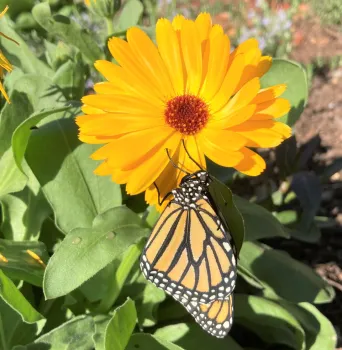
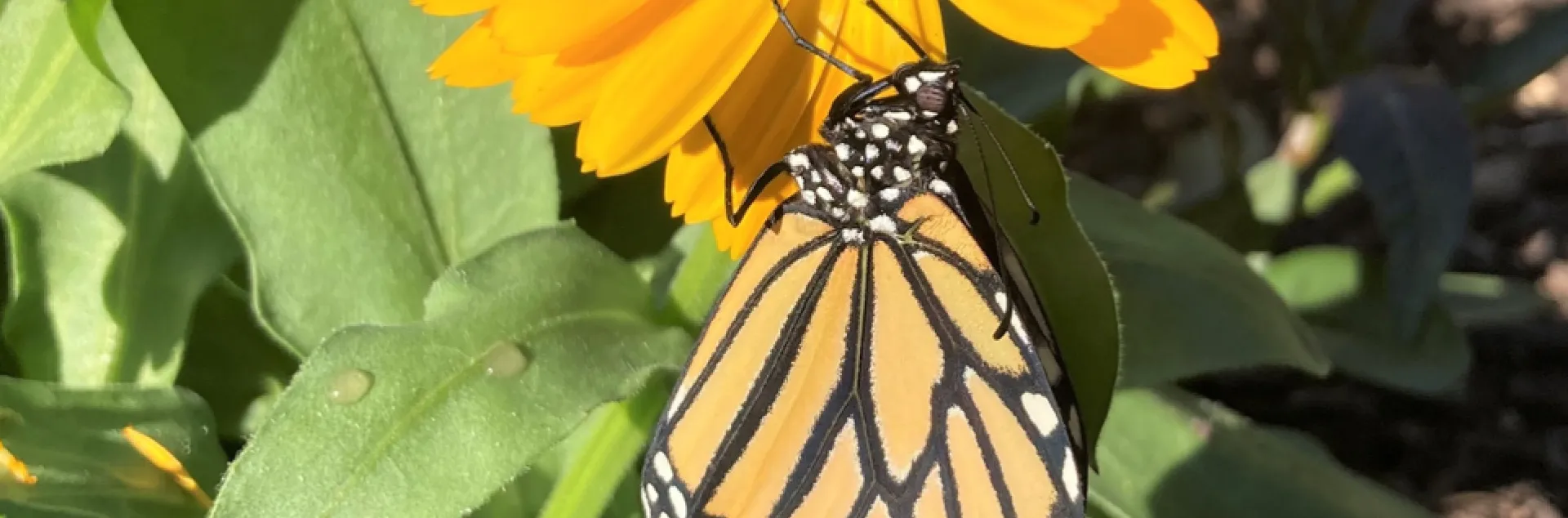
Some plants grow especially well together. Nasturtiums planted near zucchini can help reduce squash bugs. Onions planted near peppers can help keep aphids away. Basil planted near tomatoes may help protect them from tiny insects called thrips. Calendula, also known as pot marigold, helps protect many plants from aphids. Easy to grow from seeds, its bright flowers attract bees and helpful insects like lacewings and tiny wasps that eat garden pests. The petals are edible and can even be used to make tea and calendula oil.
Low-growing plants used as cover crops also benefit the garden. They cover the soil, block weeds, and help retain moisture. Beans and peas enrich the soil by adding nitrogen, an essential nutrient. Other helpful cover crops include clover, buckwheat, and fava beans. These plants act as “living mulch” by protecting bare soil.
Some plants are called trap plants because they attract bugs away from other crops. Ornamental tobacco (nicotiana) traps aphids, mites, and whiteflies. Dill is a trap crop for tomato hornworm. Nasturtiums can help reduce cabbage worms and make a colorful, edible ground cover.
Companion planting also brings beneficial insects into the garden. Ladybugs eat aphids. Hover flies and bees help pollinate flowers to make more seeds and fruit. Plants like yarrow, alyssums, cosmos, borage, and sunflowers provide nectar and food for these helpful insects.
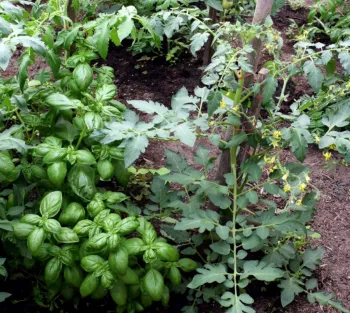
Tomatoes and basil are good partners in the garden and in the kitchen. Basil may deter pests and even improve tomato flavor. Tomatoes need wind movement or the buzzing vibration of bumble bees to set fruit. This is called buzz pollination. Beans and peas with large, hooded flowers attract bumblebees, which also help pollinate squash, blueberries, and eggplant.
Some plants do not grow well together. This is called allelopathy. One plant can stop another from growing. Black walnut trees and eucalyptus are examples. Fennel should be planted alone because it can inhibit the growth of neighboring plants. Tomatoes should not be planted near cabbage, broccoli, or corn because these plants compete for nutrients.
Companion planting is both a science and an art. It helps plants grow stronger, protects the soil, attracts beneficial insects, and keeps pests in balance. Best of all, it shows us that nature works best when living things grow together.
Find a complete list of companion plants from the Edible Landscaping Handbook, Companion chart: https://ucanr.edu/sites/default/files/2023-09/388577.pdf
By Alice Cason, April 4, 2026