
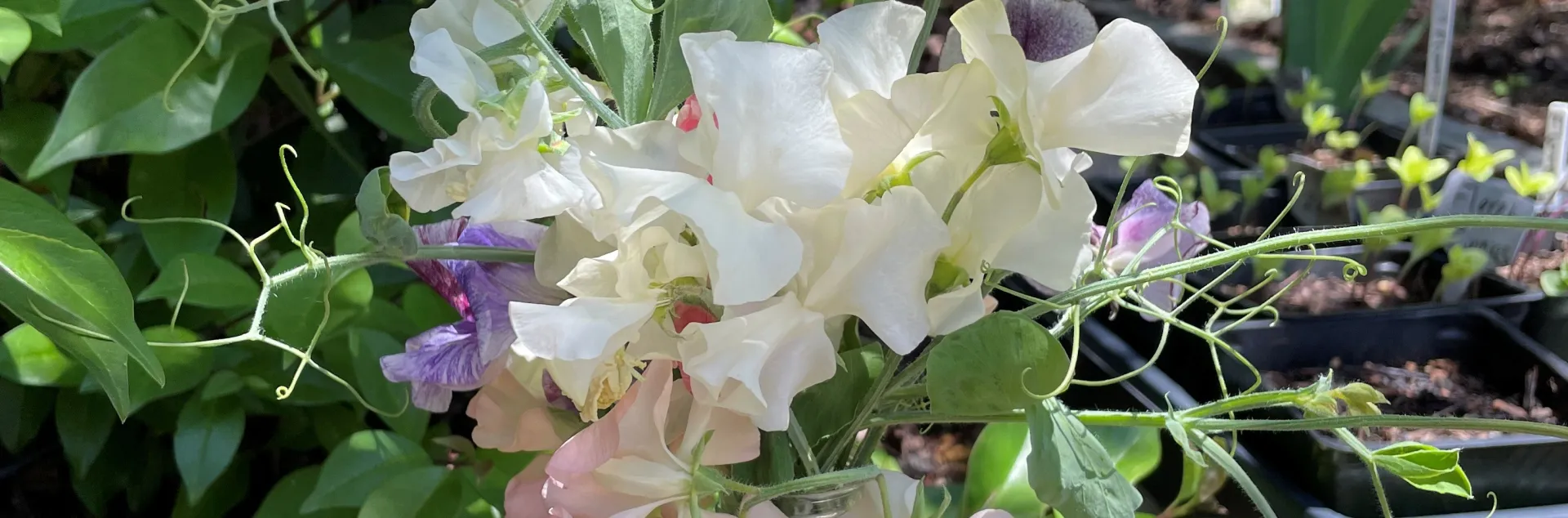
Nostalgic and timeless, the first blooms of sweet peas (Lathyrus odoratus) are a springtime treat. Bearing a heavenly floral scent and coming in every color except yellow, it’s easy to see why gardeners around the world fall in love with sweet peas. Additionally, they are relatively easy to start from seed; there are a few tricks to growing them in our summer-dry Mediterranean climate, but with the right care, even beginner gardeners can enjoy a row of fragrant sweet peas come spring!
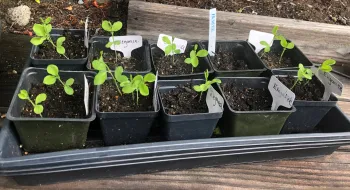
Sweet peas are hardy annuals, meaning that they can tolerate low temperatures - in our mild climate, they can be sown either in autumn or late winter. Seeds can be started early indoors by spreading seeds across a damp paper towel placed in the bottom of a container. Cover the container with plastic film and leave the seeds overnight: this will help soften the seed coat, leading to speedier germination. You can also leave the seeds in their container or in a plastic bag until they’ve begun to sprout – I’ve had the most success with this method. Once you’ve prepared your seeds and are ready to plant, choose seed trays or seedling pots with a depth of 4 inches or greater to give their roots ample room, and cover seeds with half an inch of soil. It’s best not to directly sow the seeds where you intend your sweet pea to go, as this can leave young seedlings vulnerable to being munched on by pests. After the seedlings have reached at least 3 inches in height, they can be planted out in the garden.
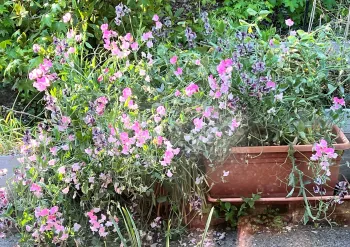
Sweet pea plants produce vines that can reach 5-7 feet in height, so it’s important to provide the plants with a trellis or structure to climb up: examples include wire fencing or netting run between two stakes, or you can make a tripod of stakes wrapped in twine. Or, you can choose a dwarf or bush variety (for example, the ‘Supersnoop’ series) that only reaches 8 inches to 3 feet in height and does not need staking. Prepare your planting site by adding compost and a natural fertilizer, such as bone meal or a well-balanced organic fertilizer, to the soil. Sweet peas thrive with their roots in cool, moist soil and their vines in full sun: to achieve this, you can plant annuals around the base of your sweet pea to shade the roots. It’s also a good idea to pinch, or remove, the growing tip of your sweet peas, taking them down to a pair of leaf nodes once they’ve reached 4-6 inches in height, as this increases the number of side shoots – and therefore blooms – your sweet peas produce.
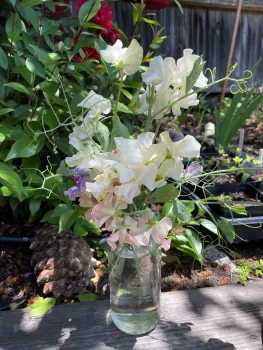
Sweet peas prefer cooler weather – in our climate, they’re likely to bloom from mid-spring until early summer, when it becomes too warm for them. However, for the months in which sweet peas bloom, they bloom prolifically. While a few sweet pea vines growing up a trellis make a stunning decoration for any garden, one of the reasons I grow them is that they make remarkable cut flowers. Sweet peas actually benefit from having their blooms cut, so the more you cut them, the more they bloom. If left alone, sweet pea blossoms eventually form green pods that resemble peas. However, it’s important not to get the two confused, as unlike their edible cousins, sweet peas are poisonous if eaten in quantity. If left to ripen, sweet pea pods form new sweet pea seeds – to collect them, just open up the pods once they’ve dried out, and hold onto the seeds until it’s time to plant them next growing season. Keep in mind that seeds may not produce plants that are the same color as the parent plant.
With their sweet fragrance and delicate blooms, sweet peas are sure to delight. So plant a row of sweet peas this spring to fill your garden with scent and your heart with whimsy.
By Emily Daane, March 14 2026