
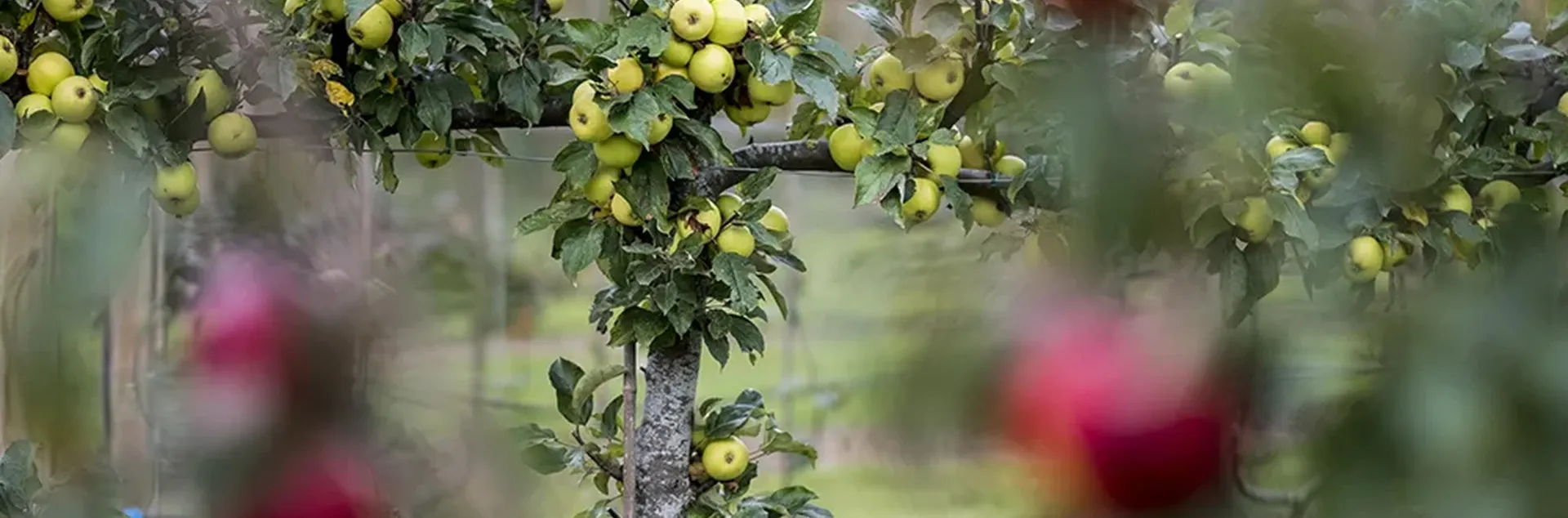
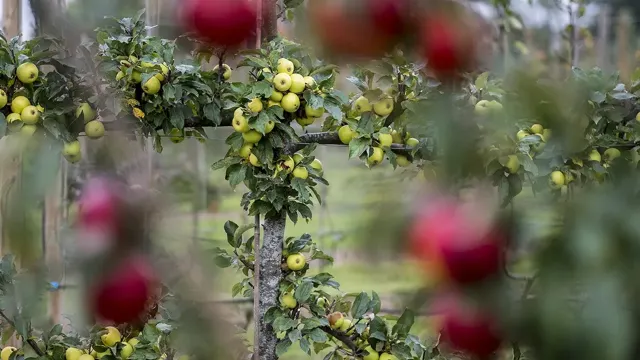
Espalier is an ancient horticultural practice of shape-shifting nature by training trees to grow flat against a wall or trellis. While you may have noticed these fan-shaped trees against a fence in a small edible garden or acting as an ornamental partition in a formal outdoor space, the practice has been around for hundreds of years, with many benefits specific to Marin.
Let’s start with a brief spin through history. The term “espalier” comes from the Italian word spalliera, which translates to “something to rest the shoulder (spalla) against,” a term that describes both the practice of training a woody plant into this position and the tree itself. The earliest espalier forms date back to ancient Egypt (where tombs showed paintings of espaliered fig trees) and Rome, where gardeners planted espaliers against walls to extend growing seasons and increase fruit yields.
Fast forward to medieval Europe, monks refined this practice in monastery gardens, encouraging compact and orderly planting styles in their narrow spaces. The Renaissance and Baroque periods in France and England gave rise to increasingly flamboyant shapes as an expression of formal garden design and precise horticulture. Imagine the gardens of Versailles, where a backdrop of geometric espalier forms in the potager du roi acts as a case study in aesthetic, precise, and cultivated food production.
Espalier is still a popular technique today, and can be a beautiful addition to the home garden for those who aren’t afraid to pick up their pruning shears. While any type of woody tree can be trained in this way, it’s easiest to espalier spur-bearing trees (such as pears and apples), which bear fruit on old wood. Some spur-bearing espalier trees can live to be hundreds of years, growing more gnarled and characterful with each passing season. If you’re up to more of a challenge, apricot, cherry, and even persimmon can be trained into espalier form, which includes shapes such as an informal fan, cordon style, candelabra, and Belgian Fence.
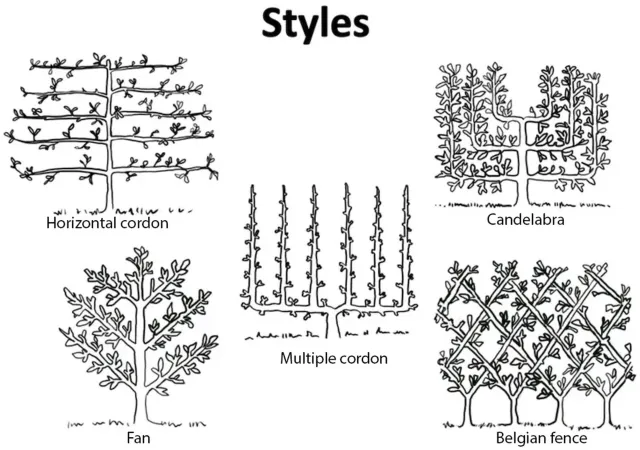
So what are the best espalier uses in Marin? If you have a small space or narrow garden, espaliers are a space-efficient solution, enabling you to grow fruit trees where traditional spacing might not be possible. If you’re feeling ambitious, you can train your own espalier from scratch, but many garden centers even carry espaliers that are pre-trained into a cordon shape, sometimes with different varieties of apples or pears grafted onto a single rootstock, providing you with three times the choice of apples in one plant.
The pruning techniques and open shape of espalier trees mean that they can be more productive at bearing fruit than their larger counterparts, plus pest management can be easier due to the small size and open branch shape. If you live in a foggier or coastal microclimate, planting an espalier tree against a heat-retaining wall helps warmer-climate trees (such as citrus) thrive where they might not otherwise succeed.
For those with a flair for artistry, espalier can be grown as living fences that provide organic demarcation of different spaces, and they are a whimsical way to create outdoor ‘rooms’ in your garden. Even when the plants go dormant in the winter, espalier shapes provide winter interest through the striking shape of the arms.
It’s easy to be romanced into establishing them in your space – but beware that espalier is an adventure into active garden management. To be successful, espaliers should be trained on a trellis system, and they need pruning in the spring and early summer, with a touch-up in the winter. If you don’t frequently cut back each year’s growth to three buds, you’ll end up with vigorous vertical shoots that have very few fruiting spurs… a mistake that is easy to make for novice (or time-strapped) gardeners.
Espalier is part art, part science, part architectural detail in your garden. So give it a whirl–or enjoy from afar. Either way, the output is beautiful.
By Anna Hartley-Simon, January 10, 2026