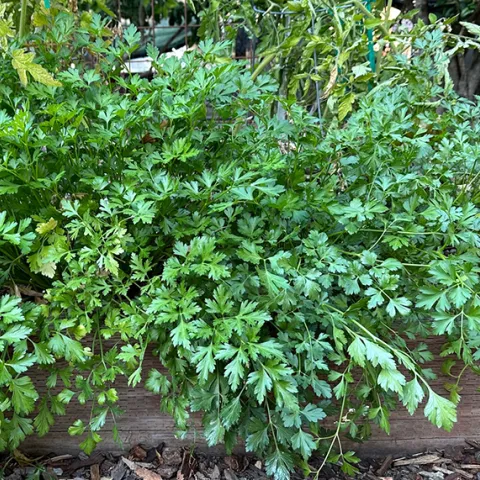
News from the Edible Demo Garden
Click here for information on how to grow EDIBLES

July 2025: Vole Invasion

July 2025: Vole Invasion

Protecting the growing plants from hungry critters is an ongoing challenge in the Edible Demo Garden. Wire mesh is used extensively under planting beds and around the straw bales to discourage gophers. Yards of protective netting keep the birds and rabbits from eating young seedlings and ripening fruit. Through vigilance and determination, EDG volunteers have usually managed to reduce damage to crops from the vertebrate garden dwellers. However, this spring volunteers noticed that something was eating the summer squash plants in the straw bales in the area known as the “back 40”. Whatever it was had to be small enough to slip around and under the gopher-repelling wire mesh. Some little holes in the bales and on the ground nearby pointed to voles as the most likely culprits.
What are Voles?
Voles are small, chunky, ground dwelling rodents with short tails. They are also called meadow mice, but they are not mice or rats. They belong to a separate genus and are more closely related to lemmings. The most common of the five species of voles in California is the California vole, Microtus californicus. It is four to six inches long with grayish brown fur, a blunt nose, and small eyes and ears. Voles are herbivores. Although their favorite foods are grasses and herbaceous plants, they can cause extensive damage to edible crops.
How do you know if voles are in your garden?
Voles are active both day and night, but primarily around dawn and dusk. They hide in dense underbrush and in their shallow burrows, so they are not easy to spot. Voles are extremely prolific and mature rapidly with females bearing multiple litters per year.
Once you notice plant damage and suspect voles, look for burrows with numerous openings, about one to two inches in diameter, connected by narrow pathways. The pathways may be littered with droppings and plant fragments. Unlike gophers and moles, voles do not pile up soil around their burrows.
What can you do to control voles?
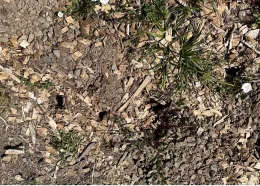
The first step to controlling voles is to make your garden less welcoming. Because they only like to travel a short distance to a food source, removing the vegetation they depend on for cover will discourage voles and prompt them to go elsewhere. Weeds and grasses provide hiding spaces, so creating a vegetation-free zone around a garden area will deter them. Unfortunately, they found both the food and cover they needed in the straw bales in the EDG garden.
In ideal circumstances, vole populations stay in balance, providing food for predators. Their lives are short, most living less than a year. They are snacks for owls, hawks, coyotes, foxes, and snakes. Populations also fluctuate with peaks every two to five years.
When vole populations are high and removal of vegetative cover and physical barriers are not sufficient to control them, snap-type mouse traps can be used with varying success. Traps should be placed at right angles to burrow pathways with the trigger end in the pathway so that voles will trip it as they pass over. Flooding or fumigating burrows does not usually work because of the shallow and open structure of the burrows. Poison bait, while effective, increases risk to pets, wildlife and humans and should never be used in edible gardens during the growing season.
What are the options for an organic edible garden?
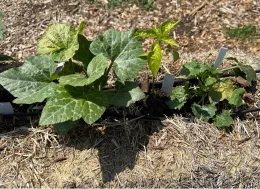
While numerous home remedies and repellents have been suggested, none have been shown to be reliably effective against voles. Possible repellents include coffee grounds, cayenne pepper, castor oil, and garlic. Voles don’t like plants with strong odors and unpleasant tastes. They avoid plants in the allium family like onions and garlic and find daffodils, marigolds and castor beans distasteful. Several of these options were considered for the Edible Demo Garden. Coffee grounds were ruled out as not certifiably organic. Claims that sprinkling cayenne pepper around garden plants discourages voles prompted the EDG volunteers to plant hot peppers among the squash vines. Subsequently, damage to the plants appeared to decrease so maybe it worked, or possibly one of the snakes recently spotted in the garden is reducing the vole population.
Click here to learn more about voles.