
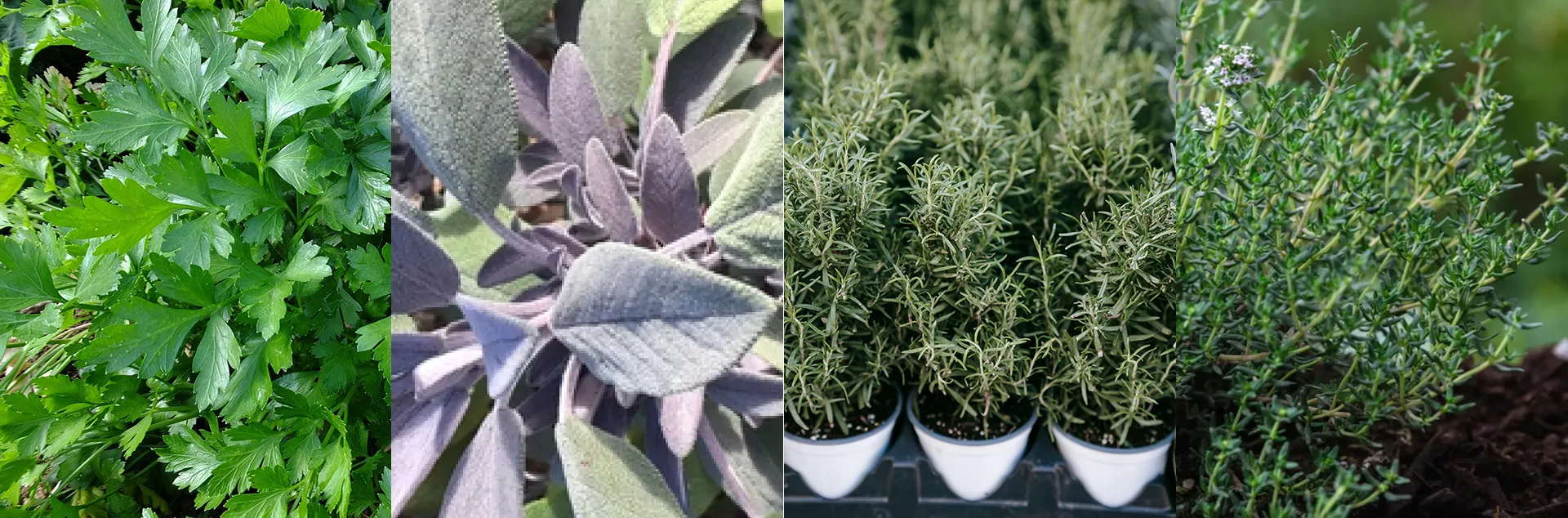
As Thanksgiving approaches, many of us start planning our holiday meals. While turkey, cranberries, and pumpkins may get most of the attention, herbs also play an important role in our Thanksgiving meals. Herbs like sage, thyme, rosemary, parsley, and chives provide flavor and a pleasing aroma to our meals. They can also easily be grown indoors and enjoyed throughout the winter.
Commonly used herbs for the holidays
A variety of different herbs are used around the holidays and can also be used throughout the year. A few examples of commonly used herbs include:
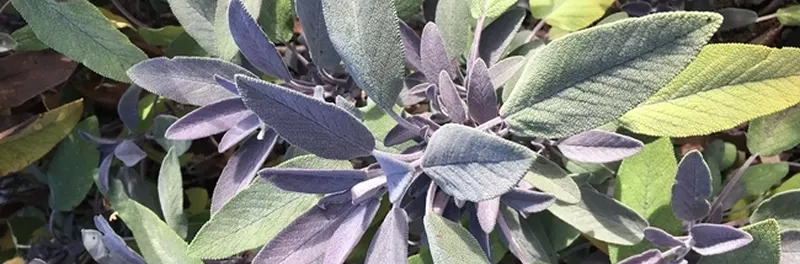
Sage: If you have stuffing (or dressing) during the holidays, odds are you're using sage. Sage is a shrubby, perennial plant that can grow to be 2-3 feet tall and tends to sprawl as it ages. Most varieties have gray-green leaves, but purple and golden cultivars can also be found. The leaves are slightly fuzzy and have a pebbly texture.
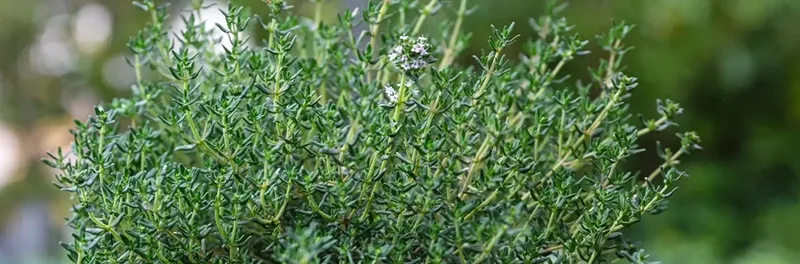
Thyme:is a perennial plant that forms a mound around 6 to 12 inches tall and wide. Plants will produce woody stems and have small, gray-green leaves. There are many types of thymes, like creeping thyme and 'citrus' thymes with lemon, lime, and orange fragrances, but French and English are the most popular for culinary use. Thyme is often used in stuffing and, since its flavor and aroma aren't negatively affected by long, slow cooking, can be used to season turkey.

Rosemary is another woody, perennial plant often used to season poultry. Rosemary is not reliably hardy in zone 6 or colder, so it is usually grown as an annual, but it can be brought indoors and overwintered. Rosemary grown indoors often dries out quickly, not because of a lack of soil moisture (they prefer drier soils), but because of low humidity. During the holidays, rosemary plants can commonly be found as Christmas tree topiaries.
Parsley
Parsley is often overlooked or simply used as a garnish, but it can be used in stuffings and in rubs for turkey, among other things. Parsley is a biennial (it takes two years to complete its life cycle) that is grown as an annual. Flat-leaf parsley is used in cooking because it has more flavor, while curly parsley is used as a garnish.
Chives: can add flavor to mashed potatoes or as a garnish to brighten a dish. They are clump-forming perennials that grow from underground bulbs. Their leaves are round and hollow and will produce pink flowers in the summer, which are also edible.
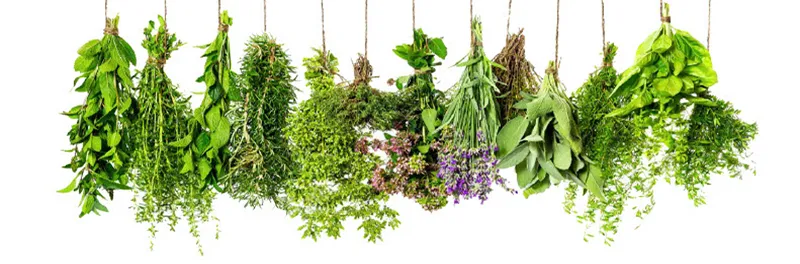
Growing herbs indoors
To grow herbs for Thanksgiving dinner, consider the following steps:
- Choose the right herbs: Common Thanksgiving herbs include parsley, sage, rosemary, and thyme. Bay laurel, marjoram, chives, oregano, and cilantro are also great additions.
- Garden or Potted: When selecting a container to grow herbs, make sure it has drainage holes. Use a good-quality potting mix, and avoid using garden soil. Use a water-soluble fertilizer for herbs following the label directions every two weeks, but don't fertilize more often. Fertilizing too much can negatively affect the flavor and aroma of your herbs.
- Growing Conditions: Sun-loving herbs like bay laurel and chives need at least 6-8 hours of bright light each day. Windows with southern exposure are often a good option. However, if your windows don't receive enough light during the winter months, you can use supplemental lighting.
- Humidity: Most herbs will grow best with temperatures between 50 and 70 °F. Avoid placing plants near heat vents, which can quickly dry out pots. Heated air also causes homes to be rather dry. Clustering plants together, placing pots on a tray of water and pebbles, or running a small humidifier can help increase humidity near the plants.
- Fresh vs. Dried: Fresh herbs are used three times more than dried herbs in recipes. Fresh herbs add a more intense flavor and aroma to dishes.
By following these guidelines, you can successfully grow herbs for your Thanksgiving dinner and enjoy the added flavor and freshness of home-grown herbs.
Additional Information & Resources
Basic Herbs for a Kitchen Garden, Tulare/Kings Counties
Culinary Herbs Profiles, Sacramento County
Herbs in Your Garden, UCANR
Photo courtesy of UCANR, Karen Schaffer, Uriel Mont, and Pexels.com