by Cheryl Schmidt

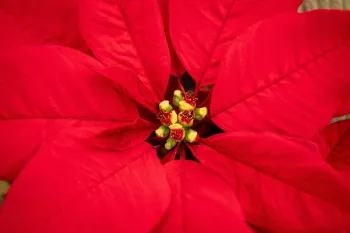
Who doesn’t love this vibrant plant in December? It comes from Mexico and is pronounced "poin-set-te-uh." It loves warmer weather, between 65 °F and 70 °F.
What do you do with these plants after the holidays? Many throw them away, but you don’t have to. You could keep it as a green house plant that will last 10 to 20 years, or you could plant it in the yard and watch it grow to 10 to 15 feet as a green shrub and live for decades. Poinsettias will grow outdoors in USDA climate zones nine to eleven, but not colder than 50 °F.
Poinsettias are beloved during the holiday season but are often thought to be highly poisonous. In reality, they are not deadly, though the milky sap can cause mild stomach upset or skin irritation in some people and pets. For this reason, it’s a good idea to place poinsettias out of reach of children and animals. Wearing gloves when handling the plant can also help prevent skin irritation.
To keep your houseplant alive, put it near a window that offers bright, indirect sunlight. If the plant is placed in direct sunlight, the leaves could burn. It doesn’t like drafts from windows, heating vents, or areas of temperature fluctuation. Keep the soil moist but not soggy. Check the soil daily to see if the top two inches are wet; it could need watering about once a week.
When watering, remove the decorative foil and anything else covering the container. Water must be able to drain from the bottom.

Your attention to the plant should pay off for a couple of months, and then it will go dormant. At that time, the leaves will start to fall off, and it probably won’t look attractive. Trim the stem four to six inches from the soil.5 Trim each branch, leaving several leaf nodes on each stem to help keep its robust shape. Check for insects such as whiteflies, mites, thrips, etc. Sometimes you can wash them off the leaves with water. Management may require insecticidal soap, horticultural oil or sprays, soil granules, etc. If there is an abundance of insects, it may not be worth keeping the plant. If you do apply a pesticide, use an insecticide or miticide that is labeled for indoor use, following all instructions8.
As the plant emerges from dormancy and goes from skeleton to budding, it is time to fertilize. When you see new growth, use a houseplant fertilizer at half strength every three to four weeks9. This is also a good time to repot into a slightly larger container using a good-quality potting mix. Continue to expose the plant to indirect light and keep the soil moist.
The next step would be to cut each branch about an inch to encourage growth. Continue watering and fertilizing during the summer months through September9.
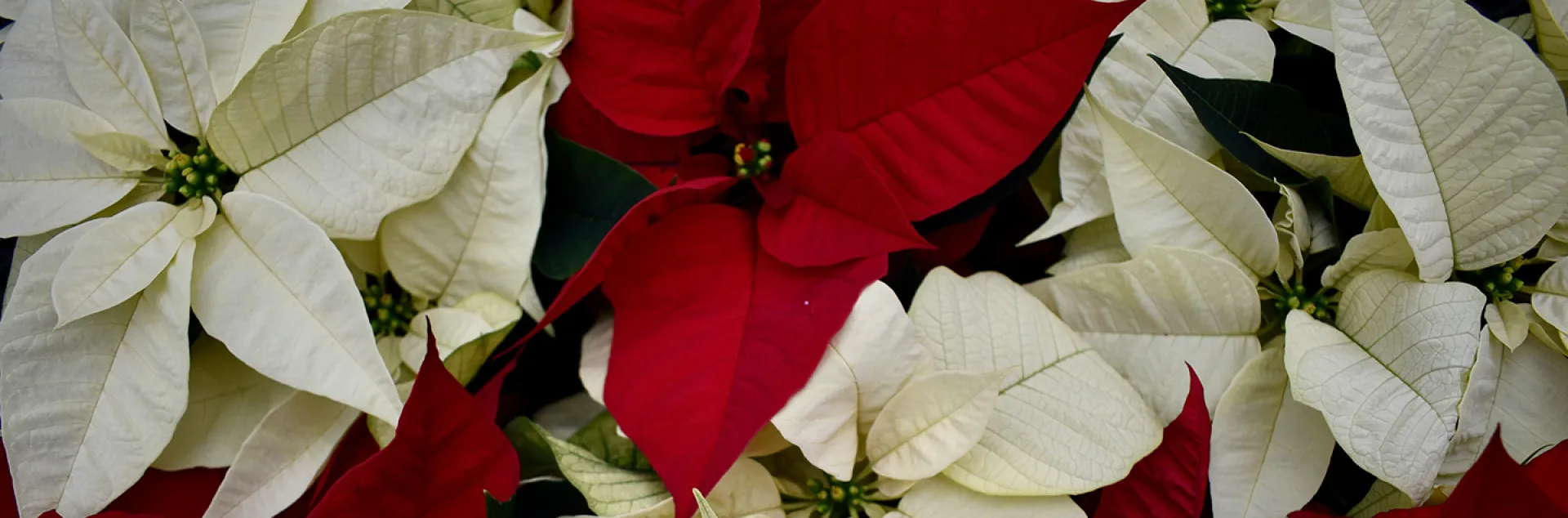
If you want the plant to rebloom in December, follow the steps below. In late September or early October, begin preparing it for its holiday color: red, white, or pink, depending on the variety. Poinsettias develop their vibrant hues as the weather cools and the days get shorter.
When it is time to get the plant ready to bloom, it will need to be secluded in total darkness for about 16 hours. The plant can be put in a box, room, closet, or anywhere it will be away from any amount of light. For the remaining eight hours, place the plant in bright, indirect sunlight. Keep the temperature around 60 °F and reduce water to signal the plant to prepare for color.
Follow this procedure until Thanksgiving. At that time, place the plant in sunlight and decrease water. When bracts and flower buds appear, stop fertilizing. The plant should bloom by mid-December.
References
- Douglas, Sharon M. Dr. Poinsettias: Disease Prevention and Control. The Connecticut Agriculture Experiment Station.
- Gillette, Barbara. How Long Do Poinsettias Last? Try These Tips to Keep Them Alive Longer. The Spruce. People Inc. Publishing Family, 11/17/25
- Goodspeed, Jerry. Could You, Should You Keep Your Poinsettia Year-Round? Utah State University Extension.
- Hughes, Megan. 4 Must-Know Tips for Keeping Poinsettias Colorful All Season. Better Homes and Gardens, 11/25/25.
- What Should I Do With My Poinsettia After the Holidays? Iowa State University Extension. 12/3/2024
- Lamp’l, Joe. Turning Poinsettias Red Again. Growing a Greener World, PBS. 11/6/2025
- Spangeberg, Bruce. Poinsettia Trivia and Care. University of Wisconsin Madison Extension. 12/16/2024
- Houseplant Problems, UC IPM Pest Notes, Publication 74172. University of California Integrated Pest Management Guidelines.
- Weisenhorn, Julie. Growing and Caring for Poinsettia. University of Minnesota Extension, 2024.
UCANR Resources
- Poinsettia Care, UC Cooperative Extension, Central Coast and South Region
- Poinsettia - Tips for Care and Reblooming, UC ANR, The Coastal Gardener.
- How to Keep Your Poinsettia Healthy and Ensure it Blooms Again, UC Master Gardeners of Humboldt and Del Norte Counties.
- Selecting and Caring for Poinsettias, UC Master Gardeners of El Dorado County
- Poinsettia Fact Sheet, Riverside County UC Master Gardeners