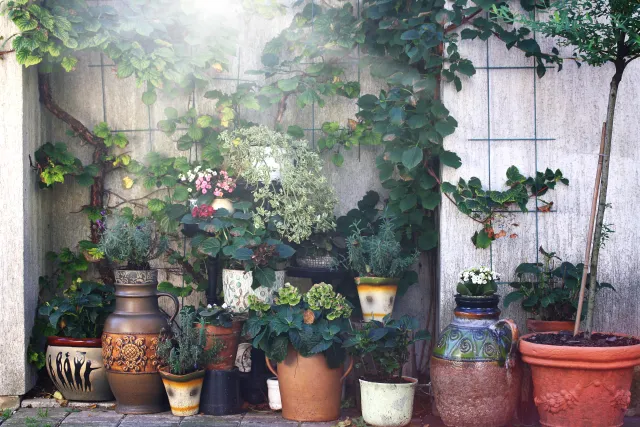
With winter’s chill in the air, it’s essential to prepare your container patio garden to withstand cold weather. Start by moving the most sensitive, smaller plants inside the house or in wind-sheltered wall nooks to take advantage of the extra warmth. Insulate larger pots by wrapping them with burlap, bubble wrap, or frost blankets, especially if they’re made of ceramic or clay, which can crack in freezing temperatures. Water less frequently, but don’t let the soil dry out completely, as winter winds can dehydrate plants.
For perennial herbs and ornamentals, trimming back annual growth helps prevent frost damage. If you grow annuals, remove them and refresh the soil to get ready for new annuals in the spring. Here are some other handy cold-weather tips for patio gardens:
- A heated interior exudes a touch of warmth through your home’s exterior walls. Extra-sensitive plants can take advantage of this extra bit of heat by moving their pots next to the exterior wall. It helps to mount your heavier pots on rolling platforms, which can be purchased online or from your favorite garden center.
- Add a thick layer of mulch or straw on top of the planter pot’s soil to retain moisture and regulate soil temperature. Consistent soil moisture is crucial in cool weather, as it both keeps plants hydrated and insulates the pot’s soil from rapid temperature changes.
- Remove dead or diseased foliage, and trim back healthy perennial growth, leaving at least three growth buds on each main stem for leafing out in the spring.
- Heavy winter rains can overwhelm your pot’s drainage. Look for standing water in pots and remove the excess water with a ladle or cup. Use a screwdriver or other pointed tool to unclog drain holes at the base of the pot. Plant roots can drown quickly in too much water.
- Winter is also a good time to check your irrigation system for clogs or leaks, especially if it has been exposed to cracking from sub-freezing nights. In our region, chilly nights rarely dip below 25°F. But Central and Eastern Contra Costa cities have recorded several cold outbreaks into the teens Fahrenheit over the past twenty years.
- If you grow winter-ripening citrus (Mandarin or navel oranges) in pots, you should cover them on sub-freezing nights with a frost blanket or an old cotton bedsheet to protect the ripening fruit from freezing temperatures, but allow the tree to breathe. You can do the same with tender or new landscape plants. Older small incandescent holiday lights strung under the protective sheet add a few extra degrees of warmth on very cold, windy nights and add an unearthly glow to your patio or deck!
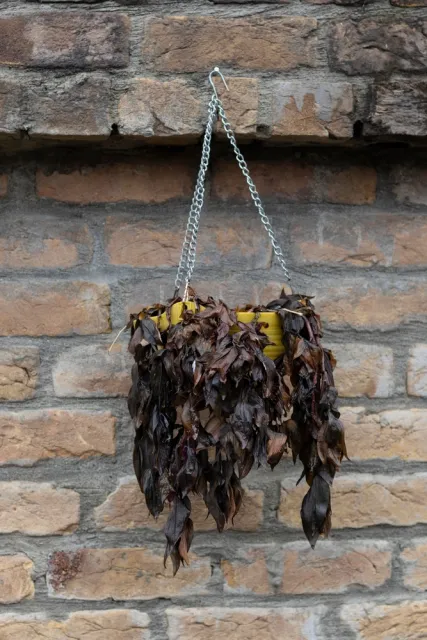
- What should you do if patio plants are frost-damaged? Be patient! Don’t prune off dead-looking branches, but instead wait until the weather warms. Damaged leaves and branches can help protect new growth from more frost damage. Once you trim off the damage, wait at least a month to give your plant a chance to recover. If the plant doesn’t bounce back, it’s a shopping opportunity!
With a little extra care, your small-space garden plants can survive our cold weather or heavy rain spells and bounce back to thrive next spring.