
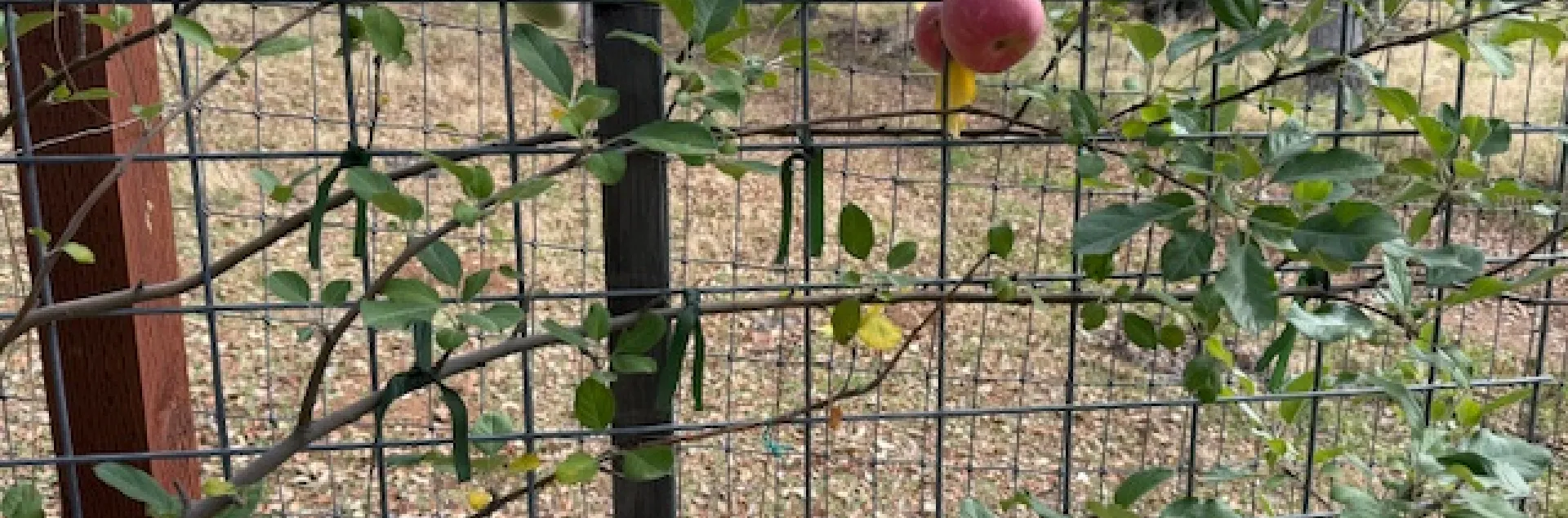
Espaliering fruit trees sounds like one of those old-world gardening skills best left to experts with perfect hedges and lots of free time. In reality, it’s far more approachable and forgiving than most people expect. At its core, espaliering simply means training a tree to grow flat along a wall, fence, or trellis. With a little patience and some basic care, it’s a technique almost any home gardener can master, and the rewards are well worth
the effort.
One of the biggest myths about espaliering is that it’s complicated. In truth, it’s less about strict rules and more about gentle guidance. You’re not forcing the tree into submission; you’re just encouraging branches to grow in certain directions by pruning and tying them as they develop. This happens gradually, over seasons, which means there’s plenty of time to learn as you go. Apples and pears are classic choices for beginners, but figs, citrus, and even some stone fruits can also be trained successfully.
Another reason espaliering feels so manageable is that it doesn’t require fancy equipment. A pair of pruning shears, some soft plant ties, and a simple support system are usually all you need. Once the basic structure is established, maintenance is often easier than with a traditional fruit tree. Pruning becomes more straightforward, harvesting happens at eye level, and there’s no climbing ladders or wrestling with overgrown branches.
The practical benefits of espaliering are a big part of its appeal. For gardeners with limited space, it can be a game changer. A narrow side yard, a small patio, or even a sunny fence line can suddenly support productive fruit trees without taking up valuable ground space. Because the branches are spread out in a single plane, they receive more evenly balanced sunlight, which helps fruit to ripen better and taste sweeter. Improved air circulation also means fewer disease problems, making the trees healthier overall.
Espaliered trees are also simply easier to care for. Pruning, thinning fruit, applying netting, or monitoring for pests can all be done quickly and comfortably. Many gardeners find that controlled growth leads to more consistent fruiting, since the tree’s energy is directed into fewer, well-managed branches rather than unchecked vertical growth.
Beyond the practical advantages, espaliering adds undeniable beauty to a garden. Trained trees create living architecture, turning blank walls or fences into focal points. In spring, they’re covered in blossoms; in summer and fall, fruit hangs neatly along the branches; and in winter, the bare structure still adds visual interest. Espaliered trees can suit formal gardens just as easily as relaxed, modern spaces.
If you’re curious about trying espaliering, bare root trees or young trees in containers (1 to 2 years old) are a great place to start. If you are not comfortable with the short window for planting bare root trees, you can always go with a container tree allowing you more flexibility for planting throughout the seasons. Always check the roots of container trees to be certain the roots are not so tightly bound that the future health and success of your tree will not be compromised.
Choose one tree and a simple pattern and focus on learning rather than perfection. Mistakes are part of the process and usually easy to correct. With a little time and confidence, you may find that espaliering isn’t intimidating at all, just a satisfying way to grow fruit trees that are as practical as they are beautiful.
Click on the links below for instructions on how to espalier your fruit tree.
https://ucanr.edu/site/uc-marin-master-gardeners/how-espalier
https://ucanr.edu/site/uc-master-gardener-program-contra-costa-county/article/putting-yay-
espalier