

Are you considering planting a hedge for privacy or to screen your street, neighbors, or a wooden fence? Fall is a perfect time to get new plants established due to cooler temperatures with anticipated winter rains.
One traditional approach to screening in residential neighborhoods is to plant a hedge, essentially a tight row of the same species of an evergreen shrub. This solution may require frequent watering and shearing, become challenging when individual plants don’t thrive, and perhaps appear a bit boring.
Another approach is to learn from farmers and landowners who have planted hedgerows for centuries. Hedgerows are wider than hedges and combine trees, shrubs, grasses, plus perennial and annual flowers. Farmers use hedgerows to define fields, protect crops from erosion, wind, and weeds, plus deter animals from wandering.
Research by the University of California on the ecosystem services of hedgerows is pertinent to all homeowners interested in enhancing wildlife habitat. Farmers may want to consult the 2010 publication "Establishing Hedgerows on Farms in California.” https://anrcatalog.ucanr.edu/pdf/8390.pdf
In addition to advice on selecting sites, this publication diagrams a wide row of plants between access roads that is bordered by native grasses, herbaceous perennials, and annuals. It also suggests appropriate California Placer and Nevada Counties as well.
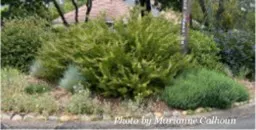
Homeowners in residential neighborhoods may be fascinated to learn that research found that bird species doubled in the presence of hedgerows, especially for migratory songbirds, and bird numbers tripled. You may already appreciate that birds help with pest control by feeding on unwelcome insects and rodents. Research also found that enhancing habitat increases the number of beneficial insects, including native bees, to aid in the pollination of nearby plants.
If you’re interested in welcoming birds, butterflies and bees, consider creating habitat with a hedgerow or a mini- hedgerow depending on space. Instead of planting a hedge of the same species, alternate three to five flowering shrubs that visually complement each other plus provide a variety of heights for wildlife. To best provide habitat, select shrubs that will attract birds, pollinators, and beneficial insects with flowers, fruit, and/or seeds during more than one season. Adding herbaceous plants (grasses, perennials, annual wildflowers, and bulbs) between woody shrubs will fill in the gaps when shrubs are young plus quickly establish low growing habitat.
Did you know the most appropriate plants for a hedgerow are those native to your county? In addition to being well adapted to the climate, natives are preferred sources of food and shelter for local wildlife. California Native Plant Society’s Calscape website https://calscape.org is a wonderful tool for selecting plants. Use the Advanced Search feature to narrow your choices.
I now realize I planted a wide hedgerow five years ago to screen a busy street plus a narrow hedgerow along our driveway. I encourage everyone to transform their property into welcoming gardens for both humans and wildlife by planting one or more hedgerows!