
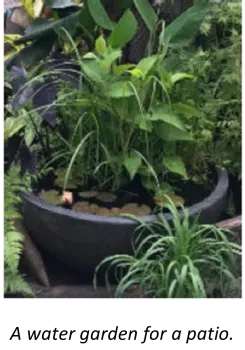
You’re a confident experienced gardener who would like to try your hand at some new plant varieties. In that case, consider including a landscape feature incorporating still water or moving water creating soothing sounds; aquatic plants; and fish if you like. Aquatic plants cultivated in a water garden or ornamental pond environment offer vast ranges of colors, textures, shapes, and sizes of flowers and leaves from which to choose and arrange, complimenting your existing terrestrial landscape. Adding a pond to your residential landscape can bring you pleasant water sounds; enhance the visual aesthetics of your surroundings; and establish a new ecosystem attracting water-loving insects (https://ucanr.edu/blogs/blogcore/postdetail.cfm?postnum=11349), wildlife, and amphibians to your yard.
Pond sizes can range from small wine-barrel-sized patio container ponds to large acre-sized earthen ponds or swim pond hybrids. Pond depths will vary significantly depending on the pond’s style, type, and nature. This article provides a brief overview of three significant factors, location, lighting, and depth, that may impact your decision to include a pond in your yard. It is recommended locating your pond in a place with maximum viewing range; easy access to clean, prune and remove vegetative detritus to effectively maintain it; and close enough to utility outlets should you choose to install mechanical pumps or filters or wish to use a pond vacuum to clean your pond.
The best location should receive approximately five to six hours of sunlight in order not to limit your selection of hardy or tropical water lilies (Nymphaea). The majority of aquatic plants need adequate exposure to sunlight so they can photosynthesize for best performance in your pond. Avoid situating your pond under or close to trees to avoid tree root issues and minimize your pond maintenance chores. Leaf decomposition increases the nutrient load increasing algal growth in the pond with some leaves shedding toxins, such as tannins from oak leaves. Over time, tree canopies and roots will continue to grow, increasing the risk of root invasion and increased shading over the pond.
Another critical factor is water depth. Varying depths maximize aquatic plant selection and cultivation. If deciding to install a larger pond, planting beds or bogs (more extensive area of shallow water where emergent aquatic plants may be installed creating a natural filter for the pond) should be considered during the planning phase and designed at the appropriate pond depth levels for the contemplated aquatic plants. Most aquatic plant varieties are emergent marginals that grow in shallower water depths, anywhere between zero to six inches of water from the plant’s crown (where the plant meets the soil. Submersible aquatic plant varieties, such as underwater grasses (Vallisneria, Sagittaria), and tropical, and hardy water lilies (Nymphaea) may be planted at depths of one to four feet of water, dependent on the actual size of the plant at the time of planting.
In conclusion, remember that a pond is not just a treat for your senses, but actively encourages biodiversity, attracting beneficial aquatic insects and creatures that require water to complete their lifecycles.
References
Garvey, Kathy Keatley. Why Honey Bees Need Water. Bug Squad. August 30, 2013. https://ucanr.edu/blogs/blogcore/postdetail.cfm?postnum=11349
- Sink, Thomas and Jessica Gwinn, and Hannah Gerke. Ornamental Ponds and Water Gardens in Texas. (n.d.)