
By Laurie McGonagill, UC Master Gardener of Placer County
The currant is a fruiting vine in the genus Ribes you may have avoided because of the prickles. Rest assured, it is the gooseberry—also in Grossulariaceae, the gooseberry family—not the currant, which has spines (prickles). Currants are usually deciduous, have delicate fragrant flowers, some bell-shaped, in shades of pink, red, and yellow. Both species featured here are deciduous, drought-tolerant and tough, as well as good looking!
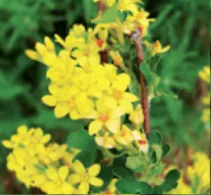
Golden currant, Ribes aureum, is also known by other names such as buffalo currant, clove currant, or Missouri currant. Golden currant grows six to ten feet tall. It blooms with yellow flowers in winter and spring. The light spicy fragrance attracts hummingbirds and butterflies. Its small globular fruits are amber or black in color and are food for birds and humans too—think currant wine or jam, yum!
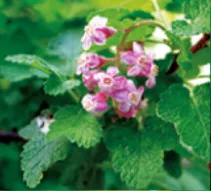
Chaparral currant, Ribes malvaceum, is a California native that grows to five or more feet. It has sweet-smelling pink flower clusters that often bloom in mid-winter, giving hummingbirds an early source of nectar. Purple berries emerge after flowering. A leaf added to your tea will give it an extra kick. Ribes malvaceum grows well on slopes with good drainage and likes a little afternoon shade in our area. It may go dormant and lose its leaves if it’s very hot. Wait until spring to water and it will bounce right back!
These currants have a moderate to fast growth rate and grow especially well under the canopy of an oak.