
Article and photos By Carol Koenig, UC Master Gardener of Placer County
From The Curious Gardener, Summer 2022
Drought tolerant plants have been an important part of landscaping for hundreds of years. Some of the earliest examples could be found in fifth and sixth century Persian gardens as well as Moorish gardens from the 13th century. Water played an important role in the landscaping of these dry, desert areas and native plants evolved to survive in extreme conditions.
Today’s native plants exhibit the same kinds of survival techniques. A California drought tolerant plant must be able to withstand low water and high temperatures. Choosing plants that are native to your area helps to assure they are adjusted to your soil and climate.
California native plants are not only beautiful, but they are mostly drought tolerant and help support the local ecosystem while providing habitat for birds, bees, butterflies, and pollinators. They are also uniquely designed to survive in low water and high heat conditions while maintaining their aesthetic and functional qualities. These plants cope with extremes in climate in various ways. Some, including trees, have large, deep root systems that tap into water stored in the soil.
Examples are cedar, guava, olive, and oaks.
Another plant quality often seen in water wise plants is thick, leathery leaves that reduce water loss and reflect heat. Examples are toyon, madrone, manzanita, and oleander.
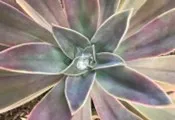
Succulents are drought tolerant and come in a variety of shapes and colors. These plants have juicy, thick leaves with a waxy coating to prevent evaporation. Examples are Sedum ‘Autumn Joy’ that blooms in the late summer and fall, and hens and chicks (Sempervivum tectorum) that produce multicolored flowers.
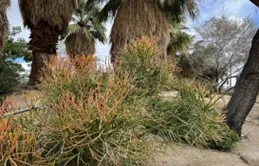
Other plants have hairy, fuzzy leaves whose fine hairs keep moisture trapped and reduce evaporation while the hairs also protect the plant from light and heat. Some plants simply have fine, delicate leaves that reduce the leaf surface and lose less water through surface evaporation.
A few plants drop their leaves when it gets hot in the summer. The California buckeye (Aesculus californica) is one of the first to bloom in spring but drops its leaves in July and August and goes dormant to protect itself in the summer heat.
Not all drought tolerant plants need to be natives. There are a variety of perennials that are long lived, hardy and can be mixed in with native plants for a beautiful garden. One old-time garden staple is the geranium. We can thank South Africa for these cheerful, fragrant and drought-tolerant plants, which come in a variety of scents and colors. Pelargonium ‘Citronella’ has a citrus scent, but there are many others with aromas including chocolate and mint.
Tried and true rosemary (Salvia rosmarinus) is a fragrant shrub with dark green foliage and violet flowers that is handsome on its own or as a backdrop to other showier plants. It’s also a must-have herb for any well-stocked kitchen and grows profusely with little water.
When planting your water wise plants be sure to water enough during the first year or two to keep the roots moist but not saturated. After the roots have established themselves, during the second year, if you have matched the plants to the conditions they need, they should do well with little or no supplemental watering.
References
• Kathleen Norris Brenzel, Editor. The New Sunset Western Garden Book, The Ultimate Gardening Guide. Times Home Entertainment Inc., Ninth edition. 2012.
• Drought Resources. University of California Arboretum and Public Garden. n.d. https://arboretum.ucdavis.edu/drought-resources