UC ANR is committed to providing an accessible and inclusive web experience for all users. If you encounter an accessibility barrier or need content in an alternative or remediated accessible format, please contact anraccessibility@ucanr.edu.
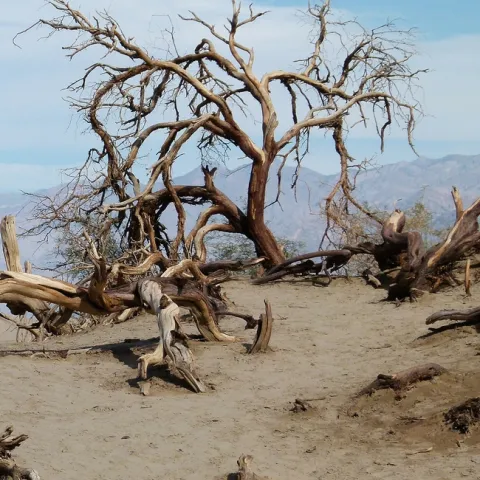
Forest health promises to take a turn for the better, thanks to forest entomologists like Jackson Audley, a doctoral student at the University of California, Davis.
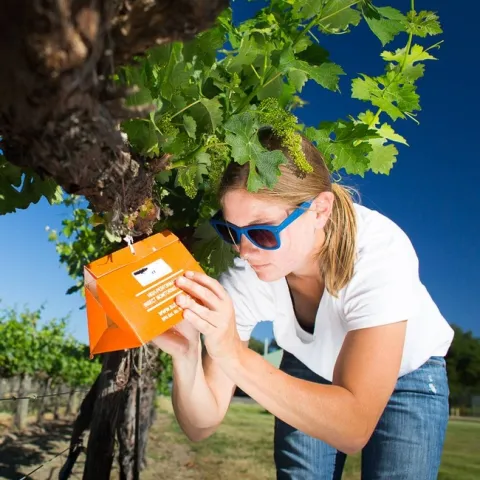
When insects, weeds, animals and diseases enter California from elsewhere in the nation or world, they can cause economic losses to agricultural crops and ecological damage to the state's natural areas. Ultimately, invasive species affect every resident of California.
The UC Integrated Pest Management Program and the Center for Invasive Species Research are two UC Agriculture and Natural Resources programs that monitor invasive species and coordinate responses when they become established in the state.
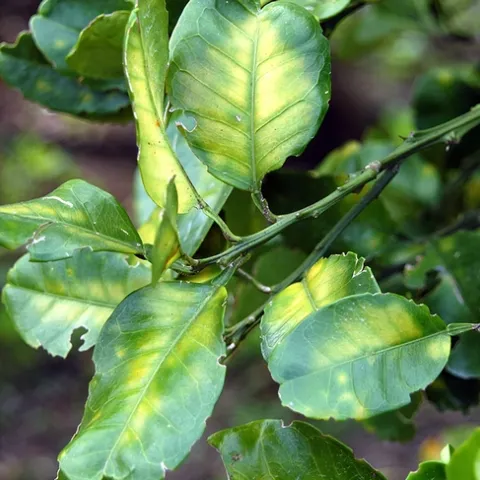
Huanglongbing (HLB) is a devastating bacterial disease of citrus that is starting to spread rapidly in urban areas of Southern California. The disease is spread by the invasive insect Asian citrus psyllid.
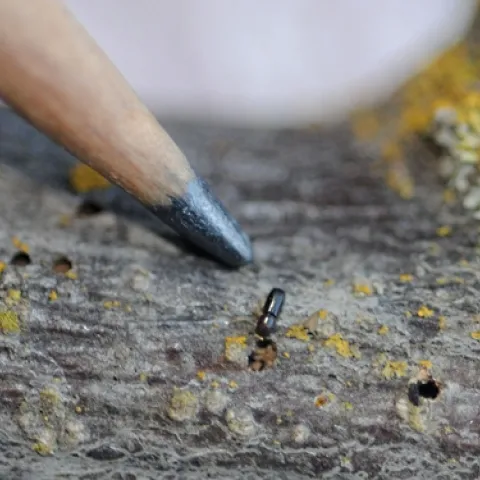
UC Davis doctoral student and forest entomologist Jackson Audley has received the 2019 Western Forest Insect Work Conference (WFIWC) Memorial Scholarship Award for his research on the chemical ecology of an invasive bark beetle, the walnut twig beetle.
The recent rain events in California have complicated crop production activities for many growers including delayed planting or harvesting and altered pest management activities (including weed control).
UC Davis chemical ecologist Walter Leal characterizes the work in his lab as "like bolas spiders." What are bolas spiders? Well, they're also known as angling or fishing spiders. That's because they don't spin a web, they hunt with a sticky glob of silk on the end of a line known as "bolas.
Applications are now being accepted for the 2020 UC Master Gardener training class. The training class teaches research-based sustainable landscape practices.
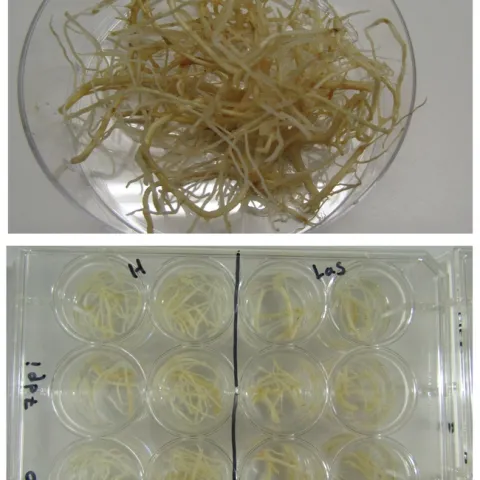
Candidatus liberibacter asiaticus (CLas), the bacterium thought to cause huanglongbing (HLB), cannot be grown using traditional laboratory methods in petri dishes on agar and nutrients.
Mark your calendar! July 15, 2019 The 3rd Annual UAV/Ag Technology Field Day Presented by UC Cooperative Extension, Merced County 9am to 11:30am (CE registration begins at 8:30am) Bowles Farming Headquarters 11609 Hereford Road, Los Banos, CA 93635 Events: UAV/Drone demonstration flights: -CSU Fresn...