Rangelands

Primary Image
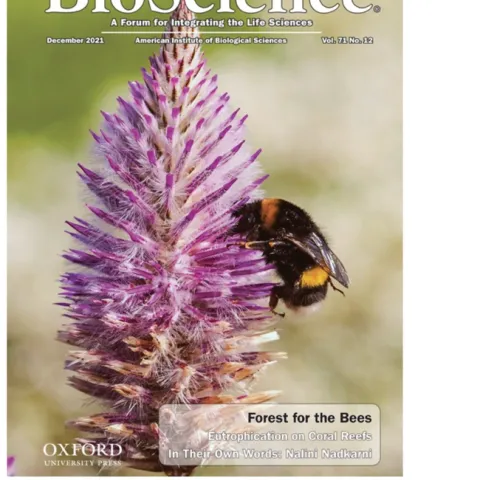
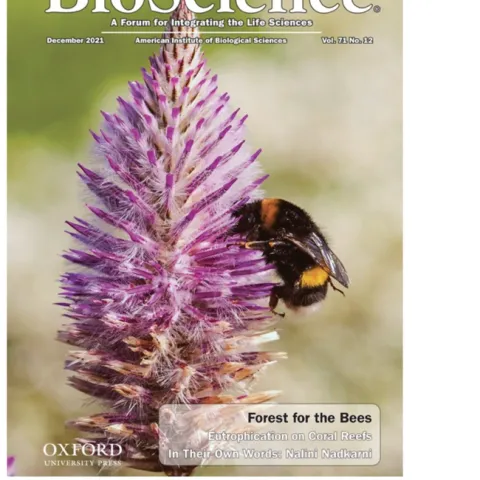
The cover image of BioScience by Diego Delso shows a Bombus terrestris, a buff-tailed bumble bee that is one of the most numerous bumble bee species in Europe.
Bug Squad: Article

Do Forests Play a Role in Bumble Bee Life History?

December 16, 2021
By Kathy Keatley Garvey
Do forests play a role in bumble bee life history? Yes, says UC Davis alumnus and research ecologist John Mola and his colleagues in a newly published article, "The Importance of Forests in Bumble Bee Biology and Conservation," the cover story in the current edition of the journal Bioscience.
View Article
Primary Image
The current edition of Bioscience, shows the cover image of a Bombus terrestris nectaring on a pink mula mulla, Ptilotus exaltatus. (Photo by John Mola)
Entomology & Nematology News: Article

UC Davis Alumnus John Mola: 'The Importance of Forests in Bumble Bee Biology and Conservation'

December 15, 2021
By Kathy Keatley Garvey
"A growing body of evidence suggests that forests may play an important role in bumble bee life history," says a team of scientists led by UC Davis alumnus and research ecologist John Mola in a newly published article, "The Importance of Forests in Bumble Bee Biology and Conservation," the cover sto...
View Article
Primary Image
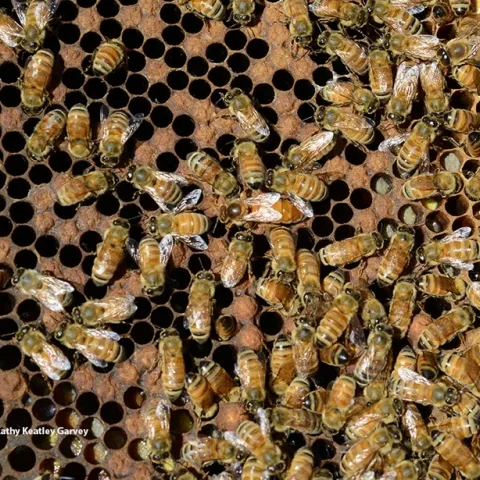
Inside the hive: a queen bee and worker bees. (Photo by Kathy Keatley Garvey)
Bug Squad: Article

Western Honey Bee Origin: It's in the Genes

December 14, 2021
By Kathy Keatley Garvey
Scientists and honey bee enthusiasts have been debating the origin of the Western honey bee (Apis mellifera) for centuries. We know that European colonists introduced honey bees (Apis mellifera) into the Jamestown colony (now Virginia) in 1622.
View Article
Primary Image
This was part of Extension apiculturist emeritus Eric Mussen's office, ready to be moved. (Photo by Kathy Keatley Garvey)
Bug Squad: Article

Eric Has Left the Building

December 13, 2021
By Kathy Keatley Garvey
Remember when, following an Elvis Presley concert, an emcee would announce "Elvis has left the building"? That was to signal that Elvis would not be returning for an encore. Since then, "Elvis has left the building," has served as a catchphrase for not only music celebrities but for retirees.
View Article
Primary Image
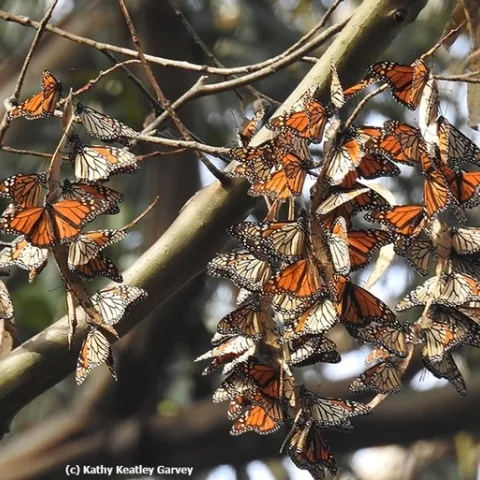
Overwintering monarchs at Natural Bridges State Park, Santa Cruz, in 2016. (Photo by Kathy Keatley Garvey)
Bug Squad: Article

Western Monarch Population Increase: What Does This Mean?

December 10, 2021
By Kathy Keatley Garvey
What does the increase in the overwintering Western monarch population along coastal California mean? The number of Danaus plexippus sightings showed a 100-fold increase as compared to last year, according to the Thanksgiving count initiated by the Xerces Society for Invertebrate Conservation.
View Article
Primary Image
riparian area with fuels treatment
Blog - Forest Research and Outreach : Article

Fuels Management in Creeks and Streambeds

December 10, 2021
By Kimberly C Ingram
There is increasing concern about fire hazard from fuels accumulation in riparian areas and what forest landowners can do to manage these areas. Riparian vegetation and forests have ecological importance in terms of water quality and quantity, and wildlife and aquatic habitat.
View Article
Primary Image
A close-up of an aphid giving birth in a Vacaville pollinator garden. (Photo by Kathy Keatley Garvey)
Bug Squad: Article

Ever Seen an Aphid Giving Birth?

December 9, 2021
By Kathy Keatley Garvey
You know those dratted aphids, those little pests that suck the very lifeblood out of your prized plants? Well, have you ever watched them give birth? They do, you know. Live births. The UC Statewide Integrated Pest Management Program says that "Aphids have many generations a year.
View Article