Rangelands

Primary Image
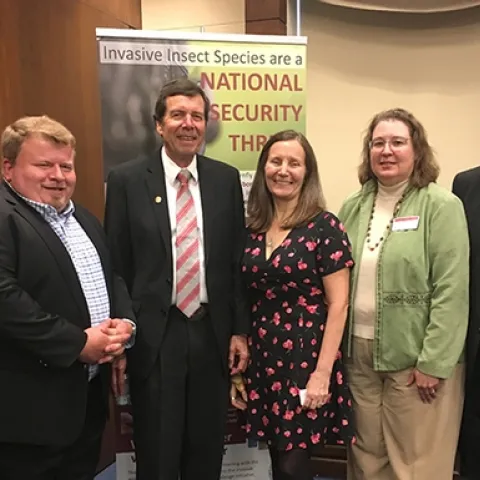
The panel gathers for a group photo following the congressional briefing. From left are Faith Oi, University of Florida; Lee Van Wychen, Weed Science Society of America; moderator Frank Zalom of UC Davis Department of Entomology and Nematology and a past president of the Entomological Society of America; Paula Shrewsbury of the University of Maryland; Kelley Tilmon of Ohio State University; and Dave Chun, chief of staff for Rep. Tulsi Gabbert. (Photo by Chris Stelzig)
Bug Squad: Article

Protecting American Coffee, Wine and Baseball Bats

June 8, 2018
By Kathy Keatley Garvey
"Protecting American Coffee, Wine and Baseball Bats Through Areawide Integrated Pest Management (AIPM)" Those catchy words headlined a recent notice of a congressional briefing.
View Article
Primary Image
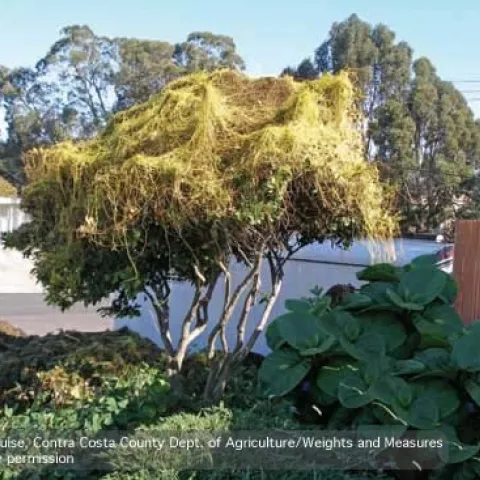
Spaghettilike stems of Japanese dodder growing on a tree. (Credit: Vince Guise)

Invasive Spotlight: Japanese Dodder

June 6, 2018
By Anne E Schellman
When people think of parasites, often what comes to mind are blood-sucking insects like bed bugs, head lice, and fleas or other bodily invaders on or in humans and other animals. But plants can have parasites too.
View Article
Primary Image
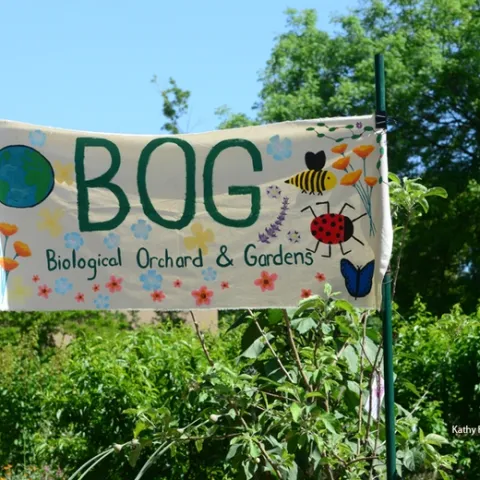
The Biological Orchard and Gardens (BOG) sign features floral and insect designs. It's located by the Mann Laboratory, UC Davis campus. (Photo by Kathy Keatley Garvey)
Bug Squad: Article

This BOG in the Heart of UC Davis Is a Treasure

June 6, 2018
By Kathy Keatley Garvey
"A bog is a wetland that accumulates peat, a deposit of dead plant materialoften mosses, and in a majority of cases, sphagnum moss."--Wikipedia. Not so with the Biological Orchard and Gardens (BOG) on the University of California, Davis, campus.
View Article
Primary Image
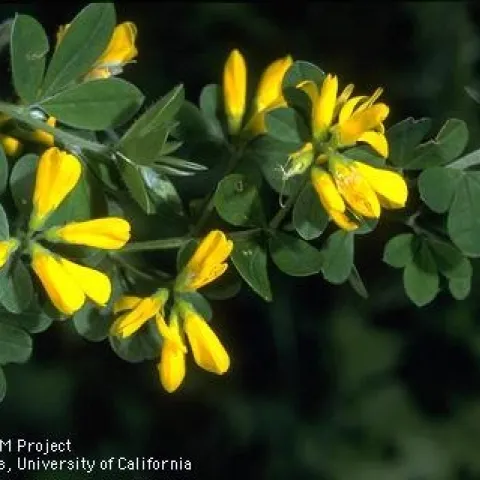
The flowers of French broom are attractive, but this invasive plant is not a good choice for landscapes. (Credit: Jack Kelly Clark)

Invasive Spotlight: Invasive Plants

June 5, 2018
By Anne E Schellman, Karey Windbiel-Rojas
People in urban and suburban areas often use the term invasive to describe plants or weeds that appear to take over a garden or landscape. However, true invasive plants are weeds that infest ecosystems, rangelands, and pastureplaces common garden weeds don't thrive.
View Article
Primary Image
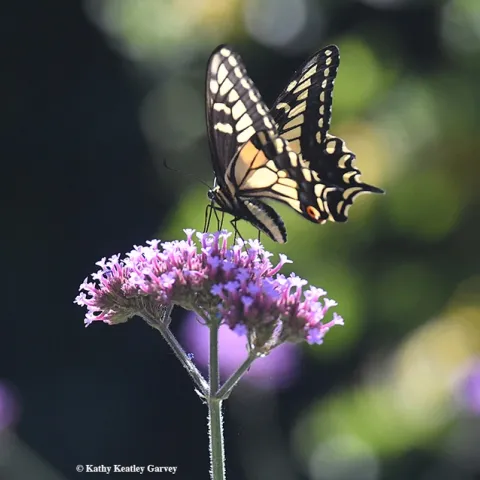
Anise Swallowtail Papilio zelicaon, nectaring on Verbena in Vacaville, Calif. (Photo by Kathy Keatley Garvey)
Bug Squad: Article

Welcome, Anise Swallowtail!

June 5, 2018
By Kathy Keatley Garvey
The Anise Swallowtail, Papilio zelicaon, fluttered into our pollinator garden and headed straight for the Verbena. Art Shapiro, distinguished professor of evolution and ecology at the University of California, Davis, identified the gender: "it's a girl.
View Article
Primary Image
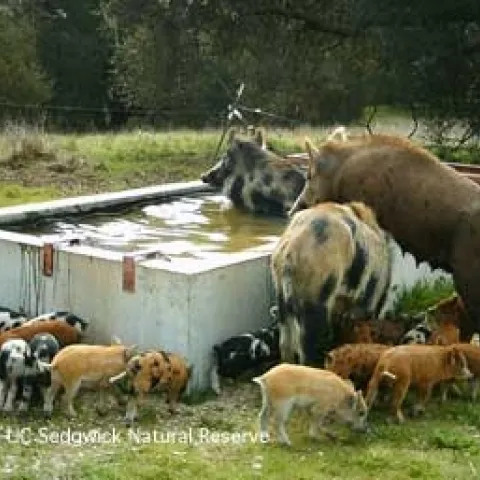
Wild pigs drinking and swimming in a cattle water trough. (Credit: Grant Canova-Parker)

Invasive Spotlight: Wild Pigs

June 4, 2018
By Anne E Schellman, Karey Windbiel-Rojas
It may surprise you to learn that California is home to invasive wild pigs, also called feral hogs or wild boars. Wild pigs can be a major nuisance for farmers, ranchers, and others who live in more rural areas or near wildlands.
View Article
Primary Image
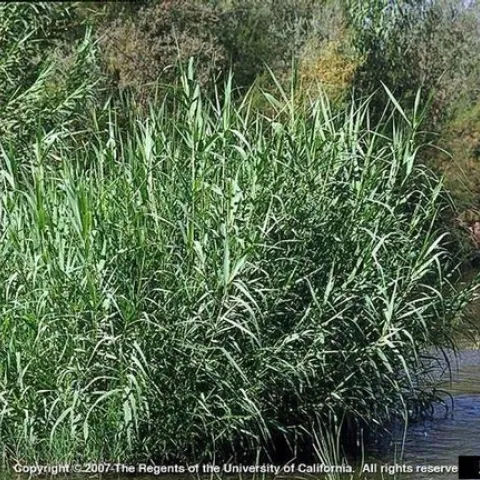
Giant reed invading a waterway. (Credit: Joseph M. DiTomaso)
Pests in the Urban Landscape: Article

California Invasive Species Action Week

May 31, 2018
By Karey Windbiel-Rojas, Anne E Schellman
Did you know that every 60 days, a new and potentially damaging invasive species enters California? California residents can help in the fight against invasive species by learning and participating next week (June 2-10) in the California Invasive Species Action Week.
View Article