It's great to see two high school seniors spend their summer doing research in a UC Davis nematology lab as young scholars in the UC Davis Young Scholars Program (YSP) YSP is a six-week summer residential program that introduces several dozen high-achieving high school students to original research...
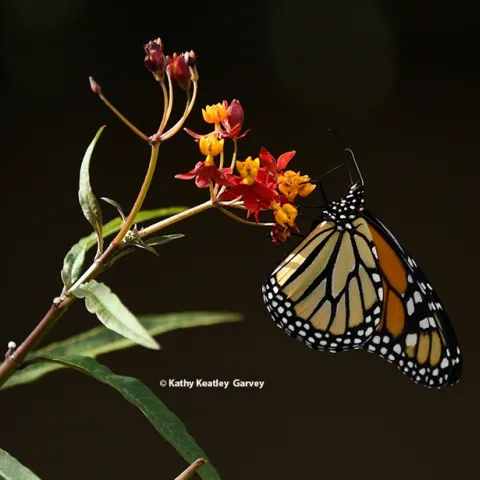
Wings up! Let's go! The monarch fall migration is underway. "Unlike most other insects in temperate climates, monarch butterflies cannot survive a long cold winter. Instead, they spend the winter in roosting spots," explains Monarch Watch.
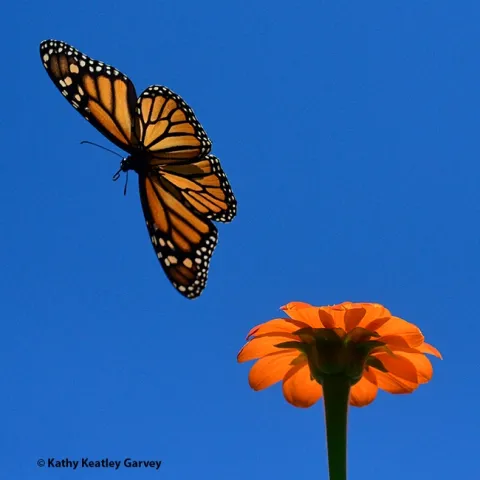
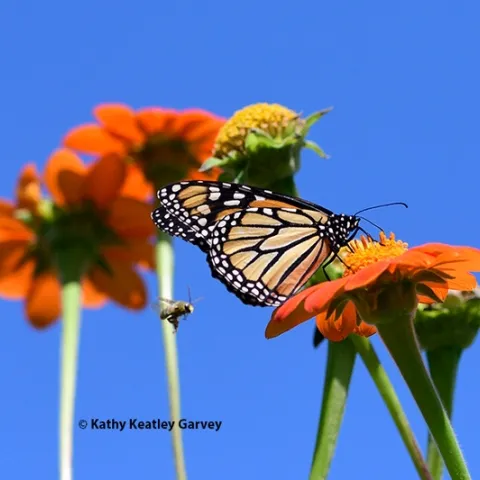
What we've been waiting for all season... A migratory monarch butterfly fluttered into our Vacaville garden at noon today (Tuesday, Sept. 17) and nectared on a Mexican sunflower, Tithonia rotundifola. Then she treated us to a butterfly ballet.
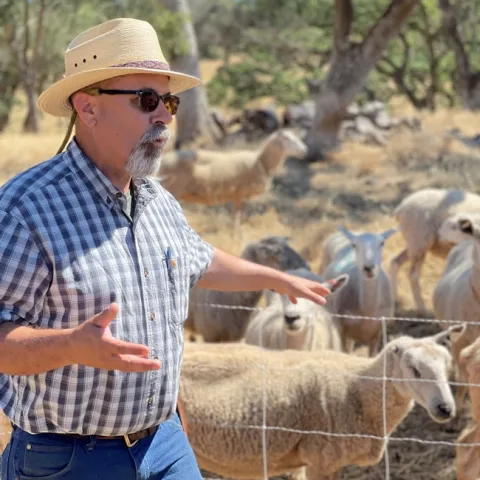
Writing my last blog post as the Livestock and Natural Resources Advisor for Placer, Nevada, Sutter, and Yuba Counties is bittersweet. When I became the advisor in 2017 (filling Roger Ingram's enormous shoes), I assumed I would stay in this job until I retired. Life had other plans for me.
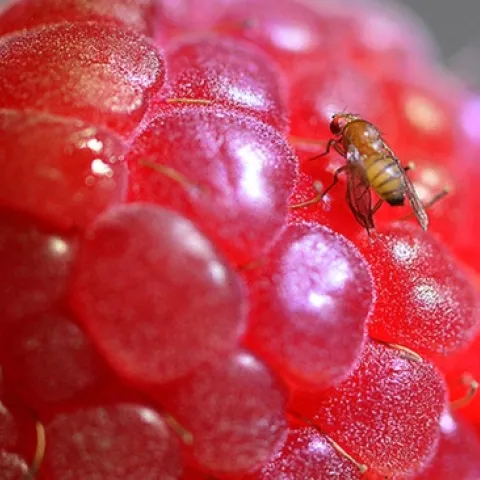
You may have never seen this tiny bug that's causing big trouble. But agriculturists and scientists have. The spotted-wing drosophila (SWD), Drosophila suzukii, is an agricultural pest that is super tiny. It's approximately 2 to 4 millimeters in length with a wingspan of 5 to 6.5 millimeters.
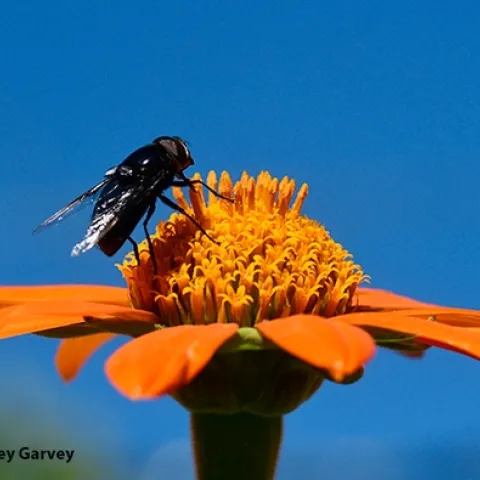
It's Friday Fly Day, when folks post images of flies. Flies seem to the entomological equivalent of Rodney Dangerfield's "I-don't-get-no-respect" quote.
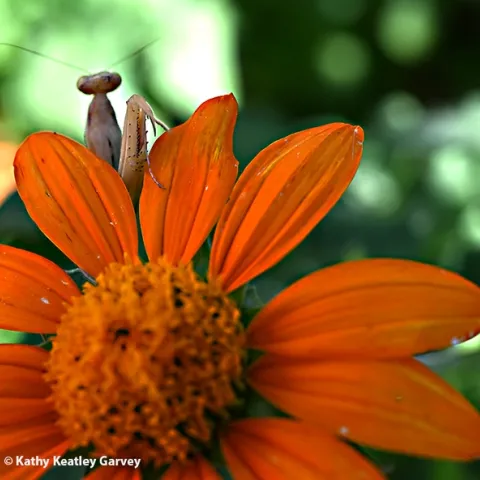
In your childhood, somebody probably gave you a jack-in-the-box toy, a music box that you crank up, and then the lid springs opens and out pops a wildly dressed clown, startling you and everyone around you. A praying mantis sighting is something like that, but without the music box.
It's beginning to look a lot like...Halloween. If you haven't noticed, stores are gearing up for Halloween with assorted ghosts, goblins and ghouls for you. We remember Halloween 2023 when a female migratory monarch fluttered into our pollinator garden.
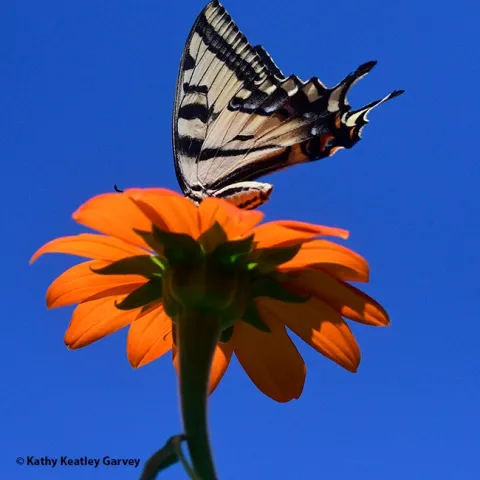
So, here you are, a newly eclosed Western tiger swallowtail, Papilio rutulus, eager to sip some nectar from a Mexican sunflower, Tithonia rotundifola, in a Vacaville garden. It's a warm, windless day, and you're anxious to score, score, score.
From honey bees to butterflies to nematodes--those will be some of the topics when the UC Davis Department of Entomology and Nematology hosts its fall quarter seminars. The seminars begin Monday afternoon, Sept. 30 and continue every Monday through Dec. 2.