

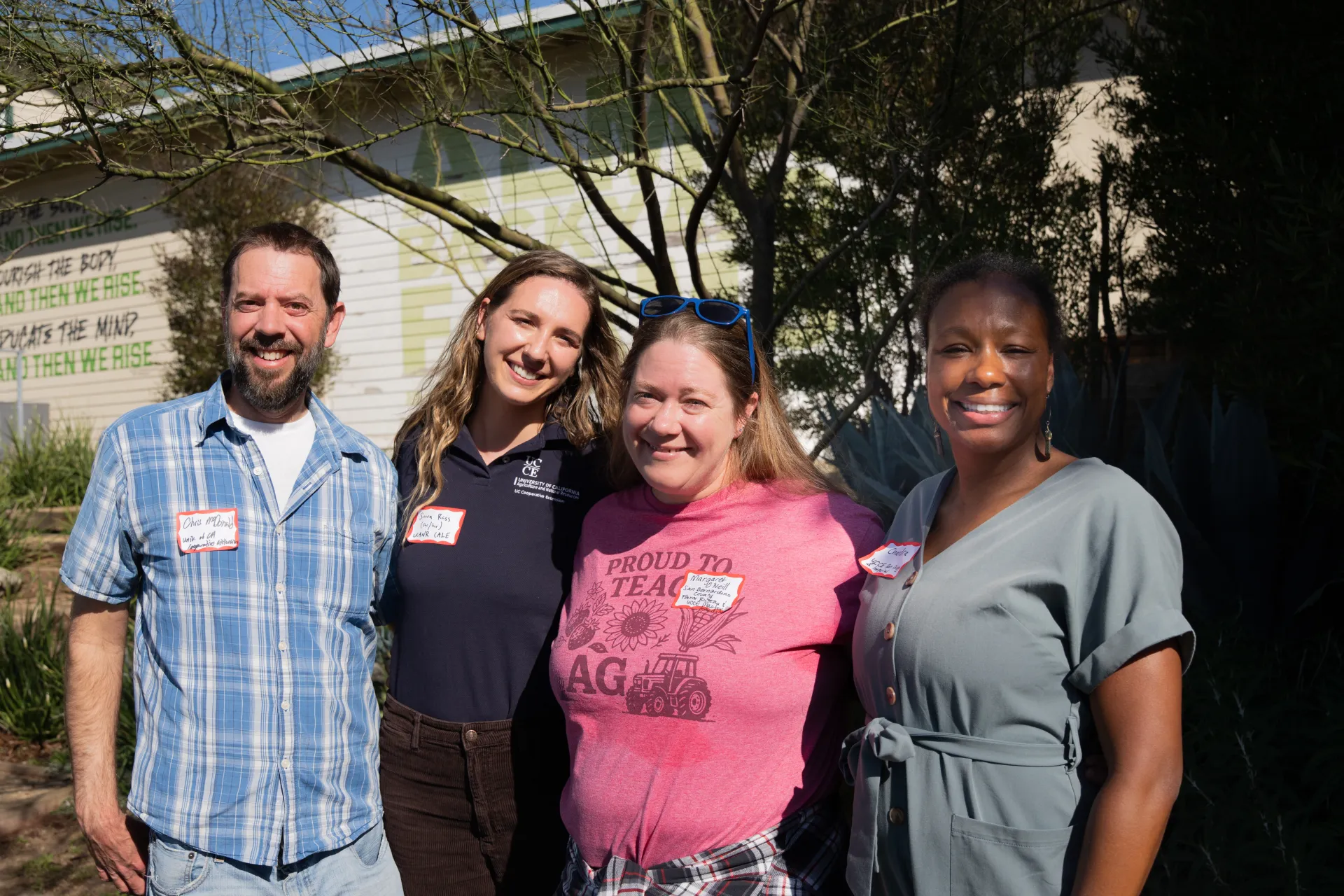
Members of the UC ANR CALE project assembled advisors, local growers for urban agritourism workshop in Compton
Members of the Climate and Land Equity project, or CALE, are used to bringing people together. So when an opportunity arose to collaborate with the L.A. Food Policy Council, or LAFPC, former CALE lead Chandra Richards jumped on it.
Since connecting with that local partner organization, Richards has stepped into a new role as Area County Director for San Diego and Imperial Counties. But in her absence, the CALE team has been hard at work to ensure her partnerships live on.
This February, the CALE team co-organized a workshop with LAFPC, hosted at an urban farm in Compton called Alma Backyard Farms.
UC ANR land equity project manager Sierra Reiss organized the event, which focused on making agritourism accessible to urban growers, ensuring small-scale and lower-resourced operations aren’t left out of this hot industry.
“The agritourism business is in this booming era right now, so a lot of people want to be a part of that,” Reiss said.
The event attracted dozens of active and aspiring business owners and community leaders from Southern California. 80 percent of attendees were growers – confirming the workshop topic resonated with its intended audience.
“ I feel like a lot of farmers have started this agritourism aspect because they need those diversified income streams,” Reiss said. “Margins are smaller than they used to be.”
Riess was pleased to hear attendees reflect on the usefulness of the event. One grower said they were “walking away with actionable steps.”
Running an agritourism business requires thorough planning to be successful. UC ANR statewide agritourism coordinator Rachael Callahan guided attendees through important questions to consider before inviting the public onto a working farm. Her presentation empowered urban growers to make the best choices for themselves and their communities, while being candid about possible challenges to anticipate.