

Spanish, Hmong interpretation available for organic agriculture series beginning in January
Farmers seeking guidance on starting or advancing their transition to organic crop production are invited to attend free webinars led by a wide range of experts, including University of California scientists and fellow growers.
Held at noon every Wednesday from Jan. 14 to March 18, 2026, the “Transition to Organic Webinar Series” covers the certification process, market dynamics, soil health and soil amendments, pest and weed management, and other key topics of organic production. Participants are encouraged to attend all sessions but can choose any webinars that are most relevant for them.

Learn more and register; attendees also can choose real-time Hmong or Spanish interpretation for each session.
The 10 online sessions – each comprising a 75-minute presentation and discussion, followed by optional office hours – are organized and sponsored by the Community Alliance with Family Farmers, UC Cooperative Extension, and the UC Organic Agriculture Institute (an institute of UC Agriculture and Natural Resources).
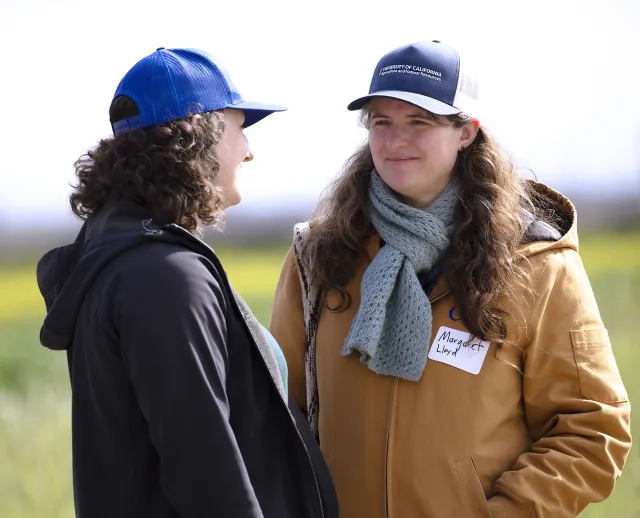
“This is the first time UC ANR is partnering with CAFF to offer such a series focused on transition to organic,” said Margaret Lloyd, UCCE organic agriculture and small farms advisor for Yolo, Sacramento and Solano counties. “Ultimately, we hope to provide the resources, community and support to folks who want to make a successful transition.”
California leads the U.S. in the number of organic farms, land in organic production and organic sales. In 2023, there were more than 3,300 organic producers in the state, according to the latest California Department of Food and Agriculture report.
Organizers designed the webinars to appeal to producers across California and to directly address issues that a variety of agricultural operations face.
“This series brings together technical assistance providers and farmers to explore the full range of challenges producers face when transitioning to organic – from certification and market considerations to management practices, biodiversity, recordkeeping and inspections,” said Grace Jackson, the Central Valley regional lead for CAFF’s Farmer Services team.
Series addresses challenges of certification, market dynamics, pest and weed management
Another organizer, Katharina Ullmann – training and technical assistance coordinator at the UC Organic Agriculture Institute – said that demand for more information was quite apparent during workshops held this past year throughout the state, from Siskiyou County to San Diego.
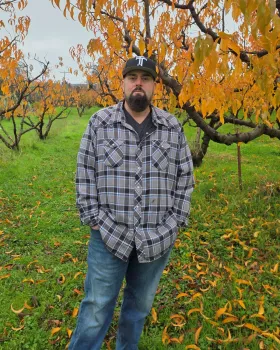
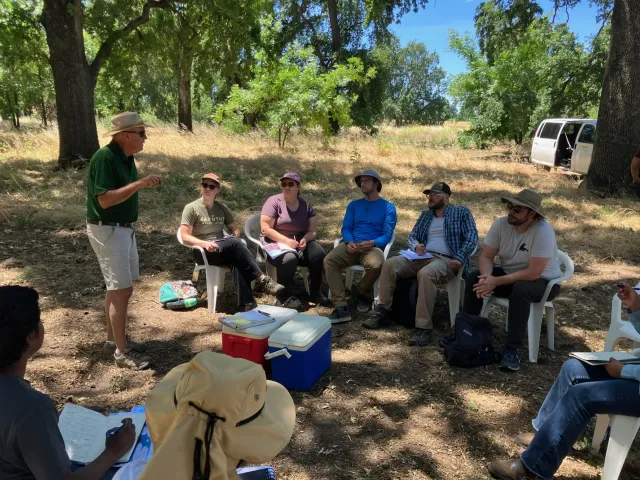
“Standalone workshops are great, but there is a lot of information to cover in a two- or three-hour workshop,” Ullmann said. “We thought it would be helpful to have a longer, regular series, where we would have a whole hour to dig into a specific transition topic.”
The lineup of presenters – available on the registration page – reflects a diverse mix of perspectives on organic agriculture, encompassing firsthand farmer experiences and the latest scientific research.
“We have farmer panels; we have people who work with certifiers, and organic inspectors; we have UCCE advisors and specialists who will present as part of this workshop,” Ullmann said. “Over the past three decades, many individual farmers and other partners like the UC Santa Cruz Center for Agroecology, the CCOF [California Certified Organic Farmers] Foundation and the Ecological Farming Association [EcoFarm] have provided training on transitioning to organic production. We are excited to add to that body of work.”
She noted that the series covers many of the topics mentioned by respondents to the Organic Agriculture Institute’s statewide needs assessment survey. In addition to crop production challenges and market concerns, growers emphasized the need for support on certification processes and related paperwork (such as the Organic System Plan) – topics to be presented on Jan. 21.
Aside from this new series on topics about transitioning to organic, Lloyd and other UCCE advisors are continuing an annual online Organic Agriculture Seminar Series on specific aspects of organic production. Details for those webinars, scheduled for Tuesdays at noon in 2026, will be posted on Lloyd’s website.
Registration and information on the “Transition to Organic Webinar Series” can be found at: https://actionnetwork.org/events/transition-to-organic-webinar-series-for-crop-producers/.
The series is made possible through funding from the California Department of Food and Agriculture State Organic Program, the CDFA Office of Agricultural Resilience and Sustainability, and the United States Department of Agriculture Transition to Organic Partnership Program.