A Natural Solution for California's Herds: African Catfish Peptides

California's cattle producers and agricultural communities are all too familiar with the rising challenge of antibiotic resistance, making common bacterial infections harder to treat in livestock. But imagine a future where we could tackle these infections with a natural, powerful alternative. Our research points to just that: antimicrobial peptides (AMPs) found in African catfish.

We're really excited about these peptides because African catfish thrive in pathogen-rich freshwater, naturally producing these robust immune compounds in their skin mucus as a defense. This natural origin makes them highly appealing alternatives to synthetic drugs.

Predicted Safety and Potent Action

One of the most compelling aspects of these AMPs is their predicted safety for mammals. Our initial computer analyses suggest that various catfish AMPs are generally recognized as safe (GRAS). We predict they'll be absorbed in the human intestine without causing liver, brain, or heart toxicity. Furthermore, lab tests on a promising peptide, NACAP-II, confirmed it was non-hemolytic, meaning it didn't damage rabbit red blood cells—a strong indicator of its potential safety for mammalian cells.

Beyond safety, these peptides demonstrate effectiveness against problematic bacteria. One study revealed NACAP-II's strong activity against Extended-Spectrum Beta-Lactamase (ESBL)-producing Escherichia coli—a critical concern for both animal and human health due to its resistance to many common antibiotics. Another peptide, ACAP-IV, also showed antibacterial activity against E. coli and Staphylococcus aureus. We believe these AMPs work by directly disrupting bacterial cell membranes, a mechanism that makes it harder for bacteria to develop resistance compared to how they resist traditional antibiotics.

UC Master Gardener Program of Alameda County: Event

Waterwise Gardening Talk (Oakland)

Event Date
Apr 18, 2026

Calculating plant water requirements, managing soil quality, using the right types of watering methods and gardening practices can greatly reduce the amount of water used in a vegetable garden. All of these issues will be addressed in this talk as well as vegetable plant selection for low water use.
UC Master Gardener Program of Alameda County
View Event
Primary Image
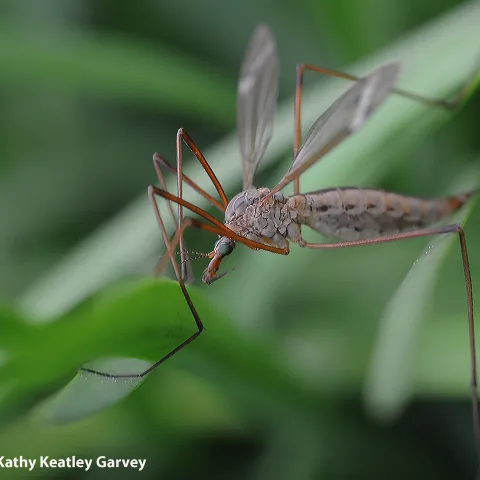
Crane fly. (Photo by Kathy Keatley Garvey)
Bug Squad: Article

They Don't Eat Mosquitoes

March 27, 2026
By Kathy Keatley Garvey
 Some folks call them "Mosquito Hawks" or "Daddy Long Legs" or "Skeeter Eaters."  They're not hawks, they're not arachnids, and they don't eat mosquitoes.They are crane flies, members of the family Tipulidae of the order Diptera (flies). With the temperatures rising, they're everywhere now,…
View Article
Primary Image
water
Stanislaus County: Article

Evapotranspiration Water Use Report 03/27/26

March 27, 2026
By Yolanda Cruz
Please find the attached document to provide the previous week’s estimated water use report in terms of evapotranspiration for almonds, peaches, walnuts, established vineyard, alfalfa, and pasture in Stanislaus County. This report may be used as a guide in your irrigation schedule for the…
View Article
Event Primary Image
3 cherries with stems
Stanislaus County: Event

IPM in Cherries - Field Day April 17, 2026

Event Date
Apr 17, 2026

Join us for a free in-person event at Delta College Manteca Farm!Topics discussed will include cherry orchard management with Delta College Manteca Farm Manager Donald Drake, spotted wing drosophila management in cherries with Jhalendra Rijal, and how improving irrigation management can be used as a tool for…
Stanislaus County
View Event
Primary Image
Over the Fence (Alameda County): Article

Aedes aegypti: A Dangerous Mosquito in Alameda County

March 26, 2026
By Mireille Giovanola
Introduction   Mosquitoes are not just pesky biters that may cause allergic reactions; they can be vectors (that is, they transmit parasites) for worrisome diseases that may cause severe health problems and even death. Mosquito-borne diseases caused by protozoa (very small, single-celled organisms…
View Article
Primary Image
Over the Fence (Alameda County): Article

Aedes aegypti: A Dangerous Mosquito in Alameda County

March 26, 2026
By Mireille Giovanola
Introduction   Mosquitoes are not just pesky biters that may cause allergic reactions; they can be vectors (that is, they transmit parasites) for worrisome diseases that may cause severe health problems and even death. Mosquito-borne diseases caused by protozoa (very small, single-celled organisms…
View Article
Primary Image
A brown deer with large ears laying in tall, dry grass, looking over its shoulder toward the camera.

“Deer-Resistant” Plants – Truth or Fiction?

March 26, 2026
By Robert M Timm
Is there such a thing as a deer-proof plant? Perhaps…but there are a variety of reasons deer may choose to ignore or consume specific plant species at a particular time and place.  Certain plants native to California (and elsewhere) have evolved natural defenses against being eaten by browsing…
View Article